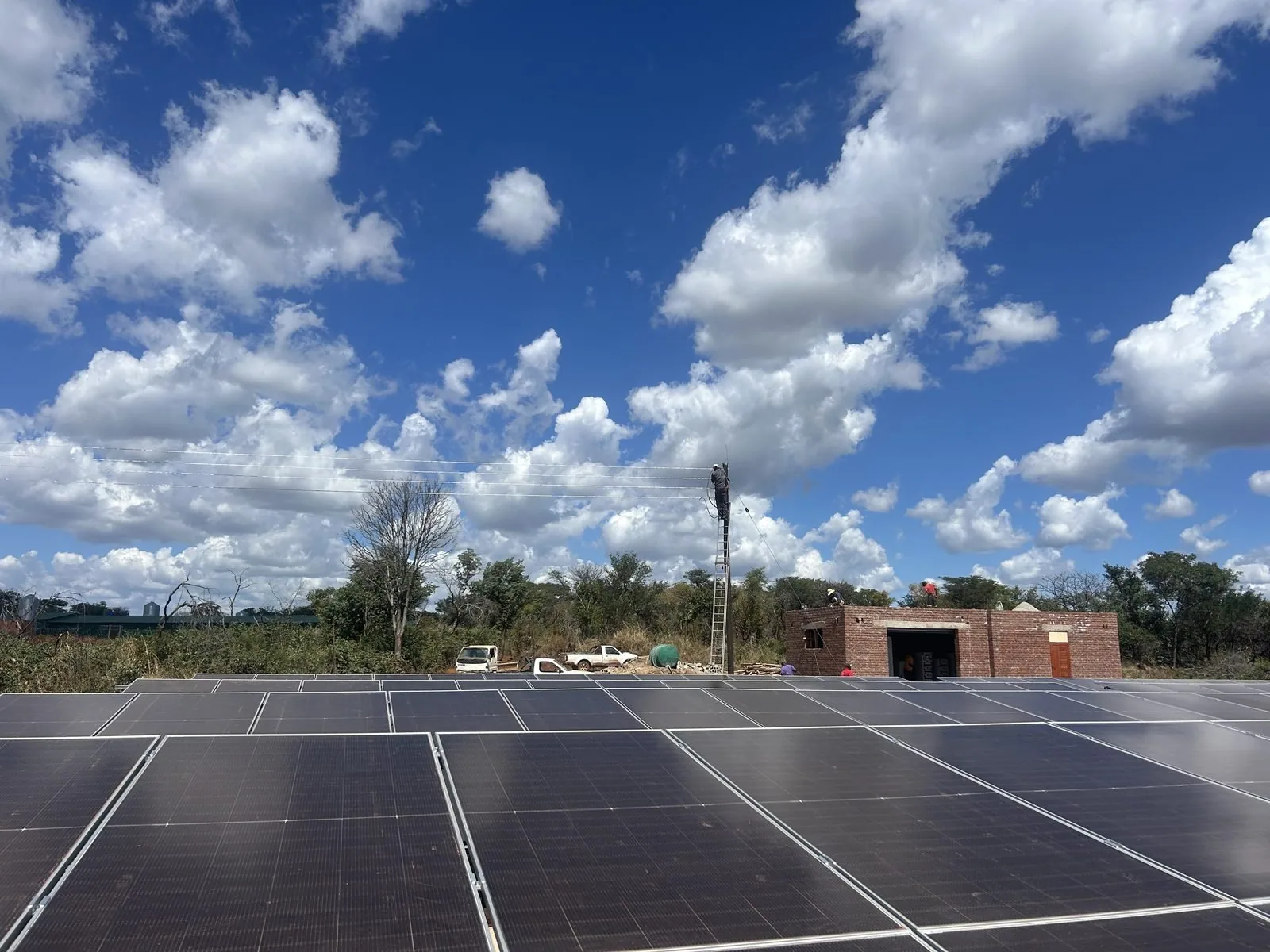
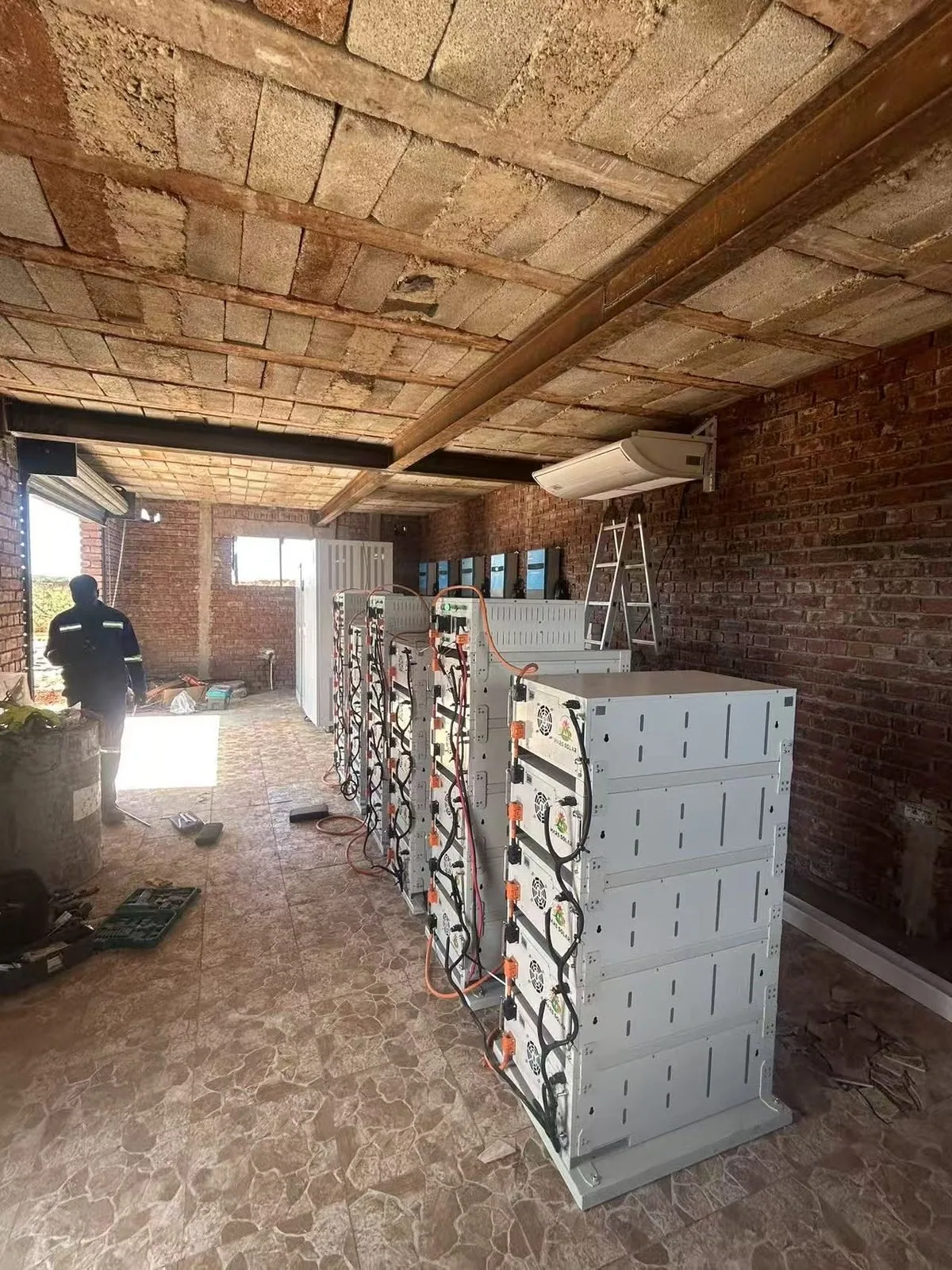
Farm loads are daytime-heavy and often far from a stable grid — a natural solar fit. PV drives pumping when the sun shines, water storage replaces battery where possible, and hybrid storage covers cold rooms and buildings.
Final equipment, capacity, model availability and local compliance are confirmed against the project brief and destination.
EQUIPMENT SCOPE
System scope.
A useful proposal names each component and explains how it fits into the complete system.
Component
Selection basis
PV array
Ground or roof mounting, engineered to site wind load
Pump controller or hybrid inverter
Matched to motor starting and pumping window
Storage where needed
Battery for cold rooms; water tanks instead of batteries for pumping
Protection
Dust, heat and lightning protection for rural sites
PRODUCT GALLERY
Systems for this application.
Farm and school configurations, sized around irrigation and daytime loads.
Farm solar system with irrigation and cold roomSchool solar system with classroom loads
SIZING EXAMPLES
Explore reference capacities.
These combinations follow the supplied product range and are starting points for a load-based proposal.
REFERENCE CONFIGURATION30 kW pumpingDirect solar pumping referenceREFERENCE CONFIGURATION250 kW hybridFarm with cold rooms reference
Images show product concepts or representative equipment. Exact models, usable capacity, chemistry, ratings, certification and warranty are confirmed in the project bill of materials.
ENGINEERING INPUTS
What we need to size it.
Give us the facts you have; the remaining questions can follow in engineering review.
These answers describe system selection. Final equipment and compliance depend on the agreed model and destination.
Do solar pumps need batteries?+
Usually no — pump into a tank by day and gravity-feed at night. Batteries are for cold rooms and buildings.
Can solar run a centre pivot or borehole pump?+
Yes, with correct motor starting design. Send the pump nameplate, depth and daily water target.
How it is sized
Capacity first, then hardware. Working through these steps in order is what keeps a quotation honest — each one narrows the answer the next one depends on.
Split pumping away from everything else
A farm is usually two different problems wearing one coat: pumping wants daylight, while cold rooms and buildings want power after dark. Treating them separately is almost always cheaper than one system sized for both.
Decide whether water or electrons are the store
Where the land allows it, pump into a tank by day and gravity-feed at night. Batteries belong to the cold rooms and buildings, not to irrigation you can lift into a header tank.
Specify protection for a rural site
Dust, heat and lightning are specification items rather than afterthoughts, and they carry more weight the further the site sits from the grid. Distance to grid and diesel cost together decide how much backup is worth buying.
FIT CHECK
Where this fits — and where it does not
Saying what a product is not for is usually more useful than another list of what it can do.
How long does it take to deliver the Solar System for Farm?
End to end, 4–12 weeks. Requirement definition takes 1–3 days, system design 1–2 weeks, production 1–3 weeks, then every unit completes a 72-hour test before shipping, and shipping and installation take 2–6 weeks depending on the destination.
Is the Solar System for Farm configuration fixed?
No. What is shown on this page is the reference configuration for the model — every system is sized against its own load data before it is quoted.
What testing does the Solar System for Farm go through before shipping?
A 72-hour test. It is the fourth of five steps in our delivery process: requirement definition, system design, production, testing, then shipping and installation.
What is included in the Solar System for Farm price?
Every component named on the quotation, plus factory assembly, the 72-hour test, export packing and the documentation set. Not included: sea freight, import duties and taxes, and site labour. Each quotation lists these on separate lines, so you can compare suppliers on the same basis.
Is installation included with the Solar System for Farm?
Not as on-site labour. Our scope: the equipment as specified, tested before it ships, with the drawings and documentation your contractor works from, plus remote commissioning support and spare parts. Your scope: the base and civil works, crane placement, AC cable runs, the grid-connection cabinet and metering, local permits, and the installation labour. We do not keep installation crews abroad, so site work and its cost are quoted by your own contractor or local EPC.
START A PROJECT
Ready to design your solar power system?
Share the site load, location and required backup time. We will define the information needed for a useful proposal.