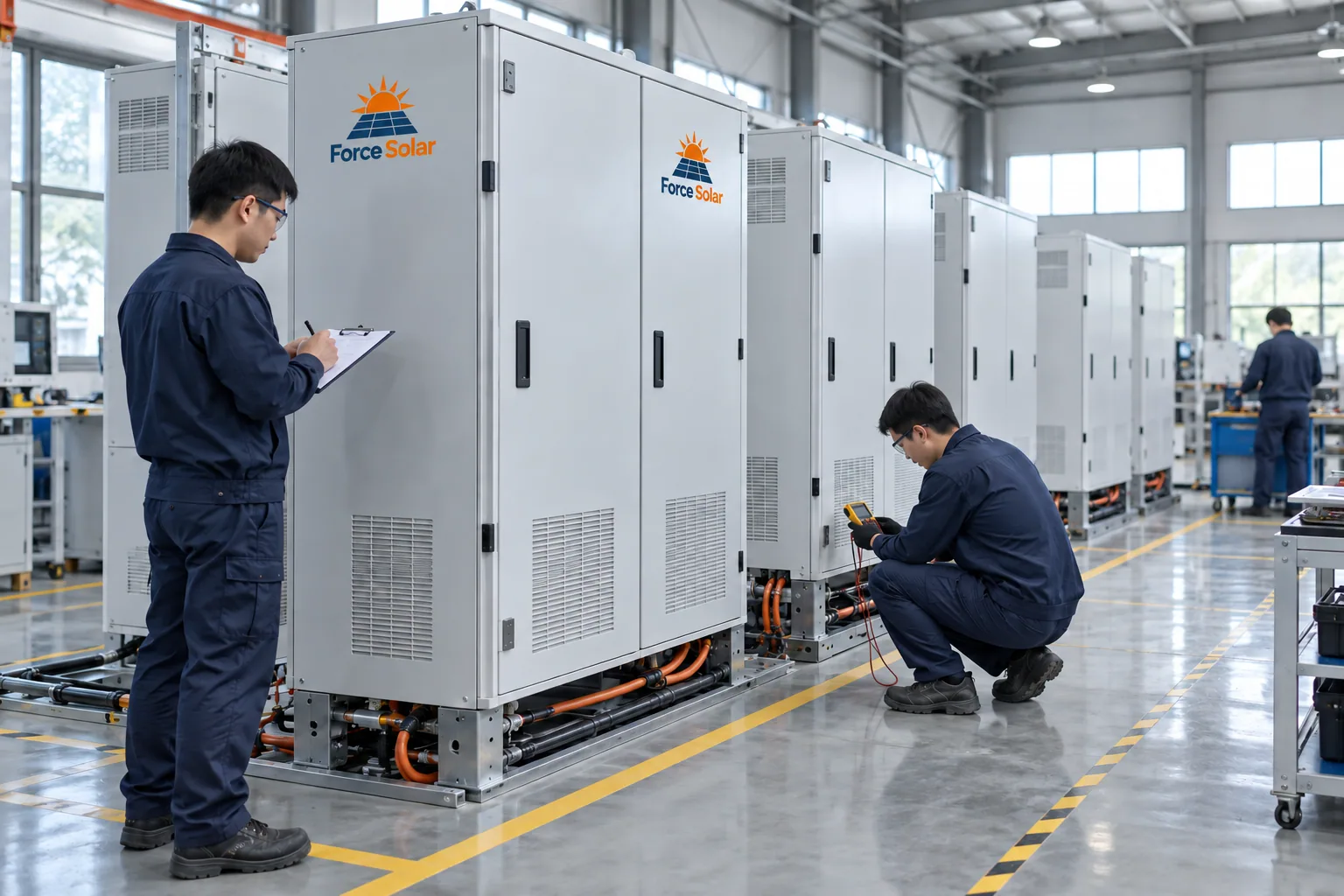
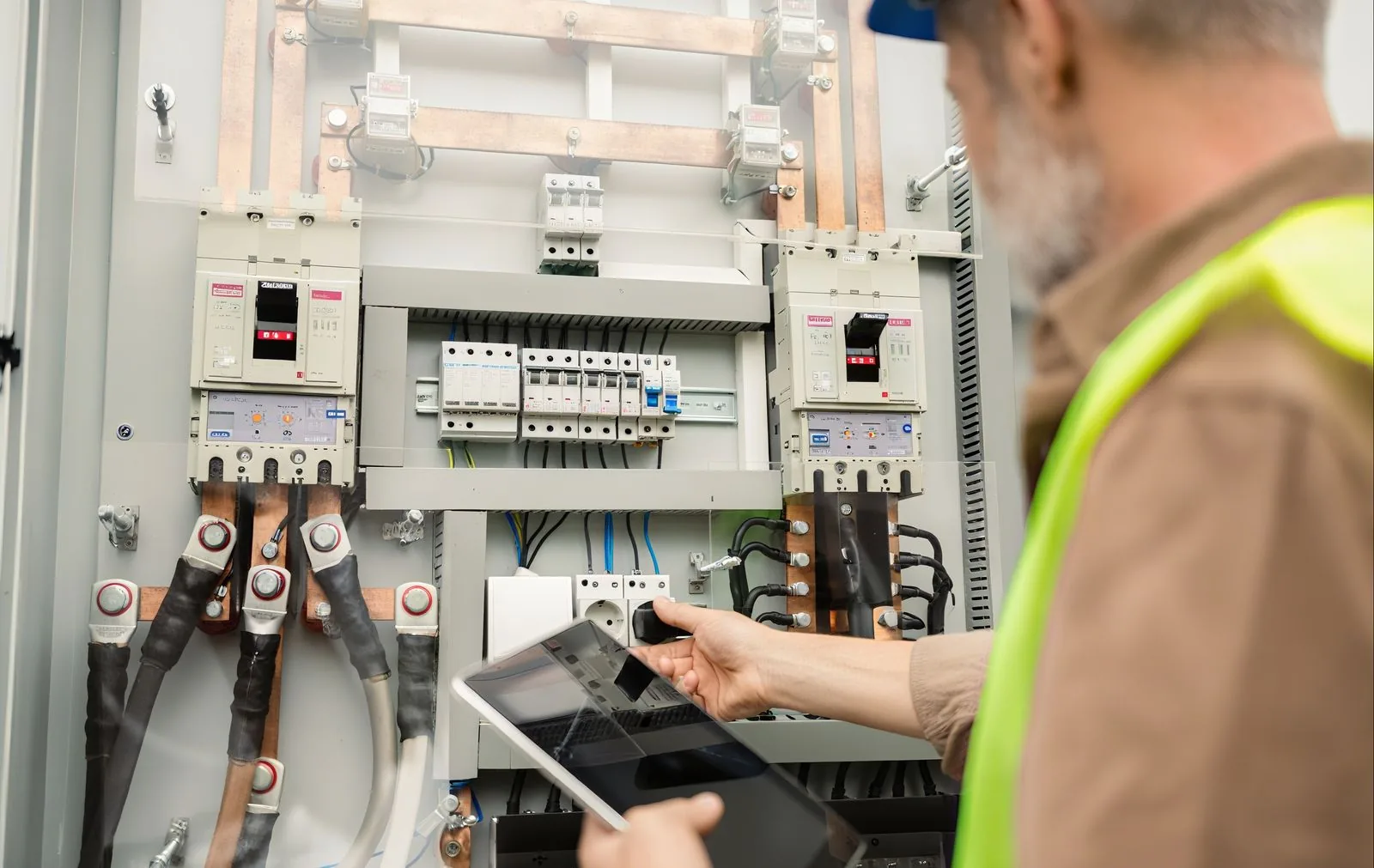
See how the equipment scope is checked from project brief through model selection, inspection and dispatch.
ORDER WORKFLOW
A traceable path from brief to shipment.
Each order should state the exact production site, selected models and inspection deliverables.
01
Engineering review
Check load profile, site voltage, grid conditions and backup target.
02
Component matching
Confirm inverter, battery, PV, protection and communication compatibility.
03
Inspection plan
Agree on model documents, functional checks and packing evidence.
04
Export preparation
Match equipment labels, manuals, packing lists and trade documents.
QUALITY RECORDS
Ask for evidence tied to the selected models.
Certificates, warranty terms and test records apply to particular products and configurations. The order file should show which documents support the equipment actually shipped.
Named bill of materials and product datasheets
Single-line diagram and interface description
Model-specific certificates where applicable
Inspection records and packing photographs
Visuals illustrate workshop and inspection activities; production site and test scope are confirmed per order.
PRODUCTION SEQUENCE
Five stages, each with a record
Every stage produces a document the next stage depends on. That is what makes the order traceable from the brief through to the packing list.
Production and inspection sequence
Stage
What is checked
Record produced
Typical duration
Engineering review
Load profile, site voltage, grid conditions, backup target
Design basis and single-line diagram
1 to 3 days
Component matching
Inverter, battery, PV, protection and communication compatibility
Named bill of materials
1 to 2 weeks
Assembly
Configuration against the approved BOM
Build record and configuration log
1 to 3 weeks
72-hour testing
Full-load functional test before shipment
Test record and inspection photographs
72 hours
Export preparation
Labels, manuals, packing lists, trade documents
Packing list and commercial documents
2 to 6 weeks
Total programme runs 4 to 12 weeks. Durations are planning ranges, not commitments.
DOCUMENTATION
What should travel with the shipment
Certificates and test records apply to particular models and configurations. The order file should show which documents support the equipment actually shipped.
Order documentation
Document
What it shows
Why it matters
Named bill of materials
Exact model and electrical interface
Lets the buyer verify what was quoted against what was shipped
Single-line diagram
Protection, distribution and interfaces
The reference the installer and inspector work from
Model-specific certificates
CE, IEC 62619, UN38.3, MSDS as applicable
Needed for customs and for grid interconnection review
Test and inspection records
Functional checks and 72-hour test result
Evidence the system was energised before it left
Packing photographs and list
As-packed condition of the shipment
The basis for any transit claim
Documents are listed per order. Which certificates apply depends on the models and the destination.
Frequently asked questions
What documents should travel with the shipment?
A named bill of materials and product datasheets, a single-line diagram with interface description, model-specific certificates where they apply, plus inspection records and packing photographs.
Do certificates cover the whole catalogue?
No. Certificates, warranty terms and test records apply to particular products and configurations. The order file should show exactly which documents support the equipment that was actually shipped.
What are the five production stages?
Engineering review of the load profile, site voltage, grid conditions and backup target; component matching across inverter, battery, PV, protection and communication; assembly; inspection; then export preparation matching labels, manuals, packing lists and trade documents. Each stage produces the record the next stage depends on.
What testing happens before dispatch?
A 72-hour documented factory test on each system before it leaves, alongside the agreed inspection plan covering model documents, functional checks and packing evidence.
How long does the whole sequence take?
4–12 weeks end to end: 1–3 days for requirement definition, 1–2 weeks for system design and 1–3 weeks for production, then a 72-hour factory test on every unit before shipping, followed by 2–6 weeks for shipping and installation depending on the destination.