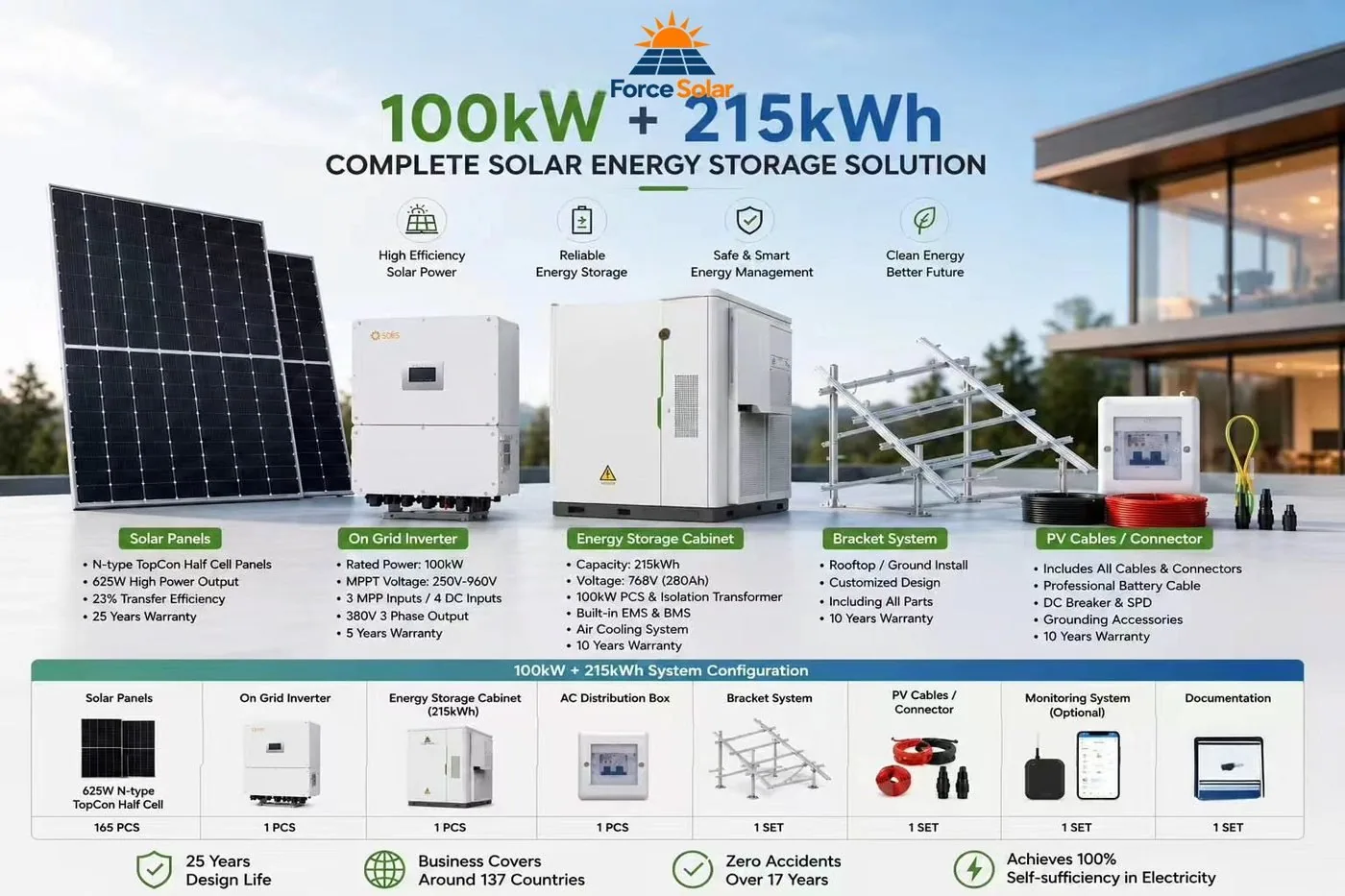
An IP54 outdoor-cabinet battery energy storage system: 100kW of power and 215kWh of LFP energy for backup, solar shifting and diesel reduction. Sized to project, OEM & ODM accepted.
Ships in the cabinet: LiFePO4 battery modules with BMS, the 100kW bidirectional PCS, cabinet HVAC, the EMS with protection and remote monitoring, and the IP54 enclosure. Sized with your project: the PV array — kWp and module count follow your available area and energy target, and are quoted on the same bill of materials. Arranged on your site: the concrete base, AC cable runs, the grid-connection cabinet and metering, and the local permits.
Final models and ratings are confirmed in the project bill of materials.
Model
FS-BESS-215
Type
Battery energy storage system (BESS)
Rated power
100kW / 100kVA
Battery capacity
215kWh LiFePO4
Depth of discharge
Up to 90–95%
Cycle life
6,000+ cycles @ 80% EOL
Output
3-phase 400V
Enclosure
IP54 outdoor cabinet, HVAC thermal management
Certificates
CE / IEC 62619 · UN38.3 · MSDS (model-specific)
MOQ
1 set — OEM & ODM accepted
Lead time
15–30 days depending on configuration
Warranty
5–10-y battery · 2-y system integration
WHAT THE SYSTEM INCLUDES
One coordinated scope.
Every proposal names each component and its role in the complete system.
Component
Details
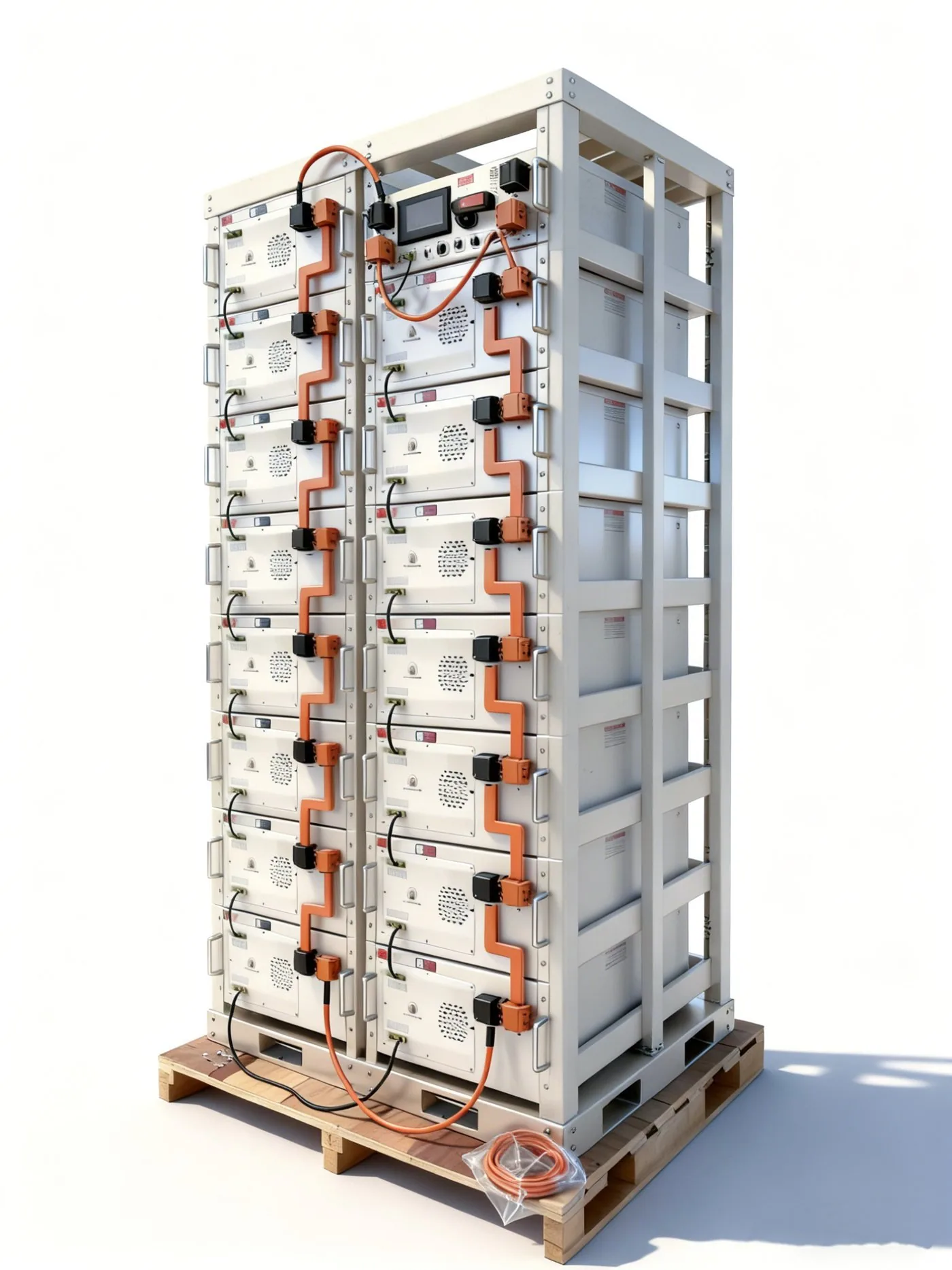
Battery modules + BMS
LFP rack modules totalling 215kWh, with cell-level monitoring and protection
PCS / hybrid inverter
100kW bidirectional conversion, grid-tied and off-grid operating modes
Thermal management
Cabinet HVAC sized for tropical installation environments
EMS + protection
Operating schedules, remote monitoring, breakers, SPD and fire detection
PV integration
DC or AC-coupled solar input. Array size — kWp and module count — is sized per project and quoted on the same bill of materials; this model carries no fixed PV number
About 194kWh usable at 90% depth of discharge: roughly 3.9 hours at 50kW, or about 1.9 hours at the full 100kW rating. These are nameplate figures — 215kWh × 90% DoD, divided by the load. Runtime on site is shorter, because conversion losses, the HVAC drawing its own supply and the reserve the EMS holds all come out of the same energy, and usable capacity falls as the pack ages
Modular — parallel cabinets scale to MWh-class storage
Factory pre-tested as a complete system before shipment
Diesel-generator coordination for long outages
PRODUCT GALLERY
What ships, and what is sized with it.
The storage cabinet as it leaves the factory, and the PV array quoted on the same order.
100kW / 215kWh BESS — what ships, and what is sized with itCabinet assembly in production
What a 215kWh BESS can power
A factory or hotel needing firm evening capacity
A cold-storage, water-treatment or telecom site
A commercial building with lift, HVAC and IT loads
A microgrid or IPP peaking asset
Usable energy of about 194kWh — 215kWh of installed capacity at 90% depth of discharge, per the specification table above — covers the critical loads of a mid-size facility through a typical outage window: refrigeration, lighting, IT, security and selected production circuits. At half its rated power the system runs for roughly 3.9 hours between charges.
Paired with solar, the battery shifts daytime generation into the evening peak and keeps critical circuits alive when the grid fails.
How to size storage for your site
Start from the critical load list (kW) and the hours of cover you need — not from the total site load. Energy (kWh) = critical kW × hours, adjusted for depth of discharge and reserve. Our team sizes the battery, PCS and protection against your outage pattern and tariff.
PRICE & PAYBACK
What drives the price and the payback.
Industry-typical figures for budget planning. A firm price follows the confirmed bill of materials and destination.
Cost factor
Typical figure (2026)
Solar modules
$0.28–0.48 per watt FOB, tier-1 supply
Sea freight & landed cost
Typically +20–35% over FOB to West Africa / Southeast Asia ports
Storage share
35–50% of total system cost where batteries are included
Payback
3–5 years against grid power; under 18 months when replacing diesel
Reference figures, not an offer. Tariff structure, demand charges, roof condition and destination change every project. Product photographs show factory kit configurations; final equipment appearance, rating, labelling and packing follow the ordered model.
TECHNICAL FAQ
Product FAQ
These answers describe system selection. Final equipment and compliance depend on the agreed model and destination.
What is the difference between kW and kWh in a BESS?+
kW is how much power the system can deliver at one moment; kWh is how long it can sustain a load. Both are sized against your critical loads.
Can this BESS be added to an existing solar system?+
Usually yes — AC-coupled integration works with most existing PV. The inverter, switchgear and control interfaces are reviewed in engineering before we confirm.
Which certificates apply for import?+
Documentation follows the exact battery and PCS models — typically CE, IEC 62619, UN38.3 and MSDS. Confirm destination requirements with us before ordering.
End to end, 4–12 weeks. Requirement definition takes 1–3 days, system design 1–2 weeks, production 1–3 weeks, then every unit completes a 72-hour test before shipping, and shipping and installation take 2–6 weeks depending on the destination.
Is the 100KVA BESS configuration fixed?
No. What is shown on this page is the reference configuration for the model — every system is sized against its own load data before it is quoted.
What testing does the 100KVA BESS go through before shipping?
A 72-hour test. It is the fourth of five steps in our delivery process: requirement definition, system design, production, testing, then shipping and installation.
What is included in the 100KVA BESS price?
Every component named on the quotation, plus factory assembly, the 72-hour test, export packing and the documentation set. Not included: sea freight, import duties and taxes, and site labour. Each quotation lists these on separate lines, so you can compare suppliers on the same basis.
Is installation included with the 100KVA BESS?
Not as on-site labour. Our scope: the equipment as specified, tested before it ships, with the drawings and documentation your contractor works from, plus remote commissioning support and spare parts. Your scope: the base and civil works, crane placement, AC cable runs, the grid-connection cabinet and metering, local permits, and the installation labour. We do not keep installation crews abroad, so site work and its cost are quoted by your own contractor or local EPC.
START A PROJECT
Need a custom configuration?
Send the load profile, grid conditions and destination port — we respond with a sized bill of materials.