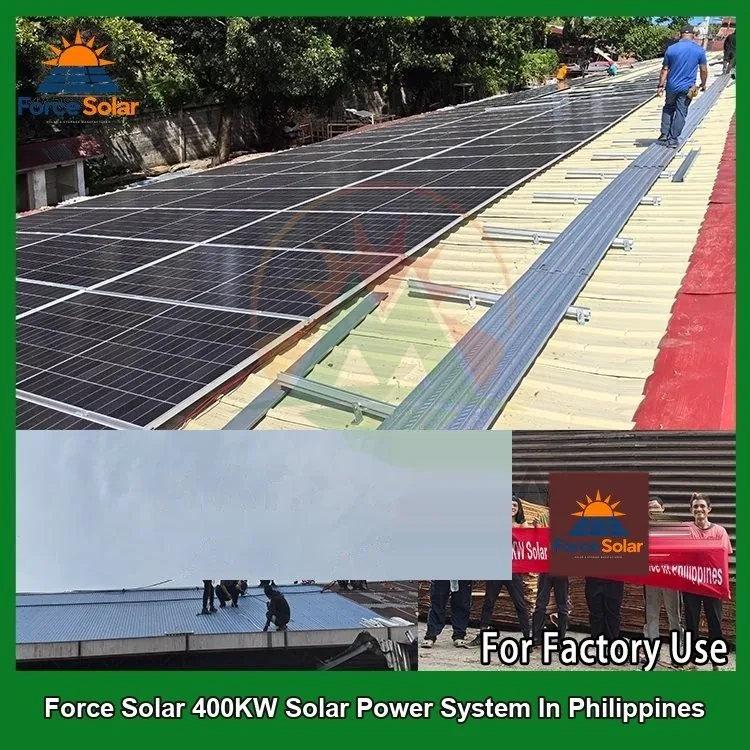
400kW Solar System for Factories & Facilities: Specs & Payback
A complete 400kW solar power system — PV modules, inverter, mounting, protection and export packing, configured around your load and destination. Hybrid-ready: add battery storage now or later. Complete solar energy system includes everything for a solar installation: solar panels, solar brackets, solar batteries, solar inverter with mppt controller, cables, MC4 connector. Best solar energy system: 400KW, DC48V to AC 110V~800V, can be customized according to the needs of users.
Every proposal names each component and its role in the complete system.
Component
Details
Solar panels
630 × 630 W N-type TOPCon half-cell modules = 396.9 kWp DC array; 25-year linear power warranty
Combiner
10T-512V — multi-string PV combiner, 1,000 V DC maximum input
Hybrid inverter
400 kW three-phase, 380–400 V
Battery storage
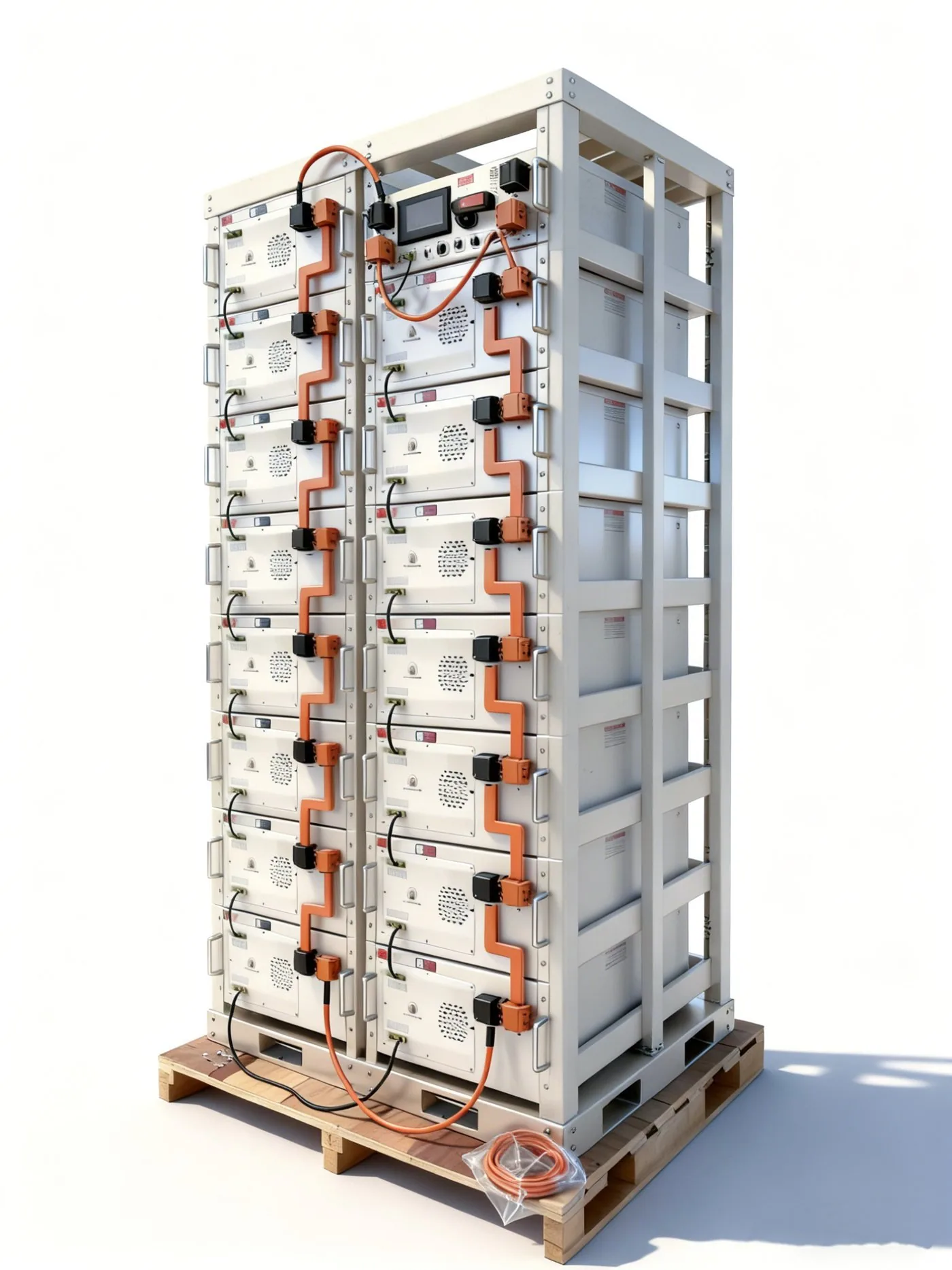
LFP battery bank, 512 V / 314 Ah = 803.8 kWh reference capacity
Distribution box
Circuit breakers, disconnectors and surge protection, self-supporting overload protection
Mounting system
Rooftop or ground, all parts: maintenance walkway, cable tray and grounding flat iron — engineered to site wind load
Cables & connectors
Battery cable with terminals, PV cable, grounding cable and MC4 connectors
Monitoring (optional)
IoT remote monitoring with mobile app for generation and alarm tracking
~1,600 kWh per day in good sun — size against your own peak-sun-hours
Packed for standard container shipment, one or more containers by scale
Hybrid-ready — add an LFP battery cabinet anytime
Engineered mounting for flat or pitched roofs
What a 400kW Solar System Can Power
For heavy load-shedding, pairing the array with a dedicated 100kW / 215kWh BESS extends night-time autonomy.
A heavy-manufacturing line or multiple production halls
A large resort, hospital or university campus
A regional cold-chain or water-treatment hub
An industrial estate with mixed commercial loads
What a 400kW solar system can power
At roughly 1,600 kWh per day in good sun, a 400kW system is sized for sites whose daytime consumption sits in that range — factories & facilities with steady operating hours. The right capacity is always checked against interval load data, not the nameplate alone.
Where the grid is unreliable, the same PV array pairs with a hybrid inverter and battery bank so critical circuits stay live through outages.
How we configure a 400kW project
Each proposal starts from your electricity bills or load list, the grid voltage and phase, roof or land area, and the destination port. The bill of materials names exact models, the single-line diagram shows how they connect, and the order file carries the inspection records.
PRICE & PAYBACK
What drives the price and the payback.
Industry-typical figures for budget planning. A firm price follows the confirmed bill of materials and destination.
Cost factor
Typical figure (2026)
Solar modules
$0.28–0.48 per watt FOB, tier-1 supply
Sea freight & landed cost
Typically +20–35% over FOB to West Africa / Southeast Asia ports
Storage share
35–50% of total system cost where batteries are included
Payback
3–5 years against grid power; under 18 months when replacing diesel
Reference figures, not an offer. Tariff structure, demand charges, roof condition and destination change every project. Product photographs show factory kit configurations; final equipment appearance, rating, labelling and packing follow the ordered model.
TECHNICAL FAQ
Product FAQ
These answers describe system selection. Final equipment and compliance depend on the agreed model and destination.
Does this system work during a power outage?+
A standard grid-tied inverter shuts down when the grid fails. For backup, choose the hybrid configuration with a battery bank and protected circuits — sized to the loads that must stay on.
Can I add batteries later?+
Yes — the system is hybrid-ready. State the storage plan before ordering so the inverter and switchgear are specified for it.
What decides the final price?+
PV capacity, inverter topology, battery energy, mounting type, destination freight and documentation. The payback table shows the industry-typical ranges.
How long does it take to deliver the 400kW Solar System?
End to end, 4–12 weeks. Requirement definition takes 1–3 days, system design 1–2 weeks, production 1–3 weeks, then every unit completes a 72-hour test before shipping, and shipping and installation take 2–6 weeks depending on the destination.
Is the 400kW Solar System configuration fixed?
No. What is shown on this page is the reference configuration for the model — every system is sized against its own load data before it is quoted.
What testing does the 400kW Solar System go through before shipping?
A 72-hour test. It is the fourth of five steps in our delivery process: requirement definition, system design, production, testing, then shipping and installation.
What is included in the 400kW Solar System price?
Every component named on the quotation, plus factory assembly, the 72-hour test, export packing and the documentation set. Not included: sea freight, import duties and taxes, and site labour. Each quotation lists these on separate lines, so you can compare suppliers on the same basis.
Is installation included with the 400kW Solar System?
Not as on-site labour. Our scope: the equipment as specified, tested before it ships, with the drawings and documentation your contractor works from, plus remote commissioning support and spare parts. Your scope: the base and civil works, crane placement, AC cable runs, the grid-connection cabinet and metering, local permits, and the installation labour. We do not keep installation crews abroad, so site work and its cost are quoted by your own contractor or local EPC.
START A PROJECT
Need a custom configuration?
Send the load profile, grid conditions and destination port — we respond with a sized bill of materials.