
Commercial solar inverter sizing for weak-grid and high-temperature markets.
Architecture, MPPT voltage window, DC/AC ratio, grid-code profile and heat derating — the five things that decide which unit a project actually needs, and why the kW label on the quotation is not one of them.
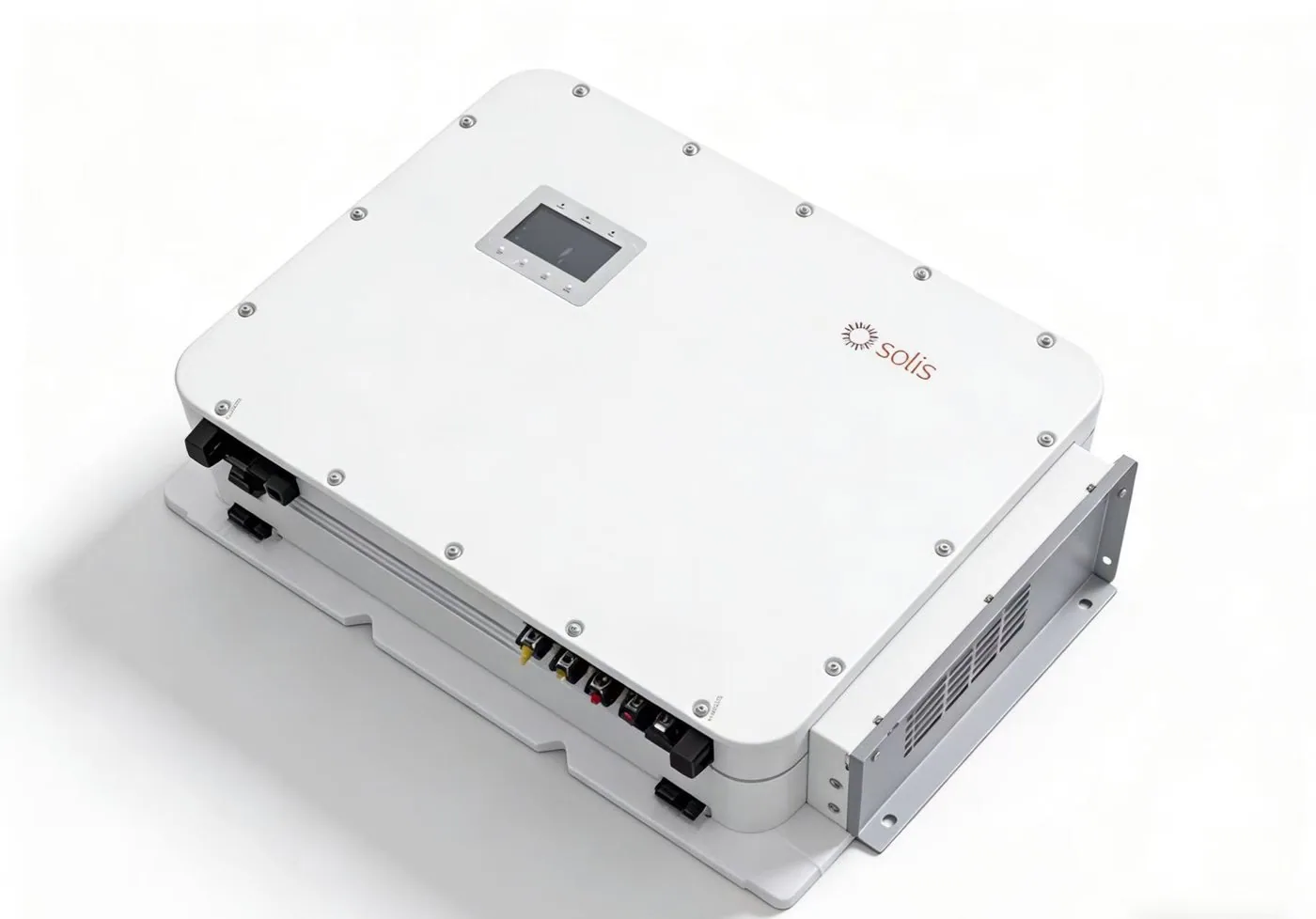
Quick answer: what size commercial solar inverter do you need?
For most commercial and industrial rooftop projects in these markets, a three-phase string solar inverter — or a hybrid solar inverter if the project includes battery storage — sized so that every string stays inside the MPPT window at both temperature extremes and the AC output matches the site’s actual service.
- Every string’s worst-case voltage stays inside the inverter’s MPPT window — cold mornings set the ceiling, hot afternoons set the floor.
- The DC array is deliberately larger than the inverter’s AC rating, by an amount the designer has checked against expected clipping loss.
- The inverter’s AC output matches the site’s actual voltage class and frequency — confirmed per country, not assumed.
- The unit carries the grid-code profile the local distribution utility requires.
- Central inverters enter the picture only at much larger, uniform arrays. They are not the default answer for a factory roof.
Why matching the kW label is the wrong starting point
The array rarely produces its nameplate number. Panel output is quoted at standard test conditions that a tropical rooftop never reproduces. A hot roof means the array operates below its rated power for much of the day.
The array and the solar inverter are rated on different sides of the device. The array is a DC number; the solar inverter’s headline rating is an AC number. Comparing them directly compares two different things.
The binding constraints are voltage and current, not power. They decide how many panels can go on one string and how many strings can share one MPPT input. Getting these wrong produces a system that either will not start on a cold morning or silently underperforms every afternoon.
Three inverter architectures, and what each one costs you
| String inverter | Central inverter | Hybrid inverter | |
|---|---|---|---|
| How it works | One unit per string or small group of strings; each string gets its own MPPT tracking | Many strings are combined first, then converted in one large unit | Converts solar DC and manages battery charge/discharge and grid or generator transfer in one unit |
| Typical use | Commercial and industrial rooftops, phased expansion | Large, uniform ground-mount or utility-scale arrays | Projects with storage, backup requirement, or both |
| Shading behaviour | Good — a shaded string does not drag down the others | Weaker — one underperforming section affects more of the array | Same as the underlying string topology |
| Failure impact | One unit takes out part of the array | A single failure affects a large section | Failure affects the site’s backup function as well |
| Maintenance | Unit swap, no specialist usually required | Specialist required, spares planning matters | As per string, plus battery-side diagnostics |
| Battery | Not integrated — needs a separate battery inverter | Not integrated | Integrated — the reason to choose it |
Published industry references place string inverters in the tens-of-kW to several-hundred-kW range per unit, central inverters from roughly 500 kW upward, and three-phase hybrid units from tens of kW upward, with the central/string decision point commonly quoted around 500 kWp on the array side. Source: commercial inverter buying guides published by A1 SolarStore and SurgePV, retrieved 2026-10-26. Treat as indicative ranges for architecture selection, not as a specification for any particular project.
String inverters — the default for a factory roof
A commercial rooftop is rarely one clean plane. It has parapets, HVAC units, skylights, different orientations and sections that shade each other at different times of day. String inverters give each string its own maximum power point tracking, which means a shaded or differently-oriented section stops penalising the rest of the array. They are also modular: if the building’s load grows, capacity can be added in units rather than redesigning the whole power block.
Central inverters — only for uniform arrays at scale
Central inverters win on cost per watt once an array is large and uniform. On a factory roof they usually lose for two reasons: the roof is not uniform, and a single failure affects a much larger share of generation.
Hybrid inverters — when storage or backup is in scope
If the project includes a battery, a hybrid inverter collapses what would otherwise be two devices into one, and handles the transfer to battery power when the grid drops. This is the architecture to specify for sites with outage exposure, and it is the one where the inverter has to be reconciled with the battery at specification time, not at delivery time.
The four solar inverter sizing checks that actually decide the size
1. The MPPT voltage window, not the power rating
Every inverter has a DC input window: a minimum voltage below which tracking is inefficient or stops, and a maximum above which the unit will not operate at all. Two temperatures set the two ends.
- Cold raises open-circuit voltage. Panel voltage carries a negative temperature coefficient, so a string’s highest voltage occurs on a cold, clear morning, not on a hot afternoon. String length has to be chosen so the worst-case cold voltage stays under the solar inverter’s maximum.
- Heat lowers operating voltage. On a hot roof the string’s operating voltage drops, and it has to stay above the solar inverter’s MPPT floor or tracking degrades.
The practical consequence: the number of panels per string is a design output, not a field decision. Re-arranging strings on the roof because a row did not fit means at least one of those two limits is now unchecked. Also worth checking: strings sharing one MPPT input should match in orientation. Mixing a south-facing and an east-facing string on the same solar inverter input forces the tracker to compromise between two different current profiles, and both orientations lose.
2. DC-to-AC ratio — deliberate oversizing
The DC array is normally built larger than the solar inverter’s AC rating. This is not an error; it is how designers recover yield in the morning and evening shoulder hours when the array runs well below nameplate. Industry references commonly quote a ratio around 1.2–1.3 for rooftop commercial systems, with wider ranges used in some designs, and treat a clipping loss in the low single-digit percentages as evidence the ratio is well chosen.
Source: A1 SolarStore commercial inverter guide and Silk Way Sourcing inverter selection guide, retrieved 2026-10-26. Indicative ranges for architecture selection, not a specification for any particular project.
What matters is that the ratio is calculated and stated, not assumed. Oversizing without a clipping estimate is guessing; oversizing with one is design. For hot climates specifically: an array on a hot roof spends more of its life below nameplate, which is one reason moderate oversizing is usually defensible in these markets. This is a design judgement for the project engineer, not a rule of thumb to apply blindly.
3. Grid frequency and voltage class — confirm, do not assume
This is the check that most often fails at delivery rather than at design. Target markets do not share one electrical standard. Some run on a 50 Hz system, others on 60 Hz; voltage classes differ by country and by whether the service is low-voltage or medium-voltage. The solar inverter’s AC output has to match the site’s actual service exactly.
Two things follow. Confirm the site’s voltage class and frequency before the solar inverter is specified, not after it has shipped — a solar inverter that does not match the local service cannot simply be reconfigured on site. And confirm which grid-code profile the local distribution utility requires: interconnection compliance is assessed at the point where the system ties into the grid, and the utility is the authority, not the equipment supplier.
If the project is in the Philippines and exports energy to the utility, how that export is treated is settled locally — see the Philippine net metering guide.
4. Battery compatibility — only if hybrid
A hybrid inverter is compatible with a given battery only when three things line up: the voltage class (high-voltage battery systems and low-voltage rack batteries are not interchangeable), the BMS communication protocol (the solar inverter and the battery management system have to talk to each other), and an approved battery profile in the inverter’s firmware.
An inverter and a battery bought separately and expected to work together is a common and expensive assumption. Specify them as one scope.
What changes when the grid is weak
Standard inverter selection assumes a grid that stays inside its nominal band. In many target markets that assumption does not hold, and three behaviours need to be specified deliberately.
Voltage and frequency excursions. Where the utility supply drifts outside its nominal range, a solar inverter configured for a stiff grid will disconnect repeatedly — the system appears to work but spends a surprising amount of the day offline. The settings that govern this need to be set against the site’s actual conditions.
Generator coexistence. Many commercial sites already run a diesel generator. A solar inverter and a generator sharing the same bus is a real engineering problem, not a wiring detail: the solar inverter must be specified to tolerate generator supply, and the changeover arrangement has to be designed. Sites comparing the two options should read solar versus diesel generator cost.
Anti-islanding and export limits. Where the utility does not permit export, or permits it only under conditions, the solar inverter has to enforce that. This is a configuration and hardware requirement, and it is cheaper to specify than to retrofit.
Heat: the derating nobody quotes on the datasheet headline
Solar inverter efficiency is quoted as a peak figure and a weighted figure, both measured under defined conditions. What a tropical site actually experiences is a unit in a hot room or a hot enclosure, at high load, for hours.
- Compare efficiency across the expected operating temperature range, not just the peak number. The unit that wins on the headline figure is not always the unit that produces more energy over a year in this climate.
- Thermal management is a design item. Inverter room ventilation, siting out of direct sun, and derating headroom decide whether the unit spends its life at the top of its temperature range. A small omission here produces maintenance costs out of proportion to its price.
Procurement checklist
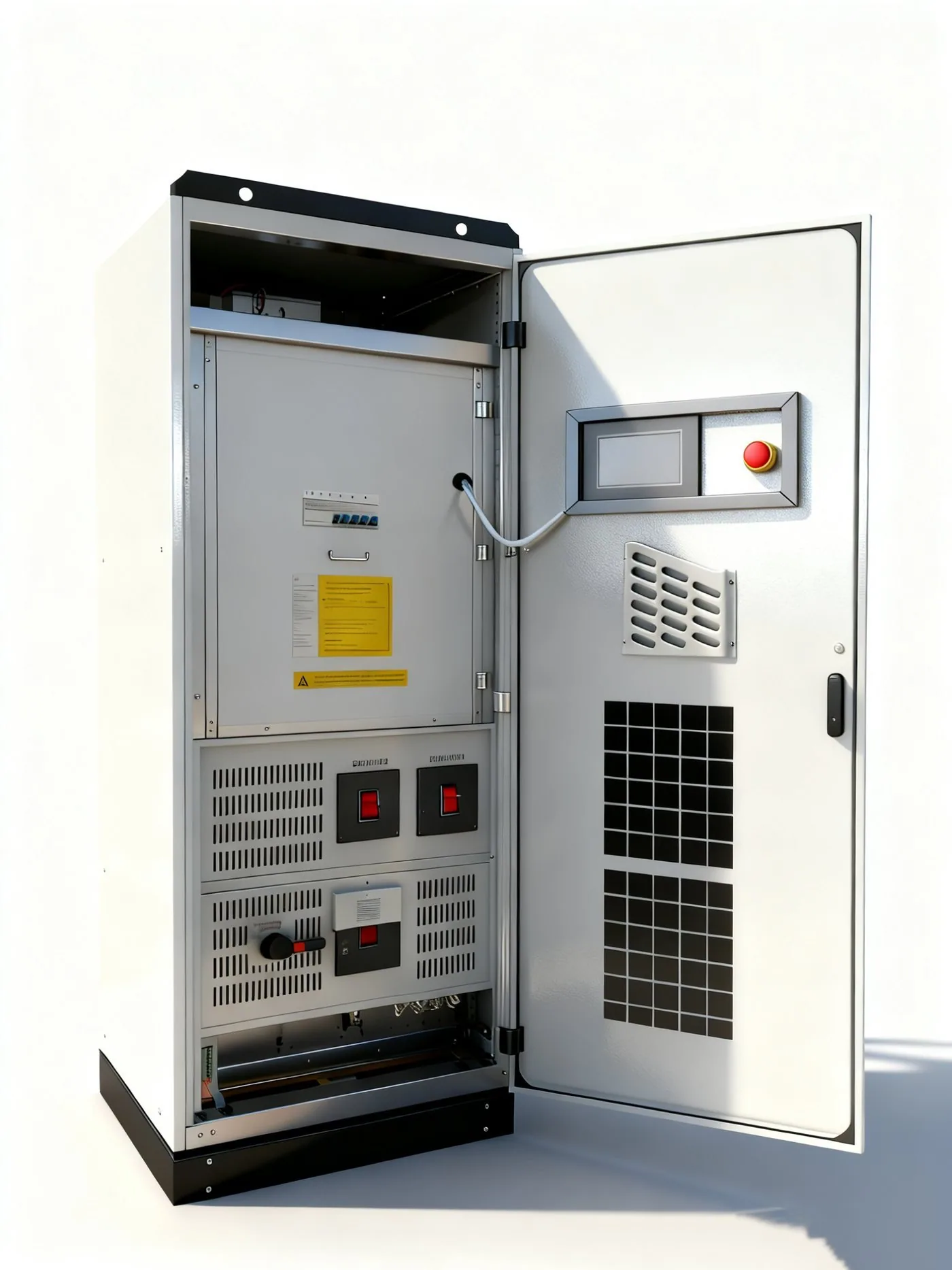
Ask the supplier to state, in writing, before order:
- Proposed solar inverter architecture, and why it fits this roof rather than a generic one
- Number of MPPT inputs, and which strings are assigned to which input
- Panels per string, with the worst-case cold open-circuit voltage and hot operating voltage checked against the MPPT window
- DC-to-AC ratio used, and the calculated clipping loss that goes with it
- AC output voltage class and frequency, confirmed against the site’s actual service
- Grid-code profile required by the local distribution utility, and confirmation the unit carries it
- Efficiency across the operating temperature range, not just the peak figure
- Derating behaviour and the ambient temperature it is specified at
- If hybrid: battery voltage class, BMS protocol, and firmware profile — confirmed as a matched pair
- If a generator is present: how the inverter behaves on generator supply
- Warranty terms, and what voids them
- Spare parts and service path in the destination country
Continue exploring.
Frequently asked questions
Is a string or central solar inverter right for a factory roof?
A string solar inverter, in most cases. Factory roofs have obstructions, mixed orientations and partial shading, and per-string MPPT is what stops one shaded section penalising the whole array. Central inverters suit large, uniform arrays.
Should the solar inverter kW match the panel kW?
No. The array is a DC rating and the solar inverter is an AC rating, and the DC array is normally specified larger than the AC rating on purpose. The ratio should be calculated and the resulting clipping loss stated.
What is a DC-to-AC ratio and why does it matter?
It is the array’s DC capacity divided by the solar inverter’s AC rating. Moderate oversizing recovers generation in the low-light hours at the start and end of the day; the cost is clipping loss at peak sun. Industry references commonly quote around 1.2–1.3 for commercial rooftops.
Can I add a battery to a string inverter later?
Not to the string solar inverter itself. Storage needs a hybrid inverter or a separate battery inverter. If a battery is likely within the project’s life, that changes the inverter decision now, not later.
Does grid frequency really matter?
Yes, and it is the check most likely to fail at delivery. 50 Hz and 60 Hz systems are not interchangeable, and the solar inverter has to match the site’s service. Confirm it before specifying.
What happens when the grid voltage drifts?
If the solar inverter is configured for a stiff grid, it disconnects. On a weak grid this can cost a meaningful share of the day’s generation. The disconnect settings need to be set against measured site conditions.
Can solar run alongside an existing diesel generator?
Yes, but it has to be designed. The solar inverter must be specified to tolerate generator supply, and the changeover arrangement engineered. It is not a matter of connecting both to the same bus.
Does heat really change the solar inverter choice?
It changes two things: which unit actually produces more energy over a year (compare efficiency across the temperature range, not the peak figure), and whether the installation provides enough ventilation and derating headroom.
How many MPPT inputs do I need?
Enough to give each roof orientation and each distinct shading condition its own input. Mixing orientations on one input forces a compromise that costs both of them.
Who decides whether the solar inverter can connect to the grid?
The local distribution utility. Interconnection compliance is assessed at the point of common coupling, and the utility’s requirement governs — not the equipment’s datasheet.
Architecture application ranges, DC-to-AC ratio ranges and efficiency ranges quoted on this page are drawn from publicly published commercial inverter selection guides (A1 SolarStore; SurgePV; Silk Way Sourcing), retrieved 2026-10-26. They are indicative ranges for architecture selection and are not specifications for any particular project. No grid voltage levels, frequency values, prices, payback periods or case-study figures are stated here, because those are site- and country-specific and must be confirmed against the destination utility and the project’s own design. Photograph from Force Solar installation records.
Sizing a project now?
Send the load profile, the site’s voltage class and frequency, and whether a generator or battery is in scope.
Request a proposal