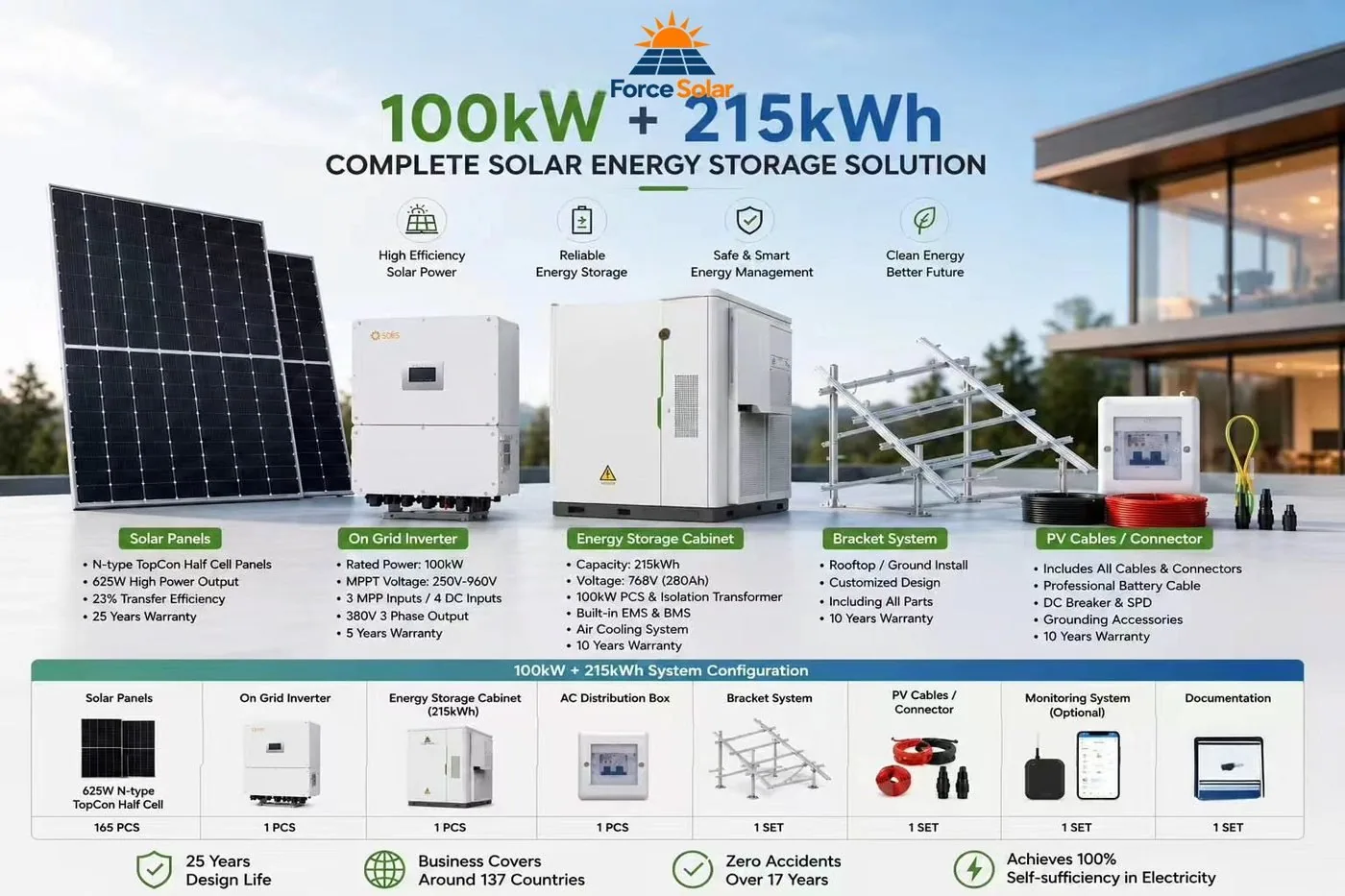
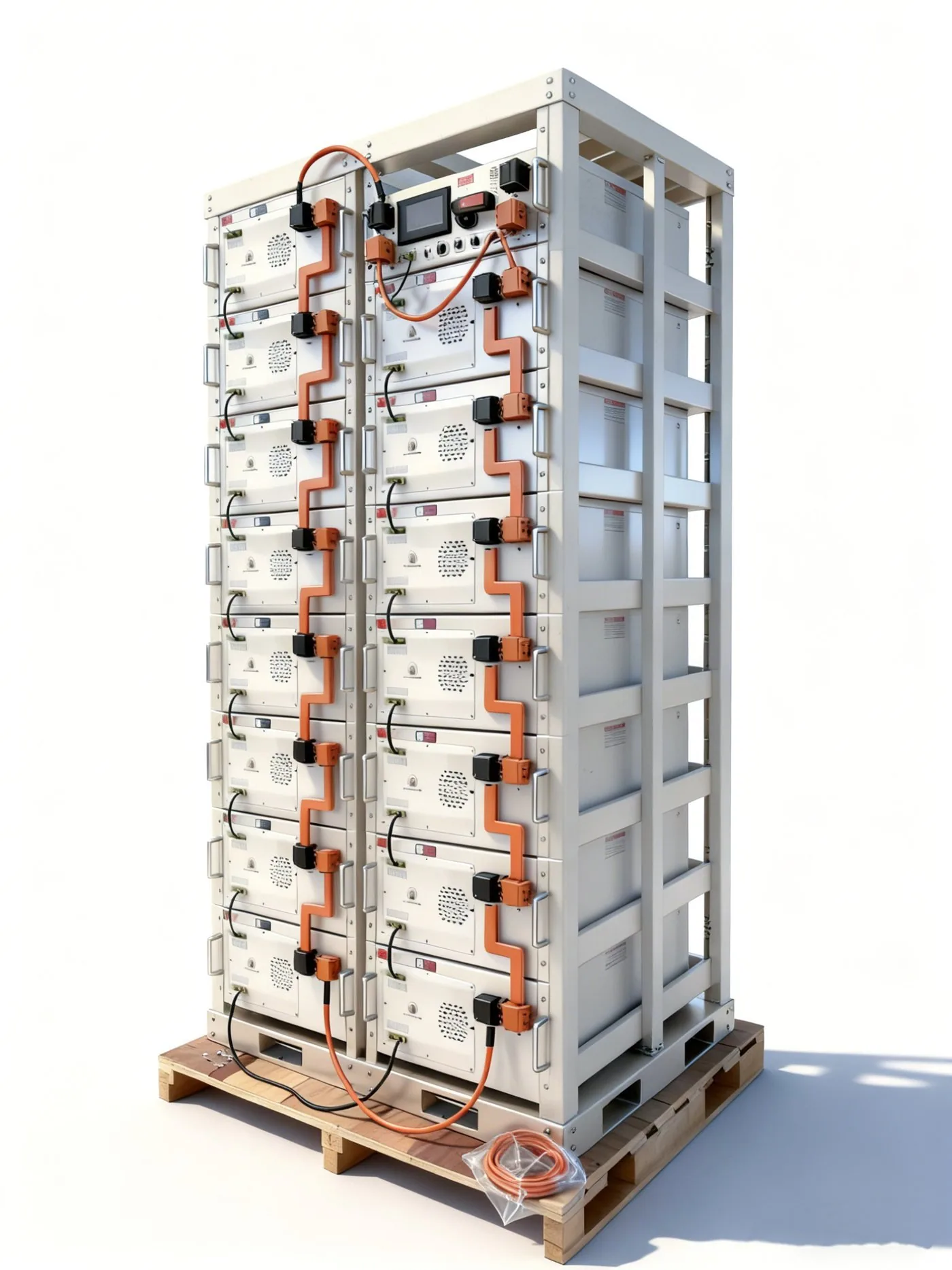
A hybrid solar system built around 100kW of inverter power and 215kWh of LFP storage: solar covers the day, the battery carries the evening peak, and critical loads keep running through an outage. This 100kW hybrid solar system ships as a complete package: solar panels, brackets, LiFePO4 batteries, hybrid inverter with MPPT controller, cables and MC4 connectors. A complete solar energy system includes everything for a solar installation: solar panels, solar brackets, solar batteries, solar inverter with mppt controller, cables, MC4 connector. Best solar energy system: 100KW, DC48V to AC 110V~480V, can be customized according to the needs of users.
Final models and ratings are confirmed in the project bill of materials.
Model
FS-HY-100-215
Type
Hybrid solar system with battery storage
Rated power
100kW / 100kVA
Battery capacity
215kWh LiFePO4
PV input
MPPT inputs, array sized to site
Output
3-phase 400V
Switchover
UPS-grade, no interruption to backed-up circuits
Certificates
CE / IEC 62619 · UN38.3 · MSDS (model-specific)
MOQ
1 set — OEM & ODM accepted
Lead time
15–30 days depending on configuration
Warranty
5–10-y battery · 2-y system integration
WHAT THE SYSTEM INCLUDES
One coordinated scope.
Every proposal names each component and its role in the complete system.
Component
Details
Hybrid inverter
100kW bidirectional, grid-tied and off-grid modes with generator input
LFP battery bank
215kWh of rack modules with BMS and cell-level monitoring
PV array
Modules and mounting sized to the site roof or ground area
Protection & monitoring
Breakers, SPD, grounding and remote generation monitoring
Documentation
Single-line diagram, manuals, certificates and packing list
215kWh carries a 100kW load for about 3.9 hours at half power
Solar by day, battery through the evening peak, generator only for long outages
Single point of after-sales contact for inverter, battery and PV
Factory pre-tested as a complete system before shipment
What a 100kW Hybrid Solar System Can Power
Depending on load profile and location, a 100kW hybrid solar system typically serves:
Where load-shedding is severe, pairing the array with a dedicated 100kW / 215kWh BESS extends night-time autonomy well past a single evening.
A mid-sized manufacturing line or packaging workshop running two shifts
A 60–100 room hotel with laundry, kitchen and pool pumps
A cold-storage room, water-treatment plant or telecom/ISP node
A commercial building with lifts, HVAC and IT loads
What a 100kW hybrid system changes
A grid-tied array stops producing the moment the grid fails. A 100kW hybrid keeps the backed-up circuits alive: the inverter island separates from the utility and the 215kWh bank carries the load. The result is not just a lower bill — it is production that does not stop when the feeder drops.
Hybrid also changes the economics of the evening: energy generated at midday is stored instead of exported, which matters wherever export rates are low or net metering is unavailable.
Sizing a 100kW + 215kWh hybrid
Power (kW) is set by the simultaneous load and motor starting; energy (kWh) is set by how long the critical circuits must run. Send the load list and the outage pattern and we will size both, then check the array can recharge the bank within the available sun hours.
PRICE & PAYBACK
What drives the price and the payback.
Industry-typical figures for budget planning. A firm price follows the confirmed bill of materials and destination.
Cost factor
Typical figure (2026)
Solar modules
$0.28–0.48 per watt FOB, tier-1 supply
Sea freight & landed cost
Typically +20–35% over FOB to West Africa / Southeast Asia ports
Storage share
35–50% of total system cost where batteries are included
Payback
3–5 years against grid power; under 18 months when replacing diesel
Reference figures, not an offer. Tariff structure, demand charges, roof condition and destination change every project. Product photographs show factory kit configurations; final equipment appearance, rating, labelling and packing follow the ordered model.
TECHNICAL FAQ
Product FAQ
These answers describe system selection. Final equipment and compliance depend on the agreed model and destination.
What is the difference between a hybrid and an on-grid system?+
An on-grid system exports to the utility and shuts down during an outage. A hybrid system adds a battery bank and islanding, so backed-up circuits keep running when the grid fails.
Can the generator stay in the design?+
Yes. In many sites the hybrid carries the frequent short outages and the generator remains for the rare long one — fuel and service hours drop sharply.
Can storage be expanded later?+
Usually yes, if the inverter and cabinet space allow it. We confirm the expansion path in the electrical design before ordering.
How long does it take to deliver the 100kW hybrid + 215kWh?
End to end, 4–12 weeks. Requirement definition takes 1–3 days, system design 1–2 weeks, production 1–3 weeks, then every unit completes a 72-hour test before shipping, and shipping and installation take 2–6 weeks depending on the destination.
Is the 100kW hybrid + 215kWh configuration fixed?
No. What is shown on this page is the reference configuration for the model — every system is sized against its own load data before it is quoted.
What testing does the 100kW hybrid + 215kWh go through before shipping?
A 72-hour test. It is the fourth of five steps in our delivery process: requirement definition, system design, production, testing, then shipping and installation.
What is included in the 100kW hybrid + 215kWh price?
Every component named on the quotation, plus factory assembly, the 72-hour test, export packing and the documentation set. Not included: sea freight, import duties and taxes, and site labour. Each quotation lists these on separate lines, so you can compare suppliers on the same basis.
Is installation included with the 100kW hybrid + 215kWh?
Not as on-site labour. Our scope: the equipment as specified, tested before it ships, with the drawings and documentation your contractor works from, plus remote commissioning support and spare parts. Your scope: the base and civil works, crane placement, AC cable runs, the grid-connection cabinet and metering, local permits, and the installation labour. We do not keep installation crews abroad, so site work and its cost are quoted by your own contractor or local EPC.
START A PROJECT
Need a custom configuration?
Send the load profile, grid conditions and destination port — we respond with a sized bill of materials.