
Short answer
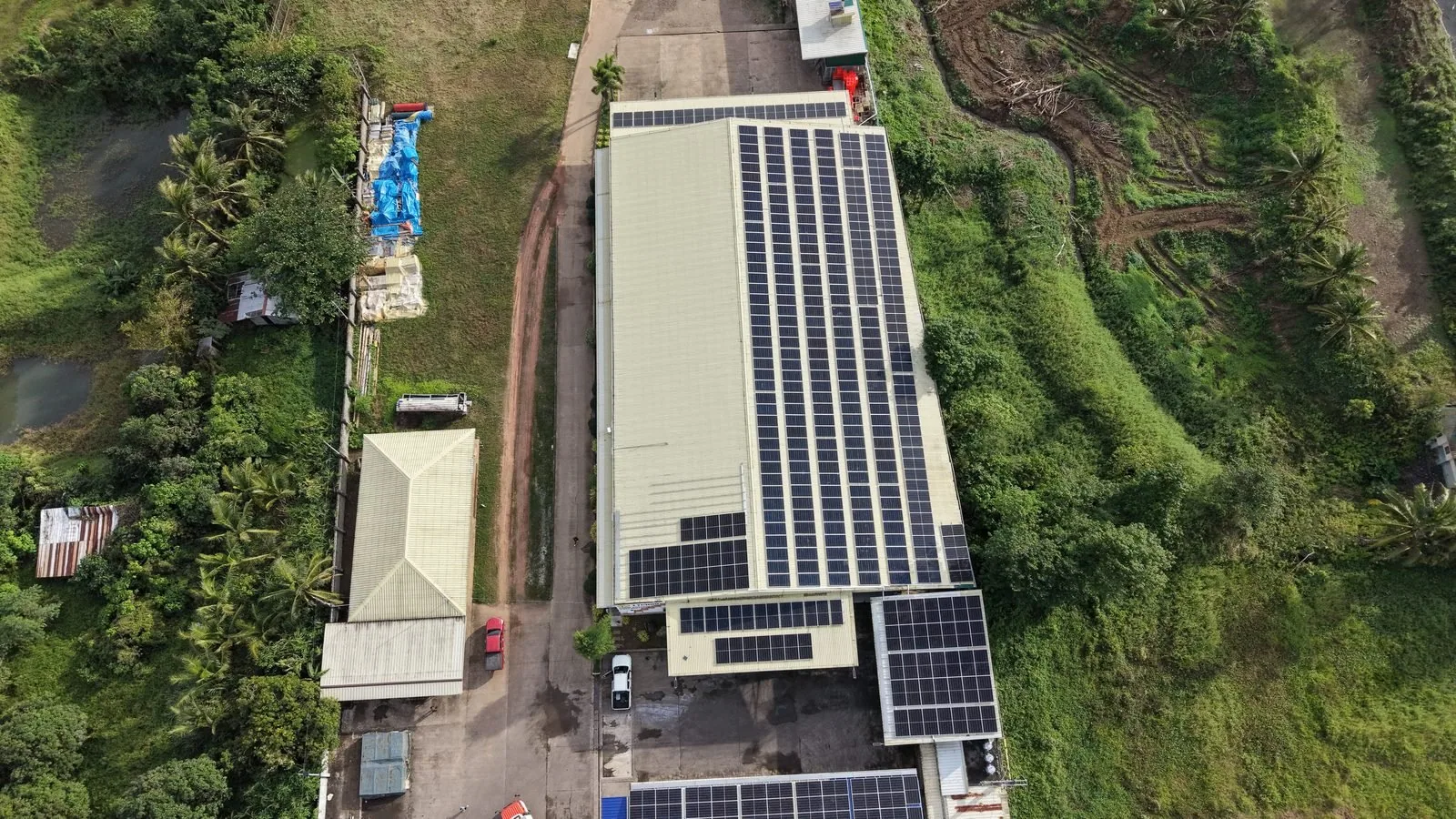
Commercial solar Kenya projects are sized against the daytime load curve and the demand charge, not the roof area. Grid power for Kenyan industry sits around US$0.18–0.23 per kWh with an extra charge per kVA of peak demand, while exported solar is credited at 50% of the units exported — so a system built to export underperforms one built to self-consume. Most factories land on a grid-tied array sized to 70–80% of daytime load, adding storage only where outages stop production or where a night shift can use off-peak tariffs.
Every Kenyan factory we talk to starts with the same two numbers: the tariff on the last bill, and how much roof they have. Only the first one belongs at the start. The second sets a ceiling on what is physically possible, but the load curve — what runs, when, and how much of it is running while the sun is up — sets what is worth installing.
What follows is the sequence we use, with the published figures we design against and the sources they come from. Your own bill overrides all of it.
The four numbers that decide a commercial solar Kenya design
- Your effective tariff per kWh, all surcharges included — not the base rate on the schedule
- Your demand charge exposure in kVA, and how much of the peak the array can remove
- The share of your load that actually runs while the sun is up
- Whether an outage stops production, which decides hybrid or grid-tied
Everything below follows from those four. A commercial solar Kenya project that jumps straight to panel counts has usually guessed at two of them.
What a Kenyan business actually pays per kilowatt-hour
Kenya's industrial tariff has been a competitiveness complaint for years, and the numbers have not improved. A 2026 Kenya Association of Manufacturers report puts industrial electricity at US$0.18–0.23 per kWh, roughly KES 23–30 depending on tariff category. Once fuel cost charges, forex adjustments, levies and VAT are stacked on the base rate, commercial users commonly land in the KES 22–28 per kWh band.
That matters because most solar proposals are modelled against the base rate, and the base rate is not what you pay. Two categories matter most for commercial solar Kenya designs:
| Tariff category | Energy charge | Time-of-use off-peak | Demand charge |
|---|---|---|---|
| SC — small commercial | KES 11.16 / kWh | TOU available at roughly half rate | KES 300 / kVA |
| CI1 — commercial & industrial 1 | KES 13.44 / kWh | KES 6.72 / kWh | KES 300 / kVA |
| CI4 — high-voltage industrial | KES 11.42 / kWh | KES 5.71 / kWh | KES 300 / kVA |
Category rates and demand charges as published for 2025/26 and summarised by SurgePV (updated September 2026); effective all-in band of KES 22–28/kWh from Kenyan solar market reporting in 2026; US$0.18–0.23/kWh industrial range from the 2026 Kenya Association of Manufacturers report. Published figures, not a measurement of your site — check your own bill and the current EPRA schedule.
Two things fall out of that table. First, the demand charge is billed per kVA of your highest draw, so shaving a peak can be worth as much as the energy you displace. Second, the off-peak rate is roughly half the standard rate, which changes the answer for anyone running nights or weekends — solar alone does not help a night shift, but solar plus a favourable TOU position does.
Costs move monthly. In June 2026 EPRA recorded a net decrease of KES 0.2685 per kWh across categories, driven by a fall in the forex adjustment that outweighed a small rise in the fuel charge. Treat any tariff in an article — including this one — as orientation, and design against the invoice.
Net metering in Kenya: the 1 MW ceiling and the 50% export credit
Kenya's Energy (Net-Metering) Regulations, 2024 set the frame every grid-tied design has to live inside, and two clauses do most of the work:
- Capacity: 4 kW for domestic single-phase and 10 kW for three-phase supply; commercial and industrial capacity sits under a 1 MW ceiling with a demand-based limit. Regulation 5 says "less than 1 MW" while regulation 6 uses a 1 MW ceiling — if your design lands exactly on that boundary, get written guidance before you build.
- Export credit: exported energy is credited at 50% of the units exported. Surplus credits carry into the next billing period and are forfeited at the end of the utility's financial year.
That 50% clause is the one that decides the architecture. Exporting 200 kWh does not erase 200 kWh of imports — it creates 100 kWh of credit. So a system designed to push everything it can into the grid is being paid at half rate for the privilege, and any credit it cannot use before year end is gone.
The practical consequence: size for self-consumption. Put the array's output into your own daytime load, treat exports as a bonus rather than the business case, and keep the array within the demand-based limit the utility will actually accept. For a three-shift factory with a flat daytime load, that usually means a larger array than a single-shift site of the same size can justify.
Size against the daytime load curve, not the roof
Roof area answers "how much can physically fit". The load curve answers "how much should". They are different numbers and confusing them is how factories end up with an array that looks impressive in a drawing and modest on a bill.
The inputs we ask for: interval data from the utility meter if it exists, otherwise the simultaneous load during production hours, motor starting currents, shift pattern, and which circuits must survive an outage. Power (kW) comes from the first two. Storage (kWh) comes from the last two. A 300 kW array with no battery and a 150 kW array with four hours of storage solve different problems, and one of them is usually wrong for a given plant.
For sizing the array itself, the useful rule of thumb is 70–80% of daytime load rather than 100%. Pushing to full coverage buys the last kilowatts at the worst rate, because the surplus either gets clipped or exported at half credit.
Hybrid or grid-tied: the decision rule
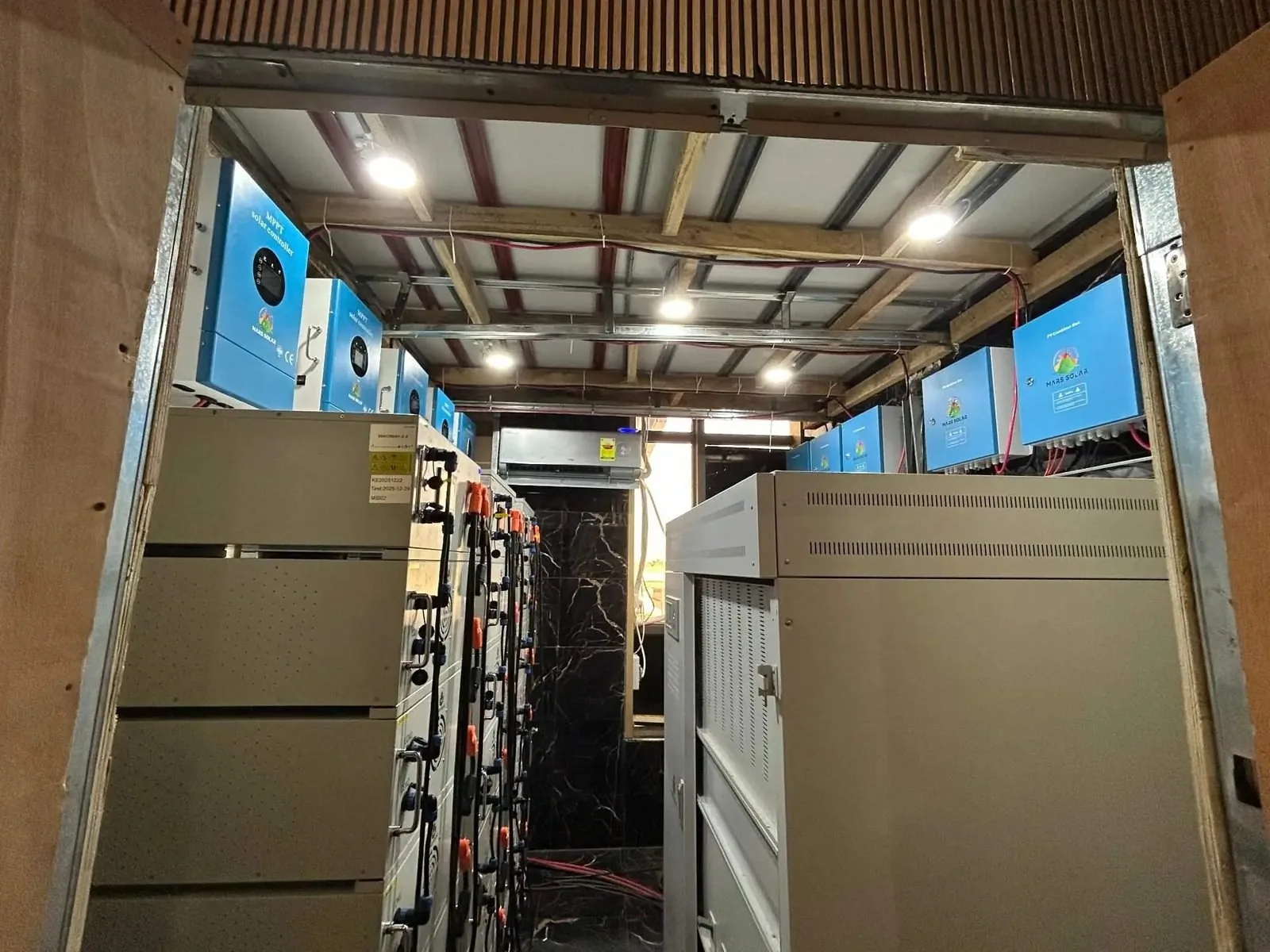
The rule is short, and it is the same one we apply in Nigeria and Ghana. If an outage stops production, you need hybrid with storage. If an outage is an inconvenience, grid-tied is enough and the money is better spent on more array.
Kenya adds a second consideration that pure cost models miss: the time-of-use off-peak rate. A plant running nights at roughly half the standard tariff has less reason to store daytime energy for night use than a plant that shuts at 6 pm. Where storage does pay is the demand charge — a bank that knocks the top off the peak draw is billed twice over, once in energy and once in kVA.
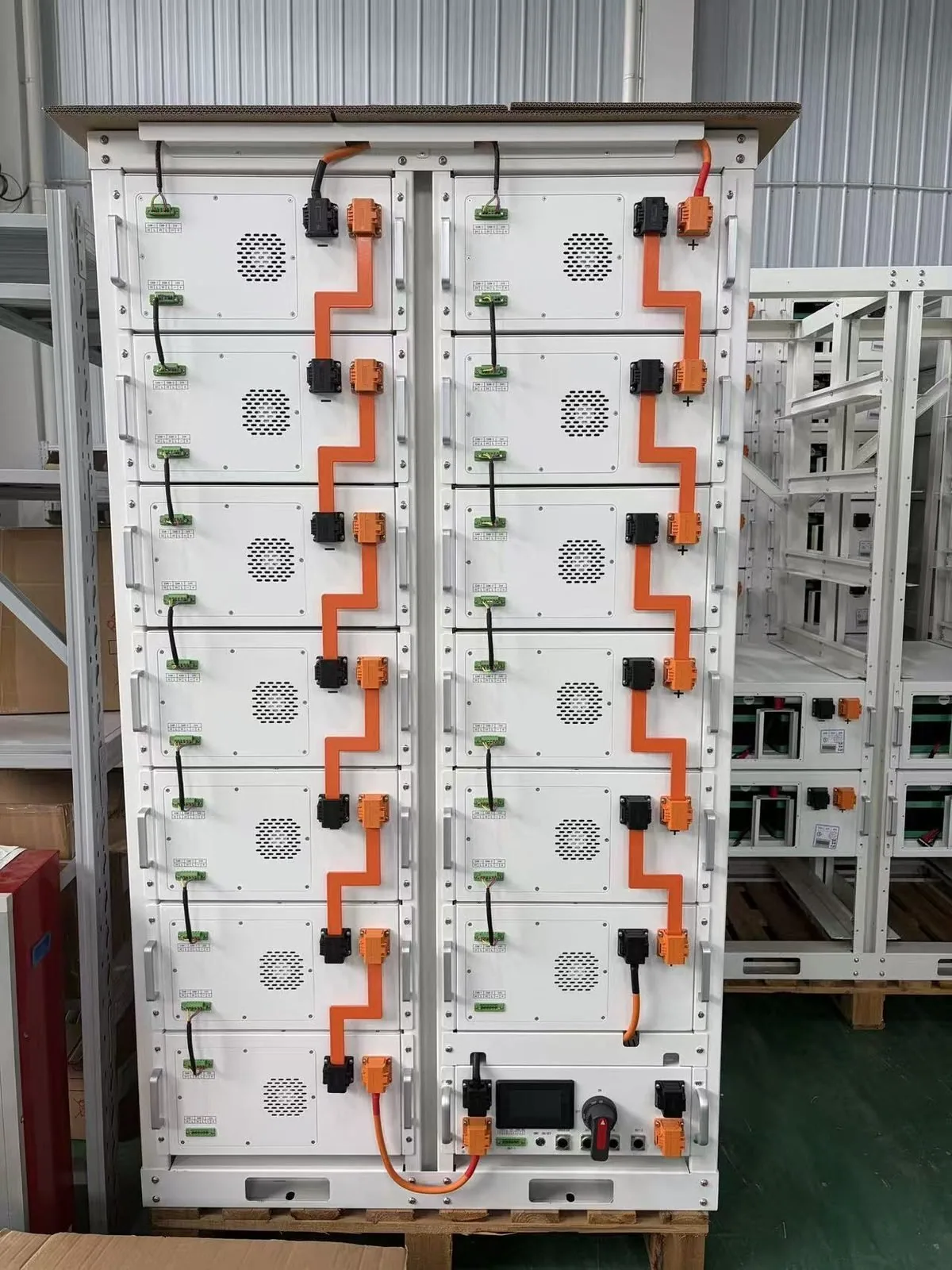
Storage also changes the maintenance conversation. A bank cycling every night is doing far more work than one catching occasional dips, and the warranty terms — cycles, depth of discharge, end-of-life capacity — decide when it gets replaced. Ask for those terms in writing before comparing prices. Our 100KVA 100kW+215kWh BESS and rack battery 50–500 kWh pages show the configurations most C&I sites in this range end up comparing.
The payback arithmetic, written out
Payback is a ratio, not a promise, and it is worth seeing the whole derivation rather than a single number.
Step one, annual production. Daily yield = array kW × peak sun hours × performance ratio. For a 300 kW array at 5.0 peak sun hours and a performance ratio of 0.8, that is 300 × 5.0 × 0.8 = 1,200 kWh per day. Check peak sun hours for your own coordinates rather than borrowing a national average — the difference between 4.5 and 5.5 is 10% of the business case.
Step two, split it. At 80% self-consumption, 960 kWh per day displaces grid purchases and 240 kWh is exported. Under the 50% credit rule the export is worth 120 kWh equivalent.
Step three, monthly value. Over 26 production days: 24,960 kWh displaced plus 3,120 kWh of credited export, 28,080 kWh equivalent. At an effective KES 25 per kWh that is about KES 702,000 per month. Add the demand charge saving separately — if the array removes 200 kVA from the peak, that is 200 × KES 300 = KES 60,000 per month, bringing the modelled benefit to roughly KES 762,000 per month, or about KES 9.1 million a year.
Step four, payback. Years = installed cost ÷ annual benefit, with the benefit indexed to whatever tariff escalation you assume. At KES 27 million installed the model returns about three years; at KES 40 million, about 4.4 years. Both are model outputs, not quotations — the installed cost is the number your own bill of materials produces, and it moves with module price, exchange rate, roof condition and whether storage is included. Market reporting for Kenyan C&I puts median payback for a 500 kW system around 6.4 years at CI1 tariffs, which is a useful sanity check against anything that claims two.
Worked example: assumptions stated in the text, arithmetic shown so it can be recomputed. Peak sun hours are site-specific — verify yours against a solar resource database for your coordinates rather than a national average.
Permits, licences and what changed in 2026
Three separate things have to be true before an export-capable system is legal, and none of them substitutes for another: the person doing the work holds the right licence, the installation is approved for connection, and the export arrangement is in writing.
On licensing, the Energy and Petroleum Regulatory Authority publishes the renewable-energy licensing route, licence registers and the solar PV worker categories (T1, T2 and T3) with their academic and experience requirements. Check the installer's licence and the contracting business separately, and keep the licence number, category and expiry in the project file.
On timing, the net-metering regulations provide for a utility decision within 60 days of application. That is a decision deadline, not an energisation date.
On the 2026 change, the Energy (Electricity Market, Bulk Supply and Open Access) Regulations 2026, gazetted on 13 May 2026, let eligible consumers contract directly with generators — at least 1 MVA on the distribution network or 10 MVA on transmission — and pay a regulated wheeling charge to move the power. EPRA is yet to publish a definitive wheeling charge, so the economics of a direct contract are still an open calculation rather than a settled saving. For most commercial solar Kenya projects under 1 MW this does not change the design, but it does change what "grid tariff" means over a 25-year system life, and it is worth asking your utility where the wheeling charge stands.
Three mistakes that shrink a commercial solar Kenya business case
The failures are rarely technical. They are modelling errors made before anyone ordered equipment, and they all run the same direction — they make the numbers look better than the plant will deliver.
Sizing to the annual bill instead of the load curve
A total kWh figure hides when the energy is used. Commercial solar Kenya designs sized off an annual total routinely overshoot, because the surplus lands at midday when the plant is already covered and gets exported at half credit. Interval data, or at minimum the shift pattern, produces a smaller and more profitable array.
Modelling exports at retail value
Exported units are credited at 50%, and unused credits expire at the utility's financial year end. A commercial solar Kenya model that treats a exported kilowatt-hour as equal to an avoided one will overstate revenue by a wide margin, and the error compounds when the array is oversized.
Buying the battery on price instead of warranty terms
Cycle count, depth of discharge and end-of-life capacity decide when the bank is replaced. Two quotes with the same sticker price can differ by years of service life, and on a commercial solar Kenya project with night production the bank is doing real work every day.
What to send for a real proposal
Four things turn a rough estimate into an engineered scope:
- Twelve months of electricity bills, including demand (kVA) readings and your tariff category
- Interval load data if the meter provides it; otherwise the shift pattern and which circuits must survive an outage
- Roof drawings or dimensions, sheet profile, and photos of the roof condition
- Grid voltage and phase at the site, plus the supply authority and any export arrangement already discussed
With those we can name the architecture — grid-tied, hybrid, or hybrid with a generator kept in the design — and issue a bill of materials you can check line by line. Capacity and model numbers are confirmed after engineering review, not before. Related reading: sizing a factory around diesel and grid hours in Nigeria and solar systems for factories.
Frequently asked questions
How much does a commercial solar Kenya system cost?
It depends on array size, module and inverter specification, roof condition and whether storage is included, so any single figure would be misleading. What is worth knowing is the shape of the cost: modules dominate, inverters and mounting follow, and storage roughly doubles the electrical scope when it is added. Get a line-item bill of materials rather than a price per kilowatt.
Is net metering available for commercial systems in Kenya?
Yes, within the 2024 net-metering regulations: up to a 1 MW ceiling for commercial and industrial customers, with a demand-based limit. Exported energy is credited at 50% of the units exported, and unused credits are forfeited at the end of the utility's financial year.
Do I need a battery for a commercial solar Kenya factory system?
Only if an outage stops production or you are targeting the demand charge. For most commercial solar Kenya installations the grid-tied option is the better first system, A grid-tied array with no storage is the cheaper option for a plant that can tolerate a grid failure, and the money saved usually buys more array.
What is the payback period for a commercial solar Kenya project?
Published modelling for commercial solar Kenya sites puts a 500 kW system at roughly 6.4 years at CI1 tariffs, with faster paybacks where time-of-use off-peak rates are used well. The number that governs your project is installed cost divided by annual benefit, both from your own bill and quotation.
Can I export everything the array produces?
Not profitably. Under the net metering rules a commercial solar Kenya design is credited at half the units exported and credits expire at the utility's financial year end, so a design that exports heavily gives up value compared with one sized for self-consumption.
Which licences matter for the installation?
An EPRA licence for the solar PV work — check the worker category and the contracting business separately — plus the utility's written approval for connection and export. Keep the licence number, category and expiry in the project file.
Does the 2026 open access change affect my project?
Only if your load is at least 1 MVA on the distribution network or 10 MVA on transmission, which is the eligibility threshold for contracting directly with a generator. The wheeling charge that sets the economics of that route has not been published.
How long does approval take?
The net-metering regulations provide for a utility decision within 60 days of application. Licensing, inspection and the interconnection agreement sit outside that window, so plan the schedule around the longest of them rather than the 60 days.
Tariff and regulatory figures are the published ranges cited above, checked October 2026, and are not measurements of your site. Photographs from Force Solar installation records; figures describe the referenced configurations — every system is sized against its own load data.