
What is actually inside a solar power system price.
Five line items explain most of the number. The remainder is project-specific, and knowing which is which is the difference between comparing two quotes and comparing two prices.
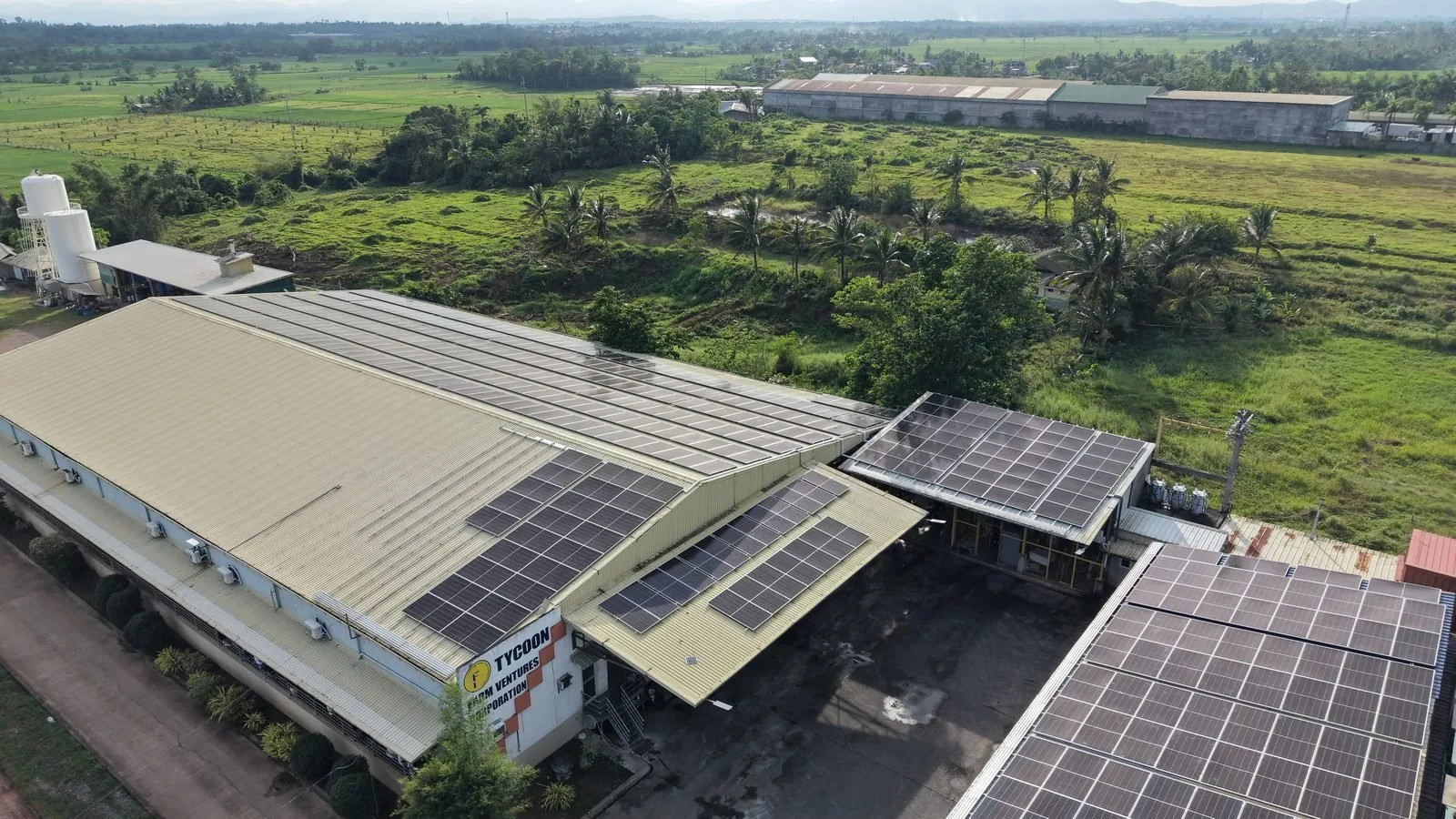
What makes up the cost of a solar power system?
Modules, inverters, batteries, mounting and electrical accessories. On the home and small-business hybrid systems we build, those five explain 91–99% of the price; the remaining 1–9% is custom parts that are priced against the site rather than against a list.
These are equipment prices. Freight, customs duty, local installation, permits and grid connection fees sit outside them, and they are set by your port and your installer — not by us.
The five line items, and what one unit of each costs.
Everything else in this cluster is arithmetic on these five numbers.
| Line item | Unit price | Unit basis | What drives the quantity |
|---|---|---|---|
| PV module | $68–$76 | per 630 W module ($0.108–0.121/W) | Array size you need, rounded up to whole modules |
| Battery pack | $1,300–$1,400 | per 16 kWh pack ($81–88/kWh) | Backup hours times the critical load — not the array size |
| Hybrid inverter, 220–240 V | $450–$600 | per 12 kW unit ($38–50/kW) | Roughly 1.2 times the array rating, in 12 kW blocks |
| Hybrid inverter, US 115/220 V | $1,000–$1,180 | per 12 kW unit ($83–98/kW) | Same rating rule; the dual-output build costs more per kW |
| Mounting | $22–$28 (220–240 V), $22–$31 (US) | per module | Module count, roof or ground type, and wind loading |
| Electrical accessories | Not linear | per system | Falls per module as the system grows — a 96-module system does not need six times the accessories of a 16-module one |
The same five items, on three real configurations.
These three are published prices, not estimates. Every figure is a sum of the unit prices above.
| System | Modules | Inverters | Batteries | Mounting | Accessories | Total |
|---|---|---|---|---|---|---|
| 10kW + 32kWh | $1,088–$1,216 | $450–$600 | $2,600–$2,800 | $350–$450 | $300–$380 | $5,000–$5,600 |
| 30kW + 64kWh | $3,264–$3,648 | $1,350–$1,800 | $5,200–$5,600 | $1,100–$1,300 | $600–$750 | $12,200–$13,800 |
| 60kW + 128kWh | $6,528–$7,296 | $2,700–$3,600 | $10,400–$11,200 | $2,300–$2,500 | $760–$950 | $24,800–$26,800 |
Add the five named columns — modules, inverters, batteries, mounting and accessories — and they account for roughly 92–96% of each published total. The remainder is the project-specific items listed below, which is why a price here is a range rather than a single number. The point of publishing it this way is that you can check the sums instead of taking a total on trust.
The 1–9% that is not on the list.
On published systems the five line items explain most of the price but not all of it. The balance is custom content, and it is priced against your site.
| Item | Why it cannot be a fixed line |
|---|---|
| Cable runs and containment | Depends on the distance between array, inverter and battery room — a drawing question, not a catalogue question |
| Enclosures and protection settings | Set to your switchboard arrangement and local code, not to a standard build |
| Spares and commissioning kit | Scaled to how remote the site is and who will maintain it |
| Packaging for the route | Sea freight, long inland legs and rough roads each change the crating |
If a quote shows you only a total, ask which of the five items it covers and what it assumes for the rest. A quote that itemises is a quote you can audit.
Get the same breakdown for your system.
Send the load and the site conditions and we will return an itemised bill of materials on this structure, with our scope and yours separated in writing.
Request an itemised proposal- Hybrid solar system prices by size — all thirteen configurations
- Solar battery cost per kWh — the single biggest line
- What is not included in a solar quote — freight, duty, installation, permits
- What to send for a quote — the brief checklist
Frequently asked questions
What percentage of a solar system price is the battery?
Between 32% and 56% on the hybrid systems we publish, depending on how much storage the configuration carries relative to its array. It is the largest single line item, which is why backup hours should be a deliberate decision rather than a default.
Why do accessories cost less per module as the system gets bigger?
Because much of it is fixed per system rather than per module — protection settings, enclosures, commissioning kit. A 96-module build does not need six times the accessories of a 16-module build, and our published prices reflect that.
Are these prices for commercial systems?
No. These are our home and small-business hybrid systems, published so the structure of a price is visible. Commercial and three-phase systems are quoted against your load profile and are not priced from this table.
Does a bigger array always cost more?
Per watt it usually costs less, because inverters, accessories and custom parts spread over more modules. In absolute terms it costs more — which is why sizing against the daytime load curve matters more than buying the largest array the roof allows.
Can I compare your itemisation against a local quote?
Yes, and you should. Line up the five items, check the module and battery quantities match, then compare what each side says about freight, installation and permits. Those three usually explain the difference between two totals.
How often do these prices change?
Component prices move with the cell and semiconductor markets, so treat published figures as indicative and ask for the current sheet before you commit. The structure of the price is more stable than the numbers in it.
Ask for the itemised version.
Send your load list and site conditions. You will get the architecture, a sized bill of materials on this structure, and a delivery schedule.
Request an itemised proposal