
What a solar battery actually costs per kilowatt-hour.
The pack price is one number. What it costs you per kilowatt-hour of backup is a different one, and the gap between them is where most solar budgets go wrong.
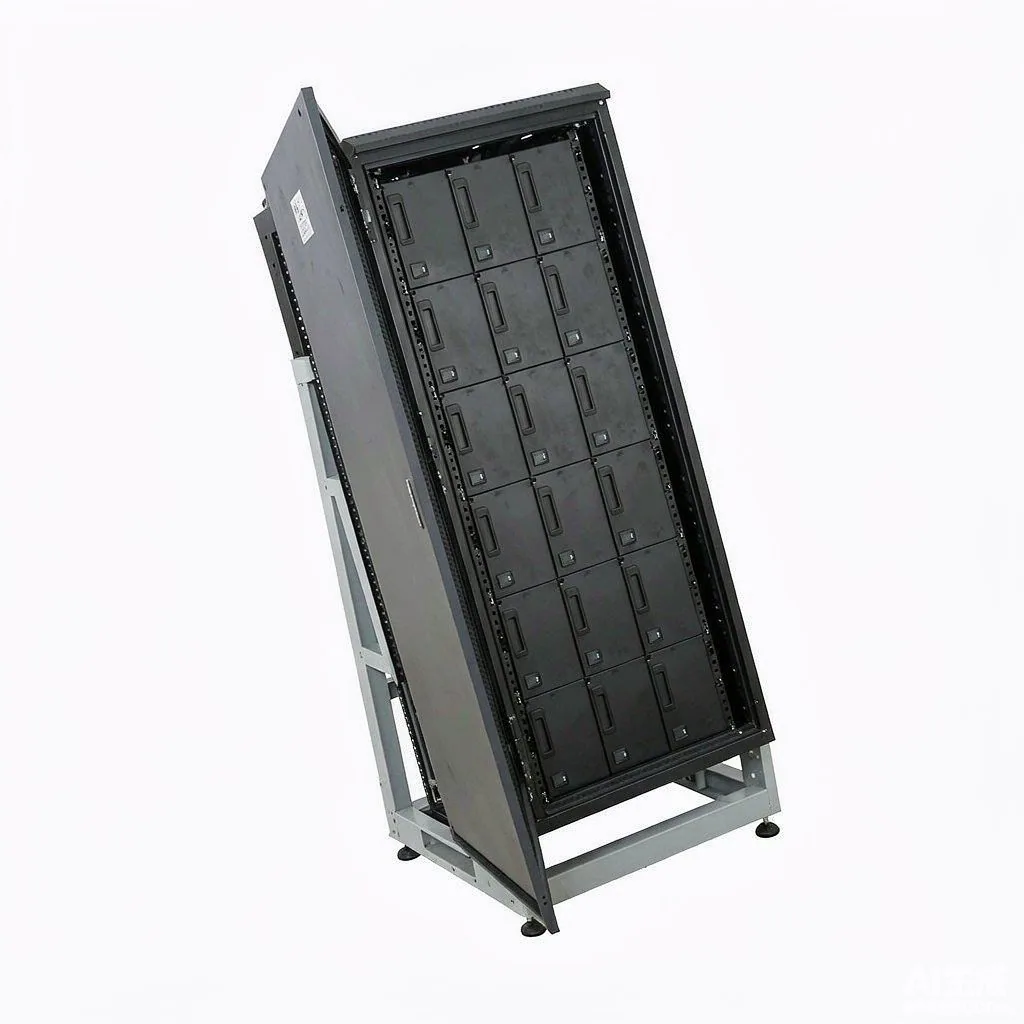
How much does a solar battery cost per kWh?
At pack level, $81–88 per kilowatt-hour: a 16 kWh lithium pack runs $1,300–1,400, and the price scales with the number of packs rather than with the array.
That pack price is not the cost of a kilowatt-hour of backup. Once you add the inverter, the array that charges it, and the custom parts, the battery accounts for 32–56% of a hybrid system’s total price — and how much backup each of those dollars buys depends entirely on which loads you put behind it.
Storage scales in 16 kWh blocks.
The unit price does not improve with quantity on this range, so the decision is purely how many blocks you need.
| Configuration | Usable capacity | Price | Unit cost |
|---|---|---|---|
| 1 pack | 16 kWh | $1,300–$1,400 | $81–88/kWh |
| 2 packs | 32 kWh | $2,600–$2,800 | $81–88/kWh |
| 3 packs | 48 kWh | $3,900–$4,200 | $81–88/kWh |
| 4 packs | 64 kWh | $5,200–$5,600 | $81–88/kWh |
| 5 packs | 80 kWh | $6,500–$7,000 | $81–88/kWh |
| 6 packs | 96 kWh | $7,800–$8,400 | $81–88/kWh |
| 8 packs | 128 kWh | $10,400–$11,200 | $81–88/kWh |
Capacity is nominal. Usable capacity depends on depth of discharge, temperature and the reserve your inverter holds back for surge loads — all of which are engineering questions, not catalogue ones.
What the battery does to a system price.
Same five line items as any system price, with storage doing the heavy lifting.
| System | Storage | Battery price | System total | Battery share |
|---|---|---|---|---|
| 6.5 kW + 16 kWh | 16 kWh | $1,300–$1,400 | $3,150–$3,350 | 39–44% |
| 10 kW + 32 kWh | 32 kWh | $2,600–$2,800 | $5,000–$5,600 | 46–56% |
| 30 kW + 64 kWh | 64 kWh | $5,200–$5,600 | $12,200–$13,800 | 38–46% |
| 36 kW + 64 kWh (US) | 64 kWh | $5,200–$5,600 | $15,000–$16,500 | 32–37% |
| 60 kW + 128 kWh | 128 kWh | $10,400–$11,200 | $24,800–$26,800 | 39–45% |
The share falls as the array grows, because the array and the inverter scale with it. It rises when storage is added without adding array — which is exactly the trade to think about before specifying backup hours.
When the battery earns its place, and when it does not.
| Situation | Recommendation | Reason |
|---|---|---|
| Daytime load, reliable grid, no outage cost | Grid-tied without storage | You are buying backup you will not use |
| Daytime load, grid drops out for hours | Storage sized to the outage window | The battery is displacing generator fuel, which is the most expensive kilowatt-hour on site |
| Evening or overnight load | Storage sized to the evening block | Daytime generation cannot serve it without storage |
| Water pumping in daylight with a tank | Tank before battery | Storing water is usually cheaper than storing the same energy as electricity |
| A few circuits that must never drop | Small pack on a backup board | You are buying hours for a defined load, not for the whole premises |
Size the storage against your loads.
Send the list of circuits that have to stay on and for how long. We will convert that into kilowatt-hours and tell you how many packs it takes.
Request a storage sizing- What is inside the price
- Hybrid system prices by size
- Cold storage sizing — where backup hours are a business decision
Frequently asked questions
What is the cheapest kilowatt-hour of storage?
At pack level the unit price is flat across our range: $81–88/kWh whether you buy one 16 kWh pack or eight. There is no volume discount to chase, so the only question is how many you need.
Is 16 kWh enough for a house?
It depends on which circuits are on the backup board. Lighting, network gear, a fridge and a few sockets is a different problem from running air conditioning and a water pump overnight. Send the load list and the answer is arithmetic.
Does the battery price include the inverter?
No. The pack price is the battery only. The hybrid inverter is a separate line, and on the US-voltage family it is a significant one.
Why does storage cost more than the array at small sizes?
Because a 16 kWh pack is $1,300–1,400 while a 630 W module is $68–76. Per unit of capacity or generation the battery is simply the more expensive half of the system until the array gets large.
Can I add packs later?
Usually yes, if the inverter and the battery management system were specified for it from the start. Say so at the quotation stage — retrofitting a parallel capacity is a different job from installing it on day one.
How long will the battery last?
Cycle life and calendar life both depend on temperature and how deeply the pack is cycled. That is a separate question from price, and it is covered in our note on battery degradation in tropical climates.
Decide the hours, then the packs.
Tell us what has to stay on and for how long. We will size the storage to that and nothing more.
Request a storage sizing