
Short answer
Brazil distributed solar in 2026 is no longer a straightforward bill-offset project. The system operator curtailed an average of 3 GW — about 17.8% of potential generation — through 10 May 2026, the TUSD surcharge on exported energy climbs from 60% of the wire fee this year to 100% by 2029, and import duty on modules is back at 25% with inverters and batteries at 20%. The market is not collapsing — it is repricing risk, and the buyers who model those three variables are the ones still closing credible projects.
Brazil built the largest distributed solar fleet in Latin America almost by accident of good policy, and Brazil distributed solar is now paying the price of that success. Net of good policy. Net metering arrived in 2012, import duty on panels sat at zero, and generation credits offset bills at close to full value. Capacity went from under 1 GW in 2018 to about 40 GW by mid-2025 across roughly 3.7 million systems, with solar representing 99% of distributed generation.
Three of those supports have since changed, and understanding what changed — and what it does to a project — is the whole of Brazil distributed solar diligence in 2026.
Curtailment: 17.8% of potential generation, and now a standing mechanism
The northeast has the best irradiance in the country and the weakest connection to the demand centres, which is the structural problem behind Brazil distributed solar curtailment. The the demand centres. The result is a structurally congested grid that cannot always absorb its own renewable output.
| Measure | Figure | Period |
|---|---|---|
| Average curtailed volume | ~3 GW | To 10 May 2026 |
| Share of potential generation | ~17.8% | To 10 May 2026 |
| ONS projection | 3.11 GW | 2026 |
| ONS projection | 3.50 GW | 2027 |
| ONS projection | 3.65 GW | 2029 |
Curtailment figures as published from ONS and S&P Global Commodity Insights data, checked October 2026. A definitive compensation framework for curtailed distributed generation was not in place as of June 2026 — confirm the current status before committing to a financial projection.
The mechanism is now permanent rather than exceptional for Brazil distributed solar. ANEEL approved an emergency plan for managing energy surpluses in distribution networks in November 2025, giving ONS authority to curtail distributed generators when grid stability requires it. On 7 June 2026 that sequence was activated for the first time. ONS monitors up to seven days ahead, confirms the day before, and sets the volume to be cut — which means any public holiday, mild weekend or low-demand day with peak solar output is a candidate.
The practical consequence for a Brazil distributed solar buyer is that a projection built on uncurtailed generation overstates the return. Curtailment estimates belong in the model, by location, not in a footnote.
The TUSD surcharge: 60% this year, 100% by 2029
Law 14,300/2022 — the Marco Legal da Geração Distribuída — introduced a progressive distribution tariff surcharge on exported energy, phased in through 2029. Systems installed before January 2023 were grandfathered; everything commissioned since is on the ladder.
| Year | Share of TUSD Fio B paid on compensated energy |
|---|---|
| 2026 | 60% |
| 2027 | 75% |
| 2028 | 90% |
| 2029 onwards | Full rate under art. 17 |
Two things follow for Brazil distributed solar. First, self-consumed energy is unaffected — it never enters the compensation calculation, which makes it the most valuable energy on the bill. Second, an export-heavy system is losing value every year on the ladder, so a design that looked marginal in 2023 does not improve with age.
Credits in Brazil distributed solar can offset consumption at the same consumer unit for up to 60 months, and shared generation allows multiple units to share credits from one installation within the same concession area.
Size categories and the storage condition
Brazil splits distributed generation by installed capacity in alternating current. Microgeração is up to 75 kW; minigeração runs from 75 kW to 5 MW for dispatchable sources and up to 3 MW for non-dispatchable ones. Photovoltaic generation qualifies as dispatchable only where it is limited to 3 MW and paired with batteries of at least 20% of the plant's monthly generation capacity — a condition that matters if storage is part of the plan.
Battery storage can itself qualify for net metering up to a 3 MW cap in Brazil distributed solar, administered by ANEEL through Normative Resolution No. 1,000/2021 as amended by Resolution No. 1,059/2023.
Import duty is back, and it is the biggest cost variable
After years of zero rates, Gecex/Camex began reinstating import duties on photovoltaic panels and cells in stages during 2025 and 2026. This is the single most important equipment-cost variable for anyone sourcing into Brazil.
| Equipment | Position |
|---|---|
| PV modules | 25% — previously reinstated after a 0% period |
| Inverters | Rising from 12.6% to 20% under the capital goods realignment |
| Battery storage | Rising from 16% to 20% |
| Modules for plants above 5 MW | 9.6% within quota, under SECEX Ordinance 411 |
| ICMS | 17–25%, varying by state |
Duty figures as published from Gecex/Camex and SECEX decisions, checked October 2026. Tariff schedules are revised repeatedly and quota windows expire — confirm the current rate for your NCM codes and import volume with a licensed customs broker before pricing.
The quota route is worth understanding for Brazil distributed solar if the project is large: SECEX Ordinance 411 set a global quota of US$717.41 million for module imports for plants above 5 MW, with an initial maximum of US$8 million per project, valid from 16 July 2025 to 15 July 2026 at a 9.6% rate. A further global quota of US$403.2 million runs from 16 July 2026 to 15 July 2027. Quotas are allocated in the order import licences are registered, and exhausted quotas mean no further licences regardless of pending applications.
Certification and the resource
Every module SKU sold in Brazil must be INMETRO-registered under Ordinance 140/2022, and for Brazil distributed solar buyers that is a schedule item rather than a formality. Testing 140/2022, with testing at accredited laboratories taking roughly 8 to 14 weeks. Chinese manufacturers with existing registration ship quickly; a new SKU takes about a quarter. That is a schedule item, not a formality.
The resource is not the problem for Brazil distributed solar. Global horizontal irradiance ranges from about 4.8 kWh per square metre per day in the south to 6.2 in the northeast, among the best in the world.
What to model before you buy
Four variables decide Brazil distributed solar returns, in order of how much they move the answer: a location-specific curtailment estimate; the TUSD rung your project lands on and where it climbs to; the import duty for your exact NCM codes and volume, including whether a quota applies; and the self-consumption ratio your load curve actually supports. A proposal that omits any of the four is not a projection, it is an aspiration.
Our scope on Brazilian projects is the equipment and the engineering behind it. Installation and the utility interconnection are carried out by a local contractor, with our engineering support behind them.
Frequently asked questions
How much solar generation is being curtailed in Brazil distributed solar?
An average of about 3 GW through 10 May 2026, roughly 17.8% of potential generation. ONS projects 3.11 GW for 2026, 3.50 GW for 2027 and 3.65 GW for 2029. Location-specific estimates belong in every model.
Is curtailment a one-off event in Brazil distributed solar?
No. ANEEL approved the emergency mechanism in November 2025 and it was first activated on 7 June 2026. ONS holds standing authority to curtail distributed generation, monitoring up to seven days ahead and confirming the volume the day before.
Do I get paid for curtailed energy in Brazil distributed solar?
A definitive compensation framework was not in place as of June 2026. Confirm the current status with legal counsel before committing to a projection that assumes compensation.
What is the TUSD surcharge in Brazil distributed solar?
A progressive distribution tariff charge on exported energy introduced by Law 14,300/2022. Compensated energy pays 60% of the TUSD Fio B in 2026, rising to 75% in 2027, 90% in 2028 and the full rate from 2029. Self-consumed energy is not affected.
What is the difference between microgeração and minigeração?
Microgeração is up to 75 kW of installed capacity in alternating current. Minigeração runs from 75 kW to 5 MW for dispatchable sources and up to 3 MW for non-dispatchable ones. PV counts as dispatchable only when limited to 3 MW and paired with batteries of at least 20% of monthly generation capacity.
How long do credits last in Brazil distributed solar?
Up to 60 months at the same consumer unit. Shared generation allows multiple units to share credits from one installation within the same concession area.
What import duty applies to Brazil distributed solar equipment now?
Modules are back at 25%, with inverters rising from 12.6% to 20% and battery storage from 16% to 20%. Modules for plants above 5 MW can enter at 9.6% within quota. ICMS varies by state from 17% to 25%. Confirm your exact NCM codes and volume with a customs broker.
How does the quota system work for large plants?
SECEX Ordinance 411 set a global quota of US$717.41 million for modules for plants above 5 MW, with an initial maximum of US$8 million per project, at a 9.6% rate. A further US$403.2 million quota runs from July 2026. Licences are allocated in registration order and stop when the quota is exhausted.
What certification is required for Brazil distributed solar equipment?
INMETRO registration under Ordinance 140/2022 for every module SKU, with testing at accredited laboratories taking about 8 to 14 weeks. A new SKU takes roughly a quarter, so build it into the schedule.
What do you supply on Brazil distributed solar projects?
Equipment and engineering: modules, inverters, mounting, storage where the design calls for it, protection and export packing. Installation and the utility interconnection are carried out by a local contractor, with our engineering support behind them.
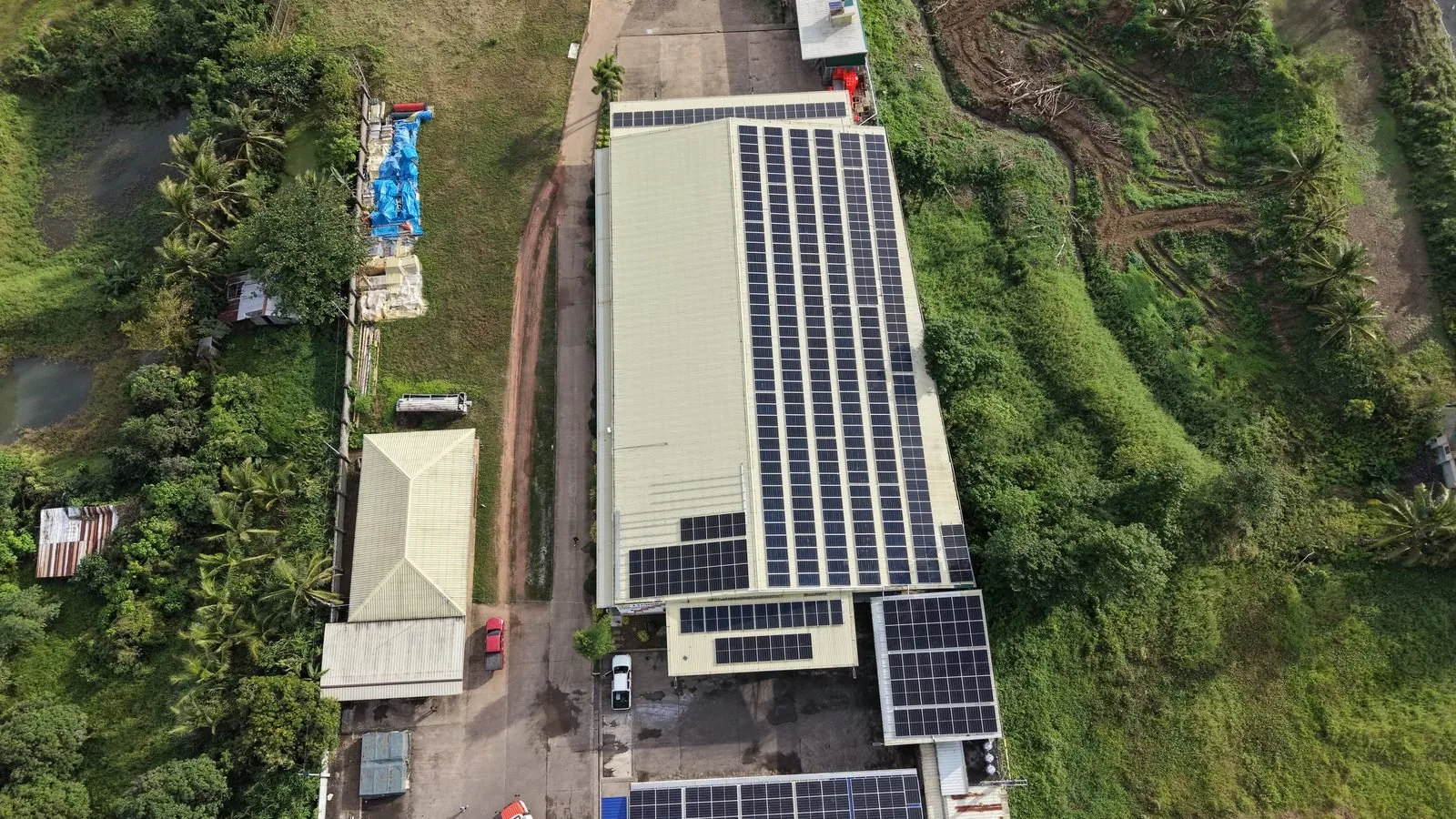
Curtailment, tariff, duty and market figures are the published ranges cited above, checked October 2026, and are not measurements of your site. Photograph from Force Solar installation records. Every system is sized against its own load data.
Sizing a similar system?
Send the load profile, site location and destination — we will respond with the engineering inputs needed for a proposal.
Request a system proposal