Final models and ratings are confirmed in the project bill of materials.
Model
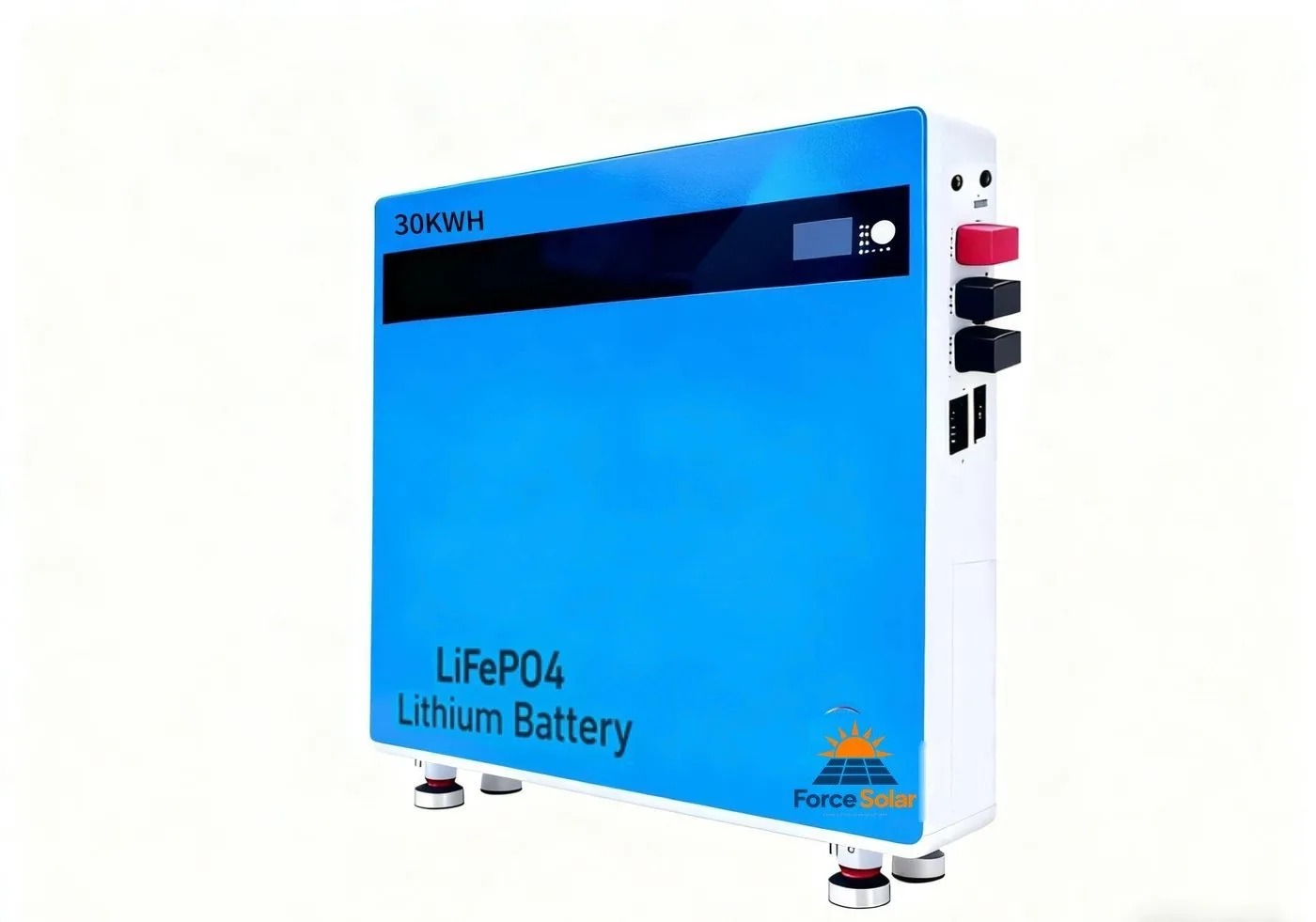
FS-BAT-30
Type
Low-voltage LFP battery bank for solar storage
Nominal energy
30kWh
Depth of discharge
Up to 90–95%
Cycle life
6,000+ cycles @ 80% EOL
Configuration
2 × 15kWh modules or rack equivalent, per project
Installation
Indoor, ventilated
Certificates
CE / IEC 62619 · UN38.3 · MSDS
Warranty
5–10 years, model-specific
WHAT THE SYSTEM INCLUDES
One coordinated scope.
Every proposal names each component and its role in the complete system.
Component
Details
Battery modules + BMS
LFP modules with integrated management and inverter communication
Connection & protection
Cables, breakers and DC protection matched to the hybrid inverter
Monitoring
State-of-charge and alarm visibility through the inverter app
Runs whole-home evening loads including some air conditioning
Sized for overnight autonomy in hybrid home systems
Expandable toward commercial rack storage
PRODUCT GALLERY
Systems in this family.
The home band where 30kWh banks are common.
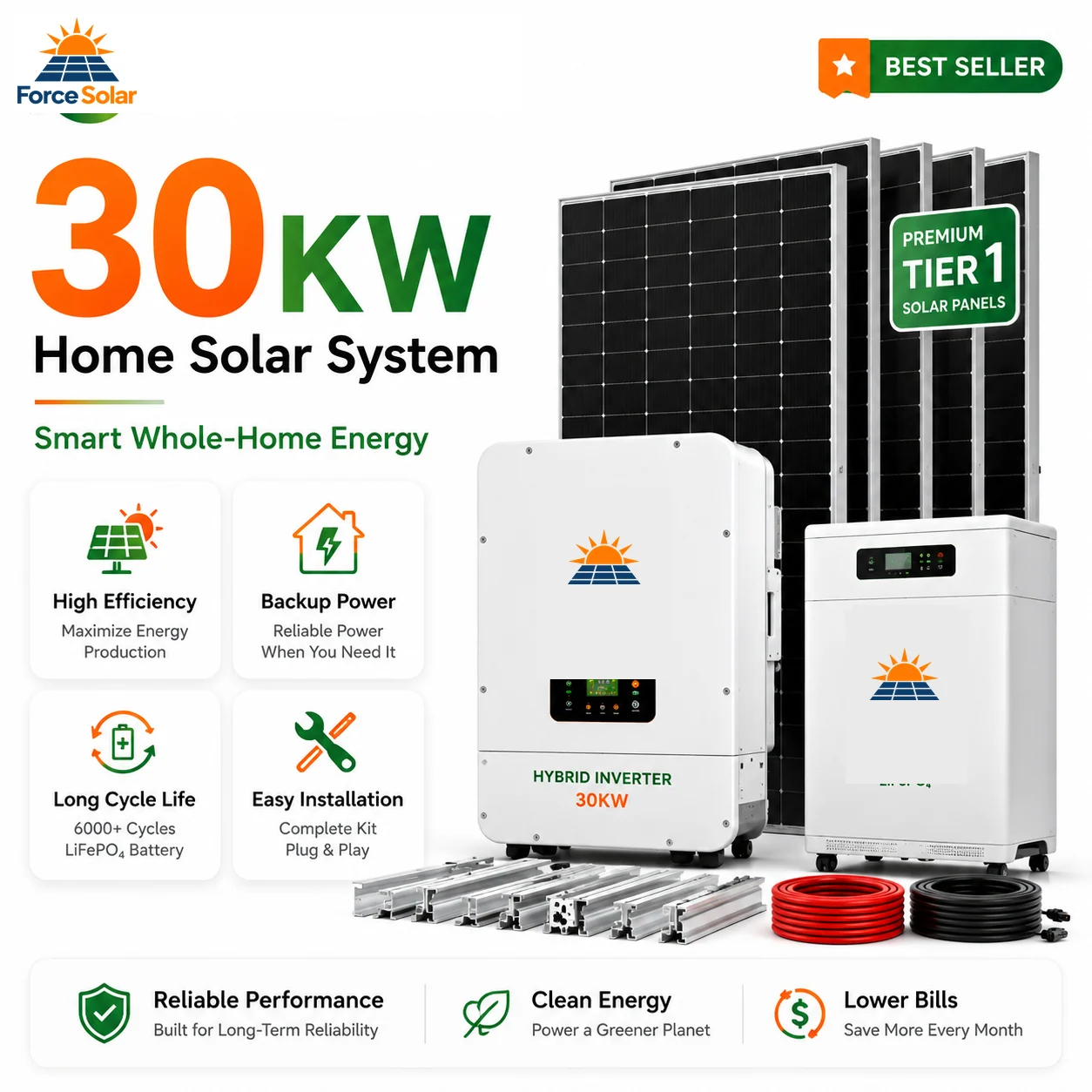
10kW with 30kWh battery30kW system overview
30kWh Battery: Capacity and Chemistry
A 30kWh battery stores enough energy to carry a typical home or small commercial unit through the evening and overnight. Chemistry matters more than the headline number: LiFePO4 delivers more than 6,000 cycles against roughly 1,500 for lead-acid, which is why a 30kWh battery built on LiFePO4 outlasts three lead-acid banks at a lower lifetime cost.
Who a 30kWh battery fits
Larger homes, villas and small commercial sites whose night-time consumption is 20–30kWh, or that want a full night of backup for essential circuits. Above this size, rack-mounted or cabinet storage becomes the better platform.
TECHNICAL FAQ
Product FAQ
These answers describe system selection. Final equipment and compliance depend on the agreed model and destination.
Is 30kWh enough for overnight backup?+
For most homes and villas, yes — check your meter between 6pm and 6am. Businesses should size from the critical load list instead.
Can I start with 15kWh and upgrade?+
Yes, if the inverter and battery family support parallel expansion. State the plan before the first order.
How it is sized
Capacity first, then hardware. Working through these steps in order is what keeps a quotation honest — each one narrows the answer the next one depends on.
Read the meter between 6pm and 6am
The overnight reading is the deciding number. Night-time consumption of 20–30 kWh is the band this model is built for, so everything else in the design follows from that figure.
Businesses size from the critical load list
For a commercial site the method changes: list what has to keep running, not what is installed. A 30 kWh bank sized from a critical load list will usually go further than one sized from a whole-site average.
Decide the expansion path now
The unit is configured as 2 × 15 kWh modules or the rack equivalent, per project. Whether further capacity can be added later depends on the inverter and battery family, so any growth plan belongs in the first conversation rather than the second order.
FIT CHECK
Where this fits — and where it does not
Saying what a product is not for is usually more useful than another list of what it can do.
Situation
Verdict
Larger homes and villas with 20–30 kWh night use
The reference case
Small commercial sites wanting a full night of essential backup
Matches the stated use
Evening demand closer to 10–15 kWh
Step down to the 15 kWh model
Anything above this range
Rack-mounted or cabinet storage becomes the better platform
How long does it take to deliver the 30kWh LFP battery?
End to end, 4–12 weeks. Requirement definition takes 1–3 days, system design 1–2 weeks, production 1–3 weeks, then every unit completes a 72-hour test before shipping, and shipping and installation take 2–6 weeks depending on the destination.
Is the 30kWh LFP battery configuration fixed?
No. What is shown on this page is the reference configuration for the model — every system is sized against its own load data before it is quoted.
What testing does the 30kWh LFP battery go through before shipping?
A 72-hour test. It is the fourth of five steps in our delivery process: requirement definition, system design, production, testing, then shipping and installation.
What is included in the 30kWh LFP battery price?
Every item named on the quotation, together with export packing and the documentation set. Not included: sea freight, import duties and taxes, and site labour. Each quotation lists these on separate lines, so you can compare suppliers on the same basis.
Is installation included with the 30kWh LFP battery?
Not as on-site labour. Our scope: the equipment as specified, tested before it ships, with the drawings and documentation your contractor works from, plus remote commissioning support and spare parts. Your scope: the base and civil works, crane placement, AC cable runs, the grid-connection cabinet and metering, local permits, and the installation labour. We do not keep installation crews abroad, so site work and its cost are quoted by your own contractor or local EPC.
START A PROJECT
Need a custom configuration?
Send the load profile, grid conditions and destination port — we respond with a sized bill of materials.