A pump is sized from water, not from roof area. Four inputs decide the array, the controller and the pump itself.
Solar pump sizing inputs
Input
What it decides
Why it matters
Daily water volume
Pump rating and running hours
The pump has to move the volume within the sun hours available
Total head, including lift and friction
Pump power
Head is the largest single driver of energy per cubic metre
Water source type
Submersible or surface pump
A borehole, a river and an open reservoir are three different pumps
Local solar resource
Array size
Generation has to match the pumping window, including the poor months
Storage: tank or battery
Whether a battery is needed at all
A storage tank often costs less than storing the same water as electricity
Where water can be stored in a tank, that is usually cheaper than storing the equivalent energy in a battery. A battery is justified when pumping has to happen outside sun hours.
THE SHORT ANSWER
What this system is designed to do.
A solar water pump system converts PV power into water flow. Daily water demand and total dynamic head are the key starting inputs; a pump nameplate alone is not enough.
Final equipment, capacity, model availability and local compliance are confirmed against the project brief and destination.
EQUIPMENT SCOPE
Product selection.
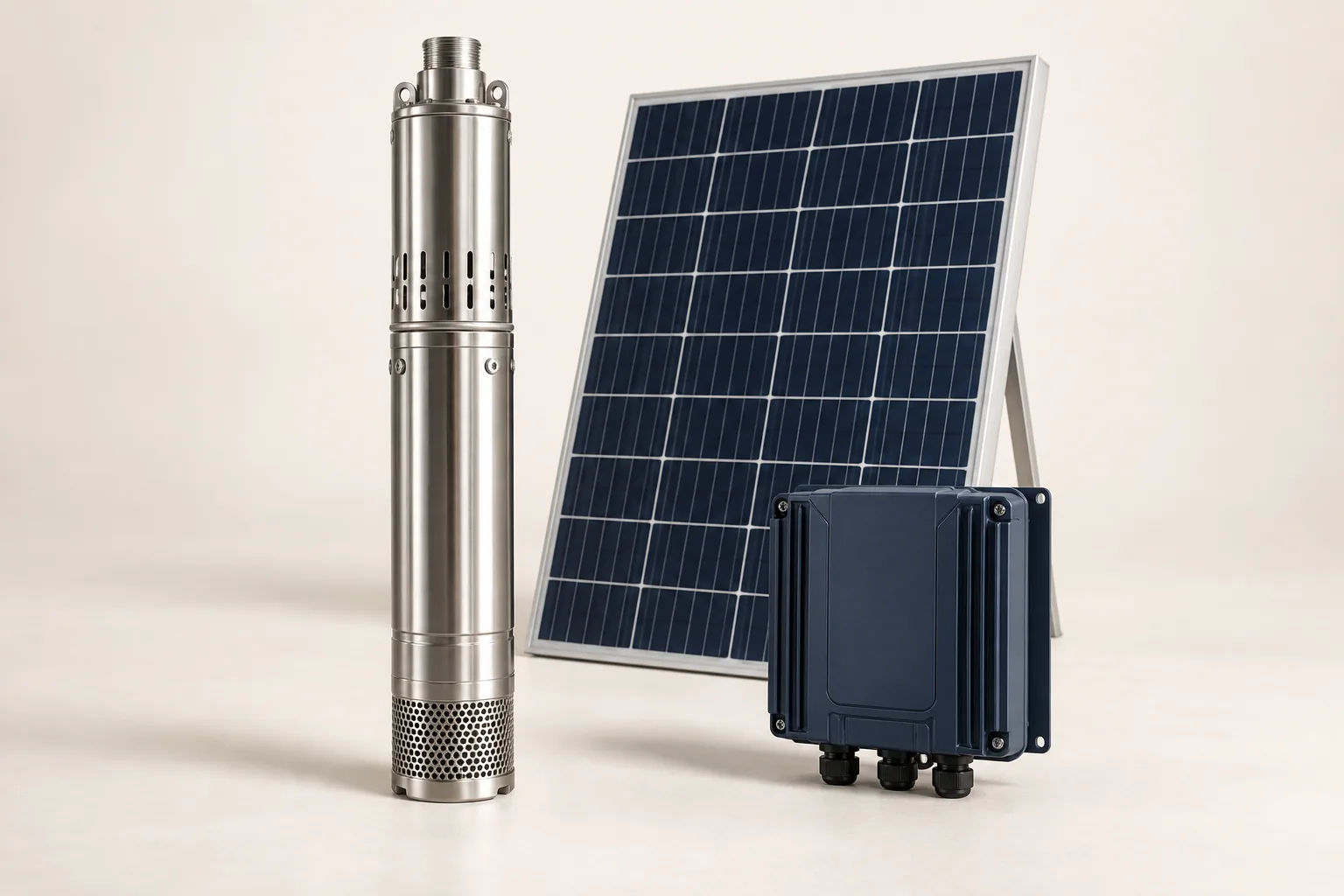
A useful proposal names each component and explains how it fits into the complete system.
Component
Selection basis
PV array
Generation for the local solar resource
Pump controller
Matches PV output to motor operation
Pump
Submersible or surface type selected for water source
Cabling + protection
Specified for the installation environment
ENGINEERING INPUTS
What we need to size it.
Give us the facts you have; the remaining questions can follow in engineering review.
Capacity first, then hardware. Working through these steps in order is what keeps a quotation honest — each one narrows the answer the next one depends on.
Start with water, not electricity
The daily water volume decides everything downstream. Lift, pipe length and the source — well, borehole or open water — convert that volume into the energy the array has to deliver.
Decide when the water is needed
Most daytime pumping systems use water storage instead of electrical storage, which is usually the cheaper answer. If the pumping window has to move outside daylight hours, the design changes and storage starts to matter.
Match the controller to the motor
The pump controller is what reconciles a variable PV output with a motor that wants steady power. Submersible versus surface type follows the water source, and the cable and protection specification follows where it is installed.
FIT CHECK
Where this fits — and where it does not
Saying what a product is not for is usually more useful than another list of what it can do.
How long does it take to deliver the Solar Water Pump System?
End to end, 4–12 weeks. Requirement definition takes 1–3 days, system design 1–2 weeks, production 1–3 weeks, then every unit completes a 72-hour test before shipping, and shipping and installation take 2–6 weeks depending on the destination.
Is the Solar Water Pump System configuration fixed?
No. What is shown on this page is the reference configuration for the model — every system is sized against its own load data before it is quoted.
What testing does the Solar Water Pump System go through before shipping?
A 72-hour test. It is the fourth of five steps in our delivery process: requirement definition, system design, production, testing, then shipping and installation.
What is included in the Solar Water Pump System price?
Every component named on the quotation, plus factory assembly, the 72-hour test, export packing and the documentation set. Not included: sea freight, import duties and taxes, and site labour. Each quotation lists these on separate lines, so you can compare suppliers on the same basis.
Is installation included with the Solar Water Pump System?
Not as on-site labour. Our scope: the equipment as specified, tested before it ships, with the drawings and documentation your contractor works from, plus remote commissioning support and spare parts. Your scope: the base and civil works, crane placement, AC cable runs, the grid-connection cabinet and metering, local permits, and the installation labour. We do not keep installation crews abroad, so site work and its cost are quoted by your own contractor or local EPC.
Do solar pumps need batteries?
Many daytime pumping systems use water storage instead of electrical storage. Night operation may change the design.
What information should I send first?
Share desired flow, total lift, water source, pipe route and site location.
START A PROJECT
Not sure which category fits?
Send the load profile, grid conditions and destination — we will name the architecture and the bill of materials.