
How to calculate your load and your backup hours.
Kilowatts and kilowatt-hours are two different questions. Getting them the wrong way round is the single most common reason a quoted system does not do what the buyer expected.
How do you size a solar and battery system?
List every load that has to run, with its watts, how many you have and how many hours a day it runs. That gives you kilowatts (what the inverter must carry) and kilowatt-hours a day (what the array and battery must supply). Add a surge allowance for anything with a motor, then decide backup hours separately.
Two numbers come out of it and they are not interchangeable: kW sets the inverter, kWh sets the battery. A system with the right kWh and the wrong kW will trip; the right kW and the wrong kWh will run out.
Build the load list.
Start from the nameplate, then correct it. Nameplates are the upper bound, not the operating figure.
| Load | Qty | Running W each | Hours/day | Surge? | kWh/day |
|---|---|---|---|---|---|
| Lighting, LED | 20 | 40 | 10 | No | 8.0 |
| Refrigeration | 2 | 350 | 12 | Yes, compressor | 8.4 |
| Water pump | 1 | 1,100 | 2 | Yes, motor start | 2.2 |
| Network and servers | 1 | 300 | 24 | No | 7.2 |
| Air conditioning | 3 | 1,500 | 6 | Yes, compressor | 27.0 |
| Total | 52.8 |
This is an illustration, not your site. The point is the shape: one line per load, running watts rather than nameplate, and hours that reflect how the place is actually used.
Split it into kilowatts and kilowatt-hours.
They answer different questions and they are sized by different equipment.
| Quantity | How you get it | What it sizes | What happens if it is wrong |
|---|---|---|---|
| Running kW | The loads that run at the same time, added up | Inverter and cable rating | The inverter trips under load |
| Surge kW | The largest motor start, added to everything else running | Inverter surge rating | The system drops the moment a compressor starts |
| kWh per day | Every load × hours, added up | Array size and battery capacity | The system runs out before the day ends |
| Backup kWh | Critical loads × backup hours ÷ inverter efficiency | Battery packs | Backup lasts half as long as expected |
Decide what actually has to stay on.
The cheapest system is the one that powers fewer things. Backing up the whole premises is a choice, not a default.
| Load | On backup? | Why |
|---|---|---|
| Refrigeration and cold rooms | Yes | Product loss is immediate and unrecoverable |
| Network, servers, payment terminals | Yes | Downtime costs transactions directly |
| Security lighting and gates | Yes | Small load, high consequence |
| Production lines | Depends | Restarting a line can cost more than the outage — or less |
| Air conditioning | Usually no | Largest single load in most buildings; removing it can halve the battery |
| Water heating | No | Deferrable by hours without consequence |
Moving air conditioning off the backup board is usually the single largest saving available in a storage specification. Decide it deliberately.
Convert hours into kilowatt-hours.
The arithmetic that turns a decision into a battery count.
| Step | Formula | Worked on stated assumptions |
|---|---|---|
| Critical load | Sum the loads on the backup board | 4.6 kW running, from the list above without air conditioning |
| Backup hours wanted | A business decision | 6 hours overnight |
| Energy needed | kW × hours | 4.6 × 6 = 27.6 kWh |
| Allow for losses | ÷ inverter efficiency | 27.6 ÷ 0.9 = 30.7 kWh |
| Leave a reserve | Do not run a pack to empty | Round up, do not round down |
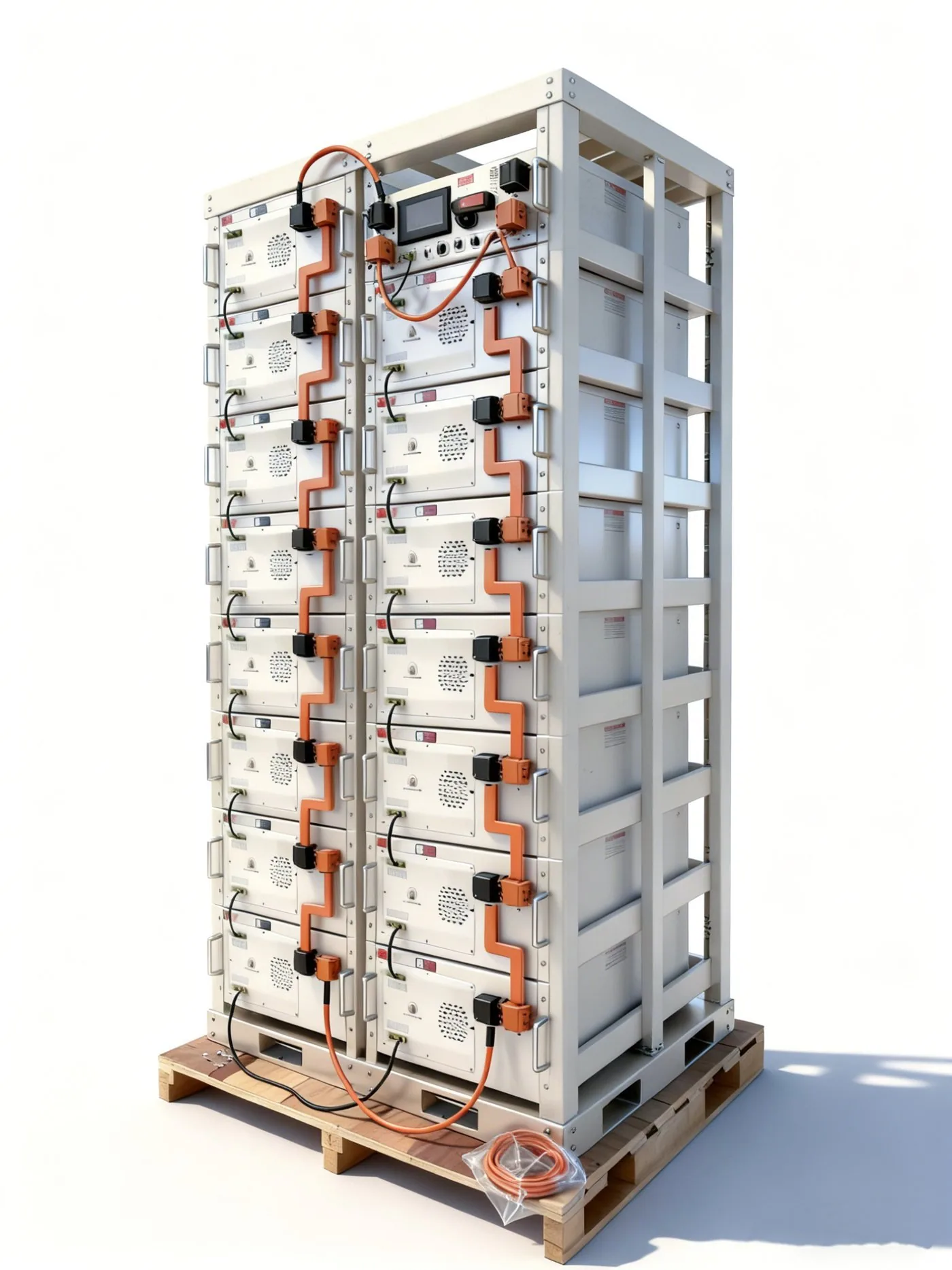
| Packs needed | ÷ 16 kWh per pack | Two packs = 32 kWh, with headroom |
Assumptions used: 0.9 inverter efficiency, no reserve for surge beyond the inverter rating, and nominal rather than usable pack capacity. Change any of them and the pack count changes.
The number people forget: starting current.
A compressor or a submersible pump can draw several times its running current for a second or two. The inverter has to carry it.
| Load type | Surge | What to check |
|---|---|---|
| Resistive — heating, lighting, incandescent | None | Running watts are the whole story |
| Compressor — fridge, freezer, air conditioning | Several times running current | Whether several start together or are staggered |
| Submersible or surface pump | High, on start | Whether a soft start or variable drive is fitted |
| Motor-driven workshop equipment | Moderate to high | Whether two machines can be started at once |
If the largest motor start plus everything else running exceeds the inverter surge rating, the system will drop that motor. That is a specification problem, not a fault.
Send the load list, get the capacity.
A list of loads with running watts and hours is enough for us to size the array, the inverter and the battery — and to tell you what to leave off the backup board.
Request a capacity check- Three-phase solar system prices by size
- What is inside a three-phase system price
- Solar battery cost per kWh — what the packs will cost
- Cold storage sizing — where backup hours are a business decision
- What to send for a quote — the full brief checklist
Frequently asked questions
What is the difference between kW and kWh?
Kilowatts are how much power a load draws at one moment; kilowatt-hours are how much energy it uses over time. The inverter is sized in kilowatts, the battery in kilowatt-hours. A system can have plenty of one and too little of the other.
Can I just use the nameplate rating of each appliance?
Only as an upper bound. Most appliances draw less than nameplate in normal use, which is why a list built entirely from nameplates usually oversizes the system. Where you have a measured figure, use it.
How many hours of backup do I need?
That is a business decision, not a technical one. It comes from how long your typical outage lasts, what it costs you when a particular load stops, and whether the generator is there as a second layer.
Should I back up air conditioning?
Usually not. It is the largest load in most buildings and removing it from the backup board can halve the battery requirement. If comfort is genuinely part of the operation, size it deliberately rather than by default.
What if I do not know the running watts?
Send the appliance model and quantity. For motors, send the nameplate and whether a soft start is fitted — that is usually enough to estimate.
Does the array have to match the battery?
They are sized from different inputs. The array is sized against daily energy demand, the battery against backup hours. A small array with a large battery will not recharge; a large array with a small battery will not last the evening.
Send the list, not the kilowatts.
A load list beats a headline rating every time. Send it and we will come back with the capacity, the configuration and the pack count.
Request a capacity check