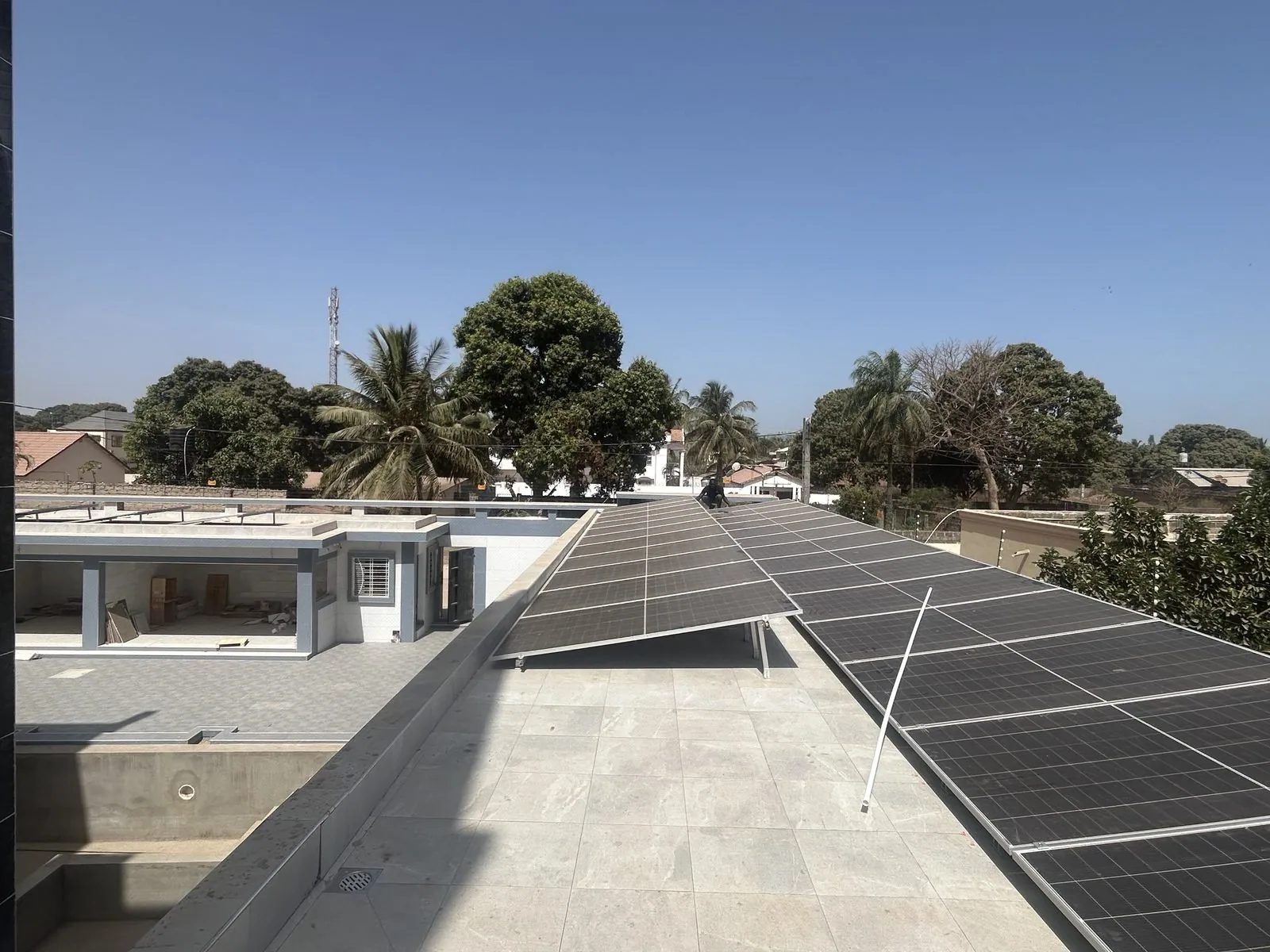
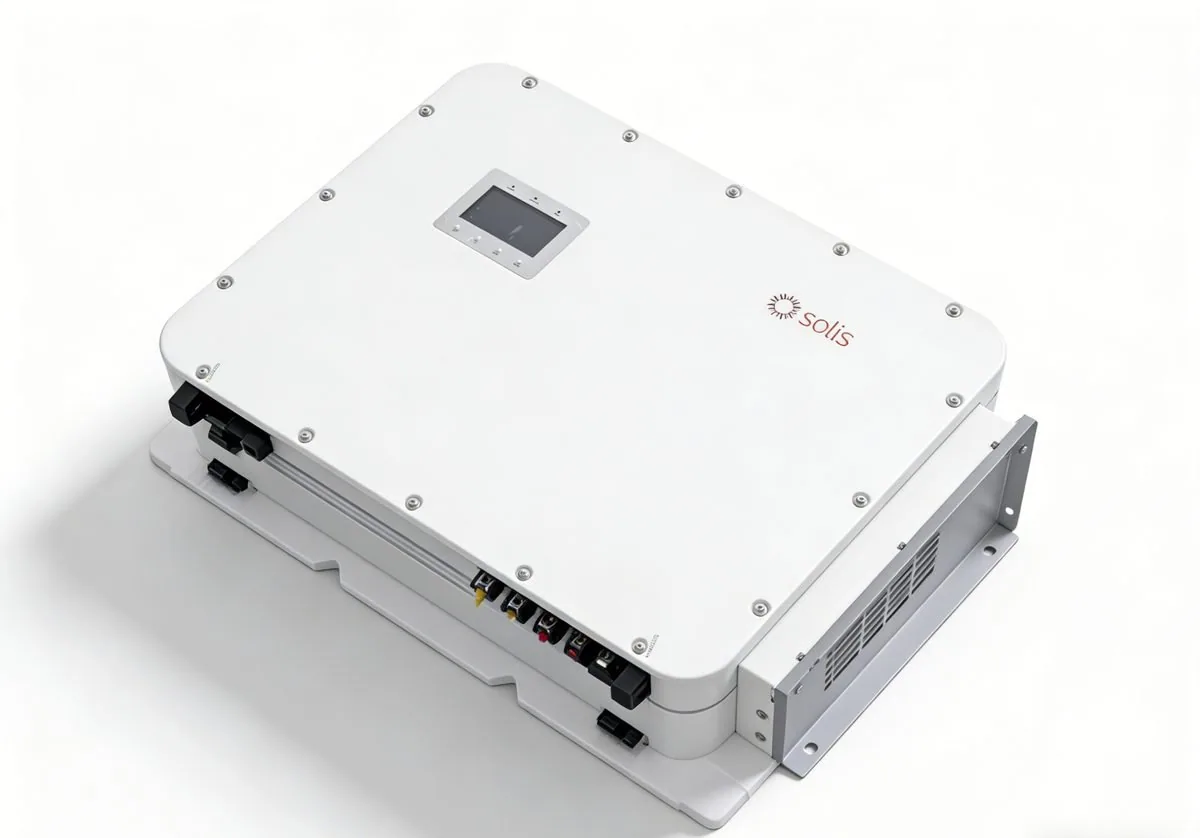
A home solar system starts from the load profile: daytime use, evening demand, roof area and which circuits must survive an outage. PV covers the day; a hybrid inverter and battery carry the evening and the backup list.
Final equipment, capacity, model availability and local compliance are confirmed against the project brief and destination.
EQUIPMENT SCOPE
System scope.
A useful proposal names each component and explains how it fits into the complete system.
Component
Selection basis
Solar panels
Module layout to suit usable roof area
Hybrid inverter
Coordinates PV, battery, grid and backup circuits
Battery, when needed
15–30kWh LFP matched to evening use and backup hours
Balance of system
Mounting, protection, cabling and monitoring
PRODUCT GALLERY
Systems in this family.
Home systems from 6.2kW to 30kW, drawn at their usual storage sizes.
10kW home solar system6.2kW with 15kWh battery10kW with 30kWh battery
SIZING EXAMPLES
Explore reference capacities.
These combinations follow the supplied product range and are starting points for a load-based proposal.
REFERENCE CONFIGURATION10 kW + 15 kWhHome solar and storage starter configurationREFERENCE CONFIGURATION12 kW + 30 kWhLarger household backup and evening useREFERENCE CONFIGURATION20 kW + 45 kWhHigh-load home or small facility reference
Images show product concepts or representative equipment. Exact models, usable capacity, chemistry, ratings, certification and warranty are confirmed in the project bill of materials.
ENGINEERING INPUTS
What we need to size it.
Give us the facts you have; the remaining questions can follow in engineering review.
These answers describe system selection. Final equipment and compliance depend on the agreed model and destination.
Is a battery required for home solar?+
Not for a standard on-grid system. A battery is required if storage or planned backup is part of the brief.
What size does a typical home need?+
Most export residential projects land between 5kW and 20kW of PV with 15–30kWh of storage — but size from bills, not averages.
How it is sized
Capacity first, then hardware. Working through these steps in order is what keeps a quotation honest — each one narrows the answer the next one depends on.
Start with the bills and the appliance list
Recent electricity bills and an appliance list give both the total consumption and the shape of the day. Available roof area and orientation then decide how much of that can be met directly by solar.
Decide whether backup is part of the brief
A standard grid-tied system does not require a battery. It becomes necessary only if backup, or shifting energy into the evening, is something the household actually wants — which is why it belongs in the first conversation rather than a later retrofit.
Match storage to evening use
Where storage is wanted, 15–30 kWh of LFP is matched to evening consumption and the required number of backup hours. Size from the night-time reading rather than from the size of the house.
FIT CHECK
Where this fits — and where it does not
Saying what a product is not for is usually more useful than another list of what it can do.
Situation
Verdict
Households wanting lower bills from daytime self-consumption
PV alone answers this
Homes that want power through an outage
A battery becomes necessary
Evening-heavy household consumption
15–30 kWh LFP is the stated range
Whole-house air conditioning overnight
Often above this range — check the night reading
Little or no usable roof area
Array size becomes the limiting factor
CAPACITY LADDER
Pick a capacity.
Six packages cover homes from a few critical circuits to a large villa. The package name is the inverter rating; the array column is the PV in kWp — the two numbers are not the same thing.
Prices are FOB the factory and cover equipment only — freight, duty, installation and grid-connection fees are destination items. Component prices move, so treat every figure as ±5% until quoted. Voltage, frequency (50/60 Hz) and phase are confirmed against the destination before production. The full table, including per-watt figures and how the derived rows were computed, is in the home hybrid system price guide.
THREE DIFFERENT QUESTIONS
Daytime use, night use and outages are sized separately.
Daytime use is answered by the array. PV runs the house while the sun is up; anything left over charges the battery or, where the utility allows it, is exported. Sizing starts from the daytime reading on the bill.
Night-time use is answered by the battery. The 15–30 kWh range on this page exists because evening consumption in a home is usually lighting, refrigeration, network and a few motors — not the whole house.
Outage backup is answered by the critical-load list, not by the size of the house. A hybrid inverter carries the circuits on the backup board through an outage; a grid-tied-only system shuts down with the grid. Where the grid is unreliable, the hybrid decision is made at the start — see on-grid or hybrid where the grid is unreliable.
BACKUP HOURS, WORKED OUT
What 16 kWh of battery actually means overnight.
Same arithmetic as the backup runtime calculator: energy needed = load × hours ÷ 90% inverter efficiency, then round up to whole 16 kWh packs. The load figures are the sums from the load list example.
Critical load
Made of
8 h needs
16 kWh packs
1.8 kW
Lights + network + refrigeration
16.0 kWh
1 pack (16 kWh)
2.9 kW
The above + a water pump
25.8 kWh
2 packs (32 kWh)
7.4 kW
The above + three air conditioners
65.8 kWh
5 packs (80 kWh)
These exclude surge headroom, temperature derating and depth-of-discharge reserve — the same exclusions the calculator prints. Air conditioning is the line that changes the answer; check the night-time reading before counting it in.
QUOTE SCOPE
What a quotation includes — and what it does not.
The FOB price covers the PV modules, hybrid inverter, LFP battery, mounting and standard accessories, and the 72-hour factory test every unit completes before shipping. Freight, import duty, installation and the grid-connection process are destination items — they are excluded from the figure and are listed separately in the proposal.
Before quoting we ask for the electricity bill and an appliance list: what to send for a solar quote is the checklist, and what is not included covers the items buyers most often assume are inside the price.
How long does it take to deliver the Solar System for House?
End to end, 4–12 weeks. Requirement definition takes 1–3 days, system design 1–2 weeks, production 1–3 weeks, then every unit completes a 72-hour test before shipping, and shipping and installation take 2–6 weeks depending on the destination.
Is the Solar System for House configuration fixed?
No. What is shown on this page is the reference configuration for the model — every system is sized against its own load data before it is quoted.
What testing does the Solar System for House go through before shipping?
A 72-hour test. It is the fourth of five steps in our delivery process: requirement definition, system design, production, testing, then shipping and installation.
What is included in the Solar System for House price?
Every component named on the quotation, plus factory assembly, the 72-hour test, export packing and the documentation set. Not included: sea freight, import duties and taxes, and site labour. Each quotation lists these on separate lines, so you can compare suppliers on the same basis.
Is installation included with the Solar System for House?
Not as on-site labour. Our scope: the equipment as specified, tested before it ships, with the drawings and documentation your contractor works from, plus remote commissioning support and spare parts. Your scope: the base and civil works, crane placement, AC cable runs, the grid-connection cabinet and metering, local permits, and the installation labour. We do not keep installation crews abroad, so site work and its cost are quoted by your own contractor or local EPC.
Does the Solar System for House work during a power outage?
Only the circuits on the backup board. A hybrid inverter with a battery carries the critical-load list through an outage; a grid-tied-only system shuts down when the grid fails. Whether backup is part of the brief is decided at the start, because it changes the inverter.
What is included in the package price?
Equipment, FOB the factory: PV modules, hybrid inverter, LFP battery, mounting and standard accessories. Freight, duty, installation and grid-connection fees are not included — they are destination items and are listed separately in the proposal.
How do I choose between 6.5, 10 and 30 kW?
From the bill, not from the size of the house. The daytime reading sets the array, the evening reading sets the battery, and the outage list sets the inverter size. The ladder table above shows the six packages; send the bill and we will point at one of them.
START A PROJECT
Ready to design your solar power system?
Share the site load, location and required backup time. We will define the information needed for a useful proposal.