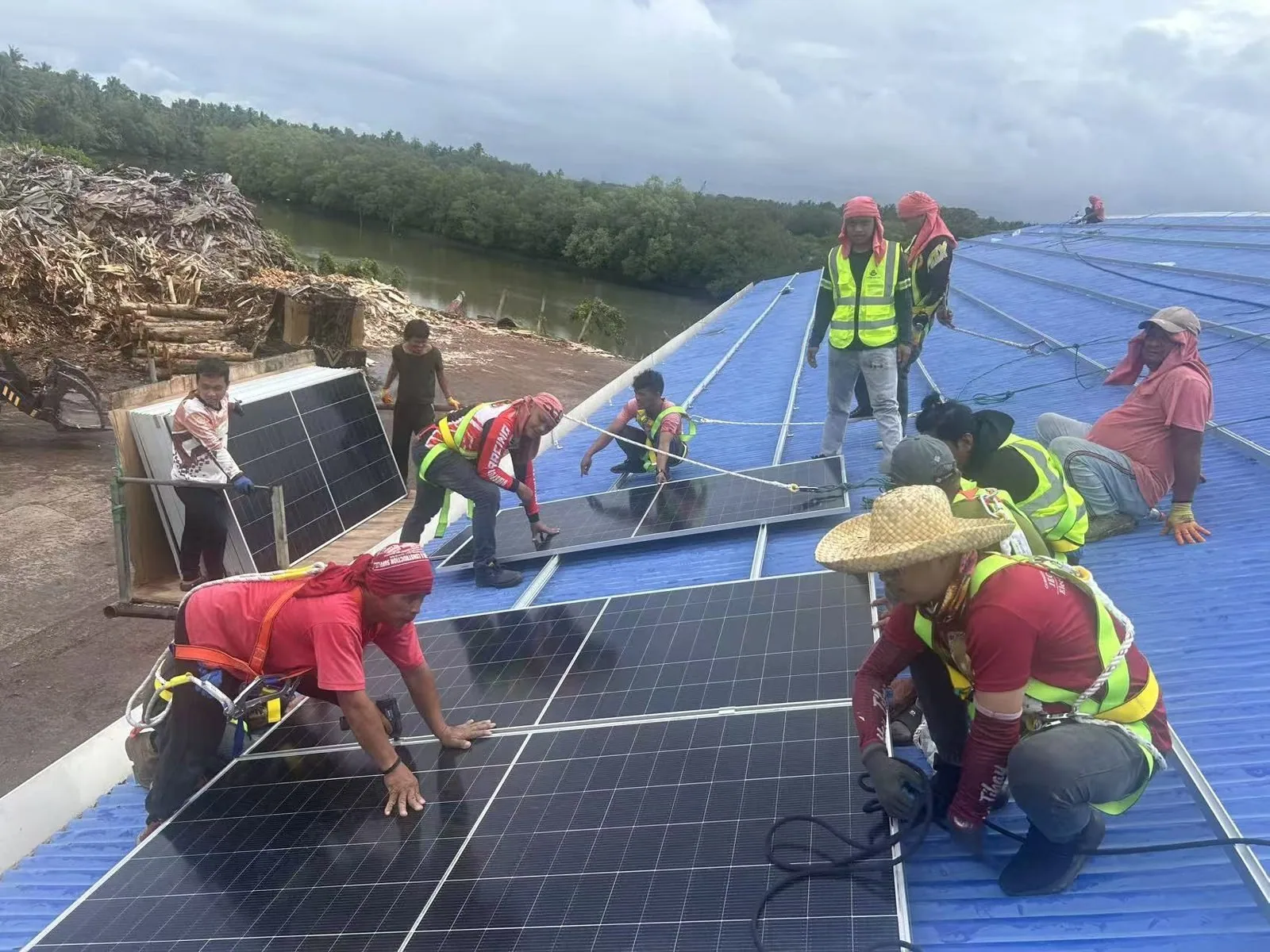
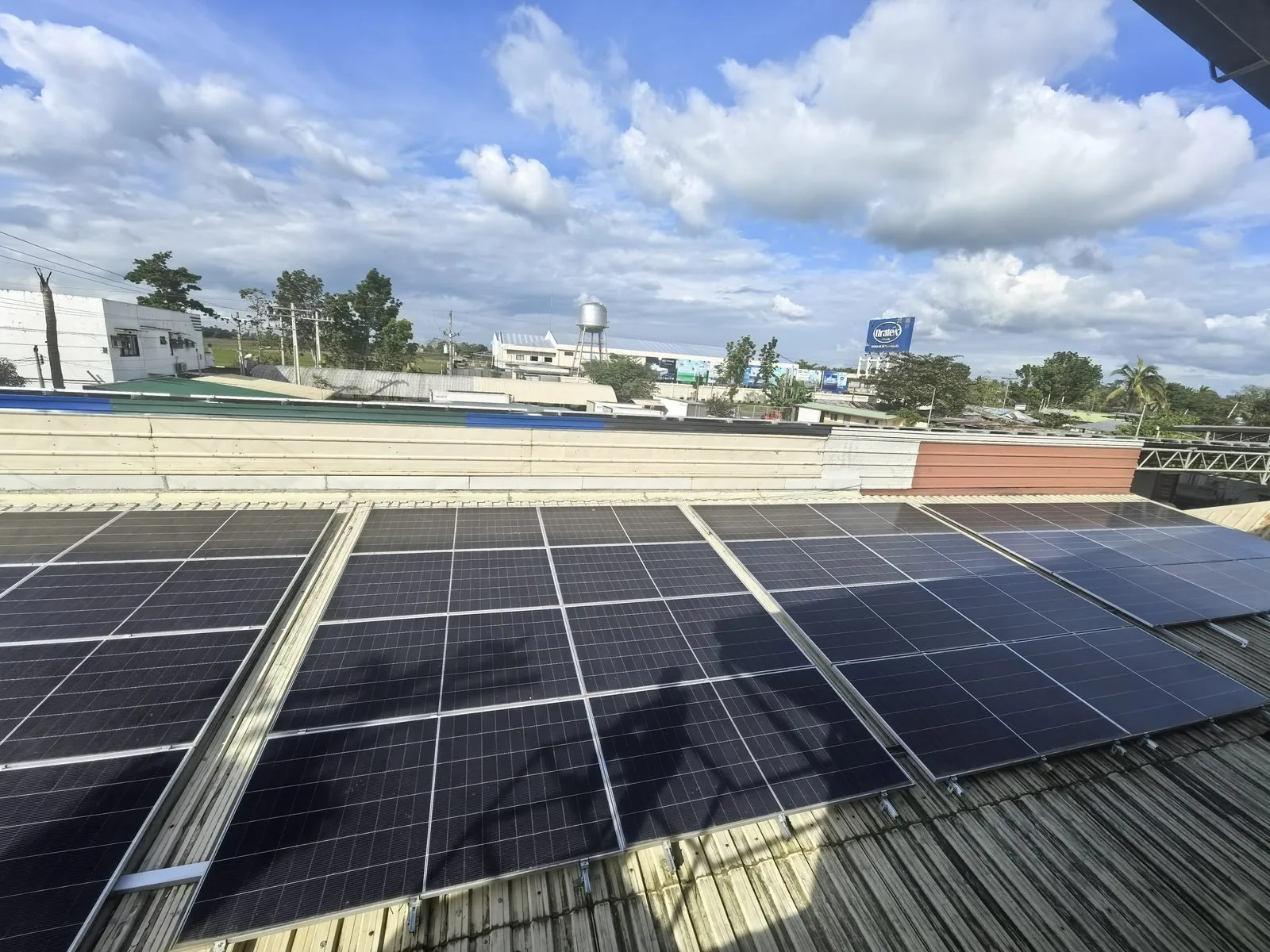
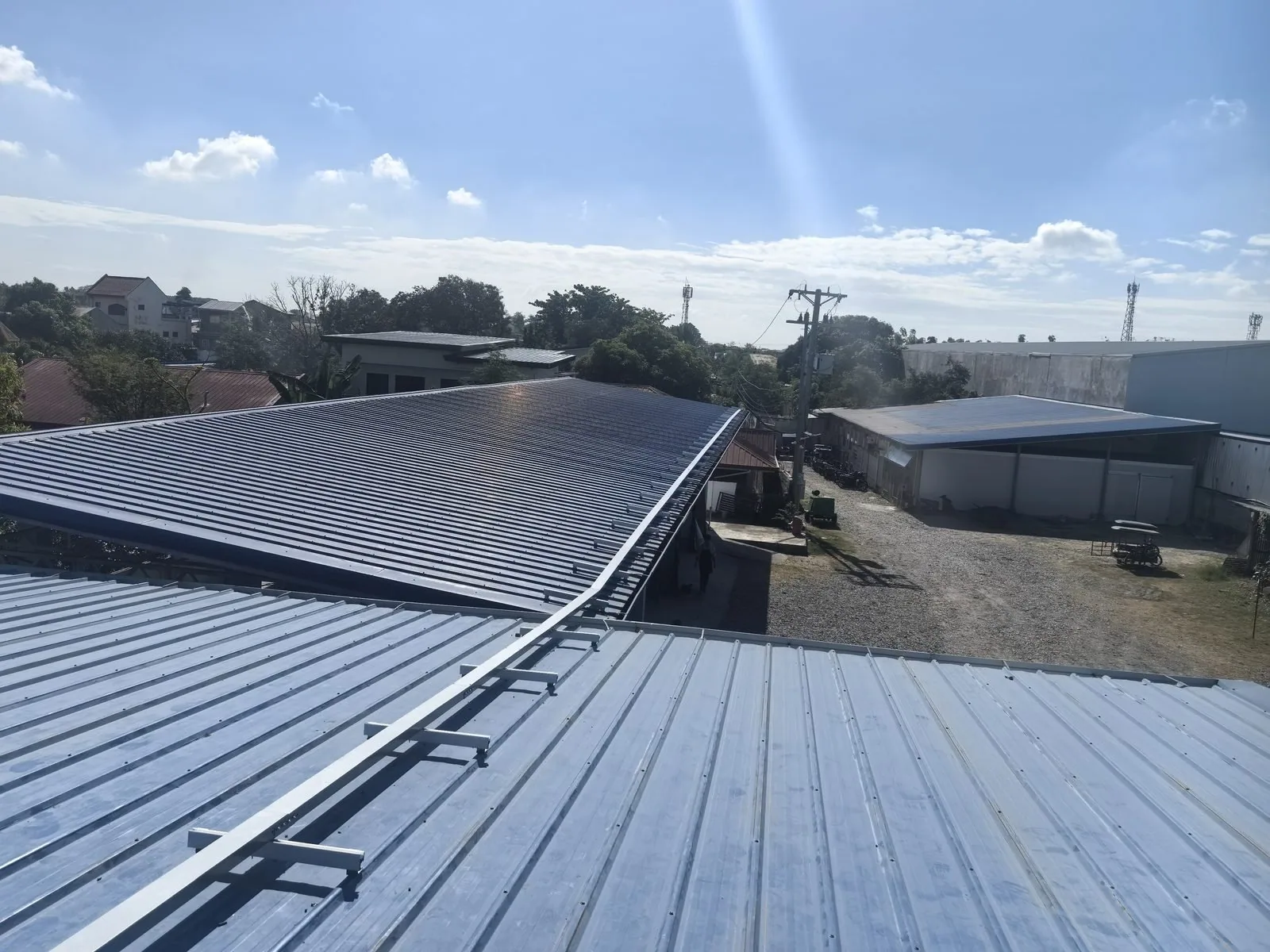
The customer operates a manufacturing facility in Butuan City running three shifts, with the heaviest consumption during daylight hours. Grid electricity in the region carries a tariff that made self-generation the obvious first lever.
The metal factory roof offered a large, unshaded area — but only part of it was safely walkable, and the structure had to be verified before any array layout was committed.
The challenge
High daytime tariff, a large but ageing metal roof, and a production schedule that allowed no installation downtime.
The Solution
An on-grid architecture was selected: PV feeds the factory load directly, the grid remains the balancing source, and no battery cost was added to the first phase. The inverter specification stays hybrid-ready so storage can be added later.
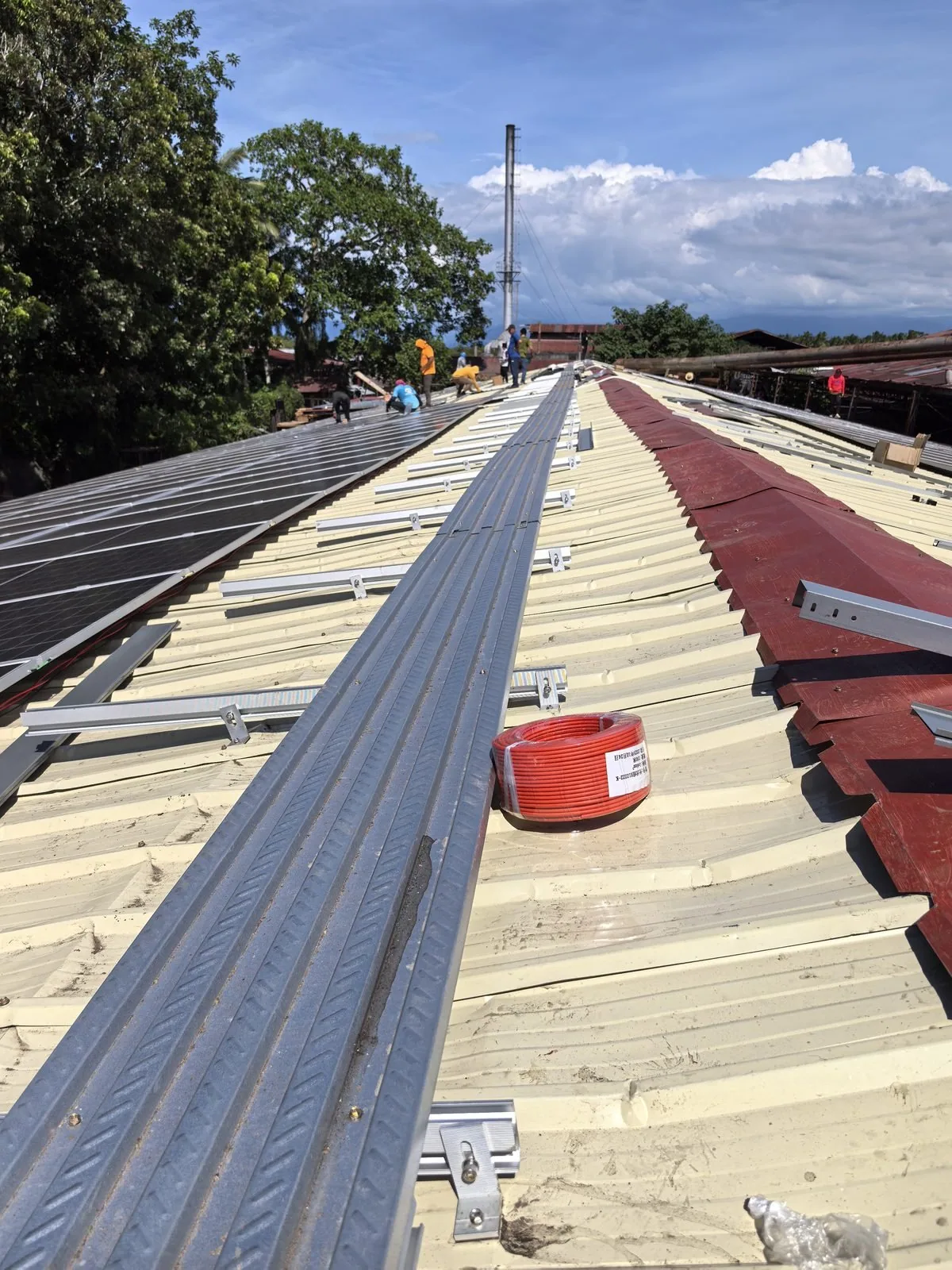
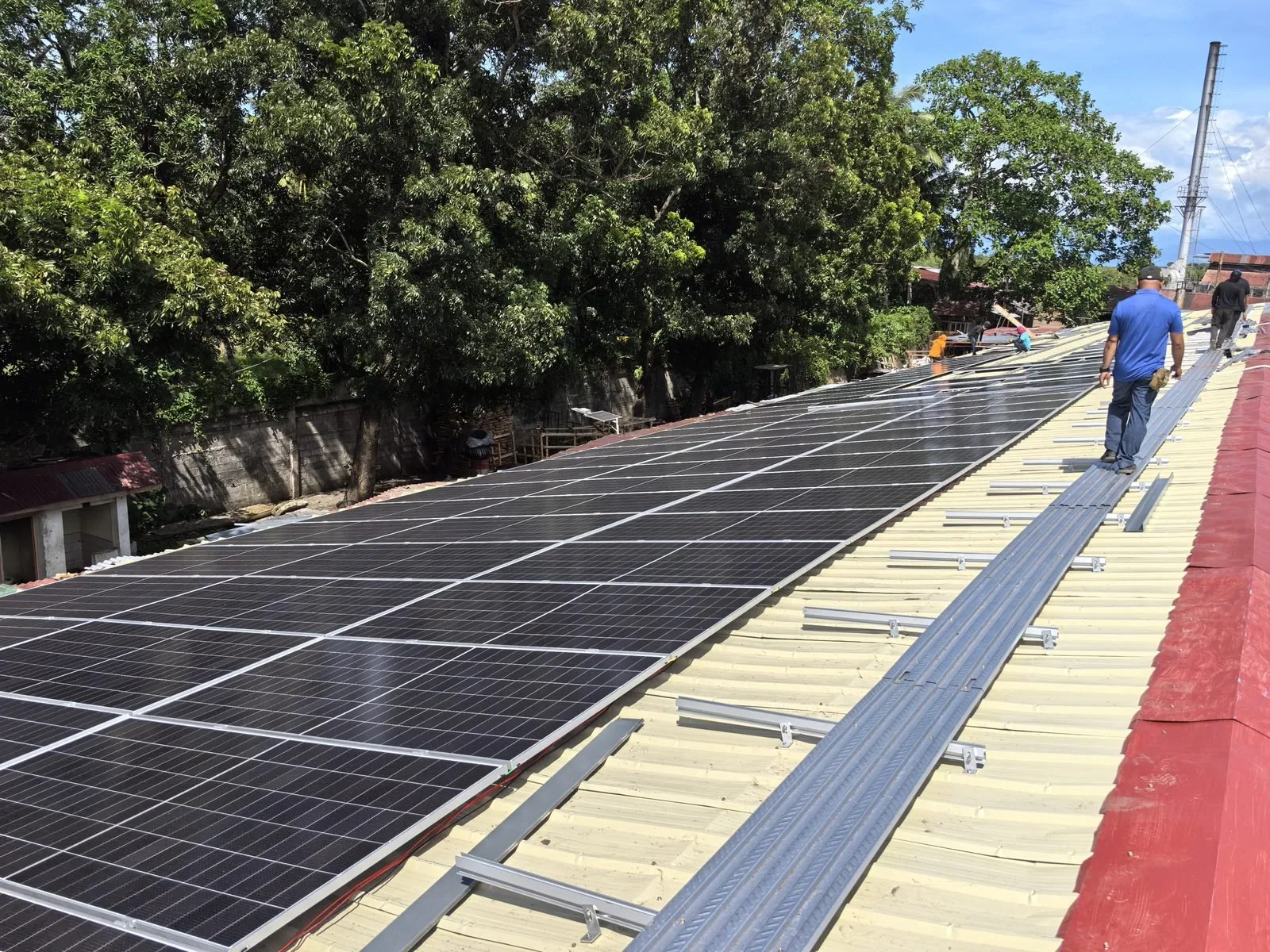
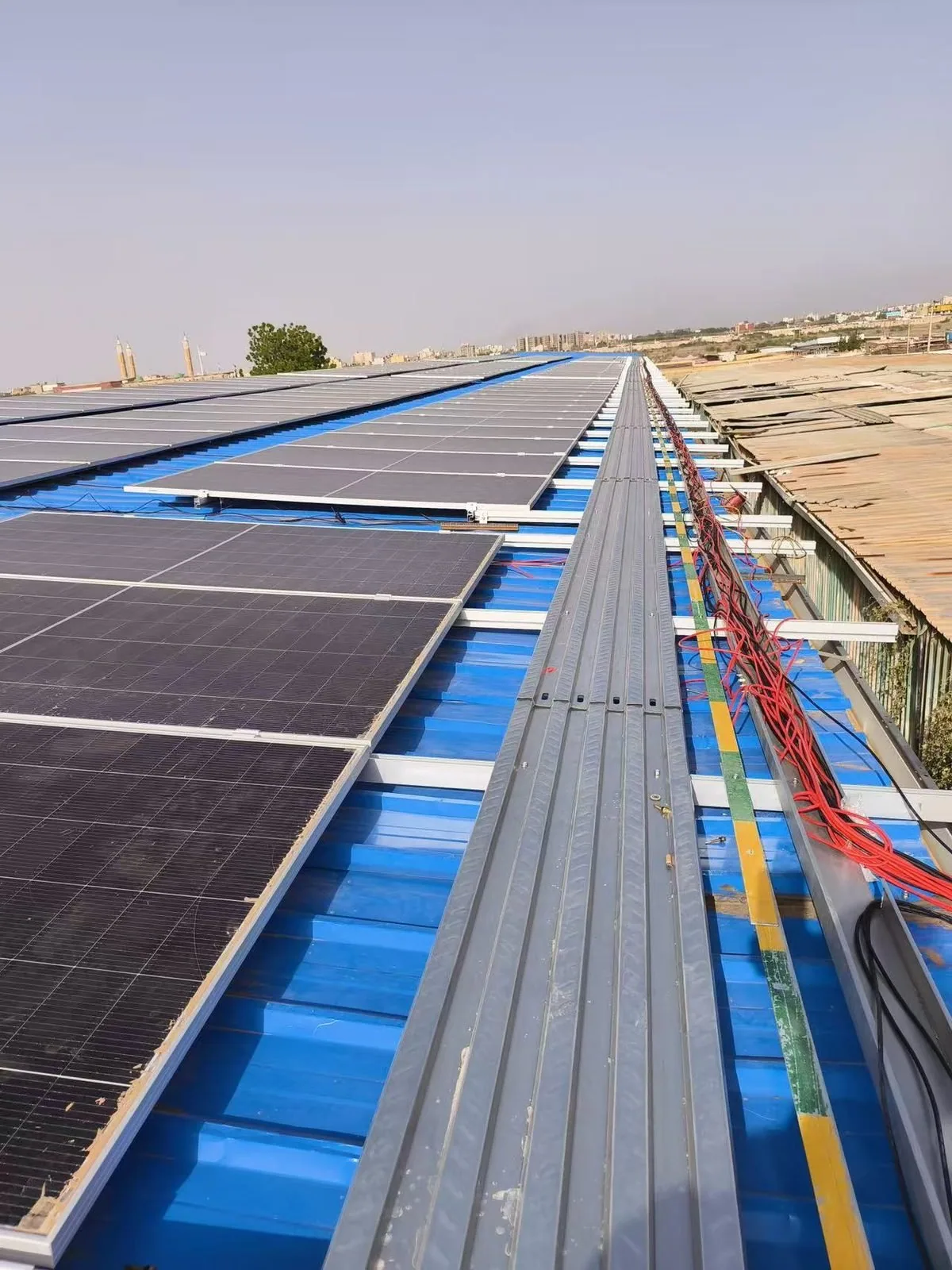
The mounting design used rails matched to the roof sheet profile with dedicated maintenance walkways — the array stays cleanable and inspectable without stepping on the sheets.
SYSTEM CONFIGURATION
What was supplied.
The configuration below is the reference for this project; every new system is sized against its own load data.
Component
Configuration
Solar panels
≈ 730 × 550W N-type TOPCon modules
Inverters
4 × 100kW grid-tied, 3-phase
Mounting
Metal-roof rail system with maintenance walkways
Protection
DC/AC SPD, breakers and string monitoring
Results & ROI
At roughly 4 peak-sun-hours, the 400kW array generates in the region of 1,600 kWh per day — directly offsetting the factory’s most expensive daytime consumption.
Figures shown are engineering estimates from the project configuration; verified metered results are published when confirmed.
Performance figures are engineering estimates from the project configuration unless stated otherwise.
Why this architecture was chosen
Why there is no battery in phase one
Three shifts with the heaviest consumption in daylight means most of the electricity is bought at exactly the hours the array produces. Adding storage would have paid for capacity that sits idle, because little of the load falls outside sun hours. Instead the inverter specification stays hybrid-ready, so storage can be added later if the load profile changes.
Why four 100 kW inverters instead of one 400 kW machine
Splitting conversion across four units buys redundancy — a fault removes a quarter of capacity rather than the whole solar supply. Each unit also sits closer to its array section, which keeps DC cable runs short, and one machine can be serviced while the others keep generating.
Why the roof mattered more than the panels
The metal roof offered a large unshaded area, but only part of it was safely walkable, and the structure had to be verified before any array layout was committed. The mounting answer — rails matched to the roof sheet profile, plus dedicated maintenance walkways — is what keeps the array cleanable and inspectable without anyone stepping on the sheets.
COMPONENT NOTES
Why each part was specified this way
Every quantity below is the one actually installed — nothing here is illustrative.
Component
What it does on this site
≈ 730 × 550 W N-type TOPCon modules
≈ 400 kW laid out over the verified walkable roof area rather than the whole footprint.
4 × 100 kW grid-tied three-phase inverters
Split for redundancy, shorter DC runs, and servicing without a full generation shutdown.
Metal-roof rails with maintenance walkways
Matched to the sheet profile — protects the roof and keeps cleaning safe and permitted.
DC/AC SPD, breakers, string monitoring
String-level visibility means one underperforming string is findable instead of being averaged away.
Applying this to your site
The value in a project like this is not the equipment list — it is the sequence of decisions behind it. If your site resembles this one, these are the questions worth answering before anyone quotes a capacity.
Get the structural report before the layout. On an ageing metal roof the walkable area, not the total area, decides array size.
Match array capacity to daytime consumption, and add storage only if the load genuinely extends beyond sun hours.
Protect the production schedule in the mounting design, not just in the electrical design.
Ask for string-level monitoring. Across several hundred modules, array-level data hides faults.
In the region of 1,600 kWh per day at roughly 4 peak-sun-hours, directly offsetting the factory’s most expensive daytime consumption.
Did the installation interrupt production?
No. The production schedule allowed no installation downtime, so the mounting design was matched to the roof sheet profile with dedicated maintenance walkways.
Was the whole roof usable for the array?
Only part of it was safely walkable. The structure had to be verified before any array went down.
What protection is included?
DC/AC surge protection, breakers and string monitoring, with 4 × 100 kW three-phase grid-tied inverters and around 730 × 550 W N-type TOPCon modules.
START A PROJECT
Get the same results
Send your load profile, grid conditions and destination — we will prepare a sized configuration for your site.