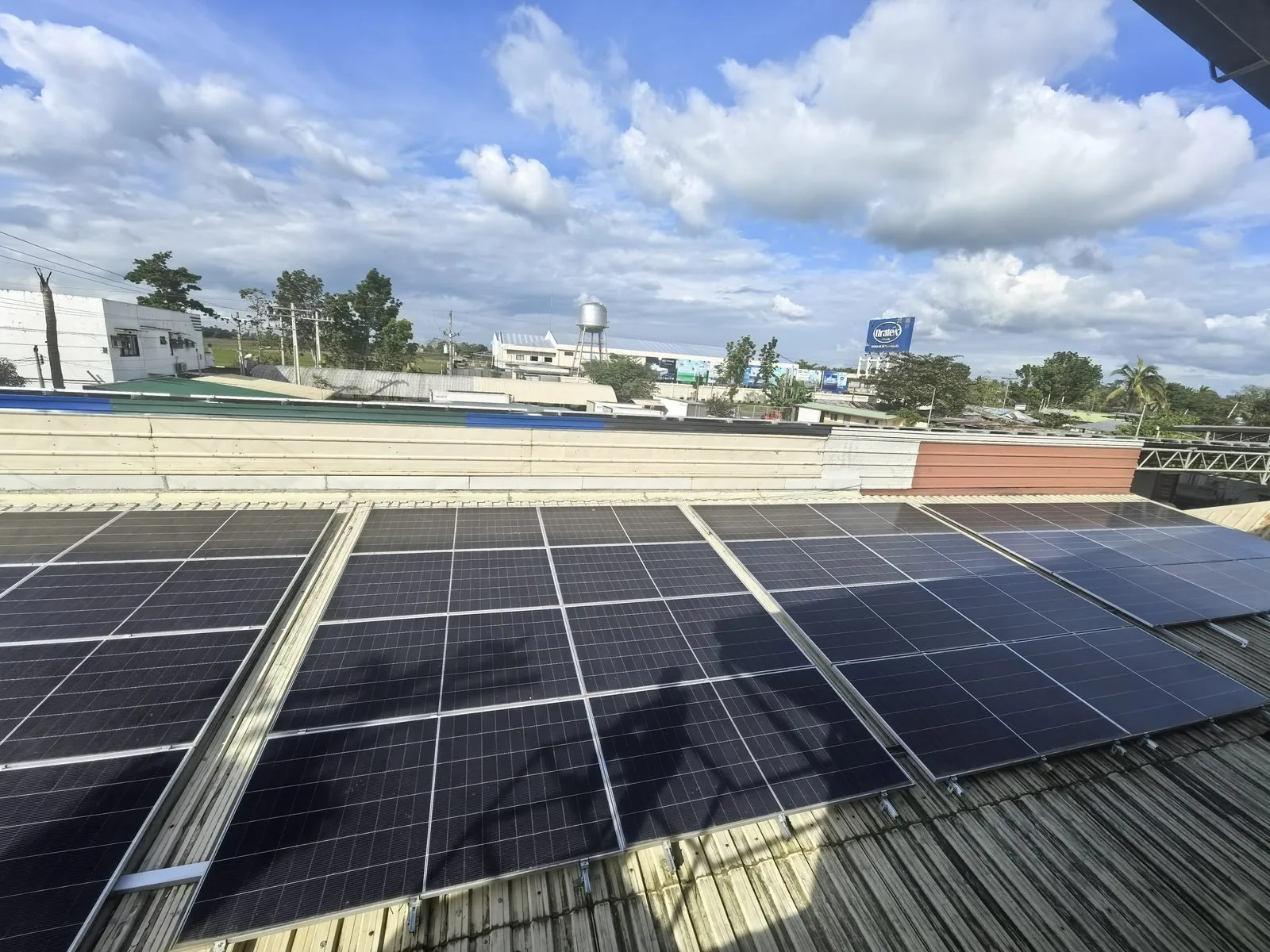
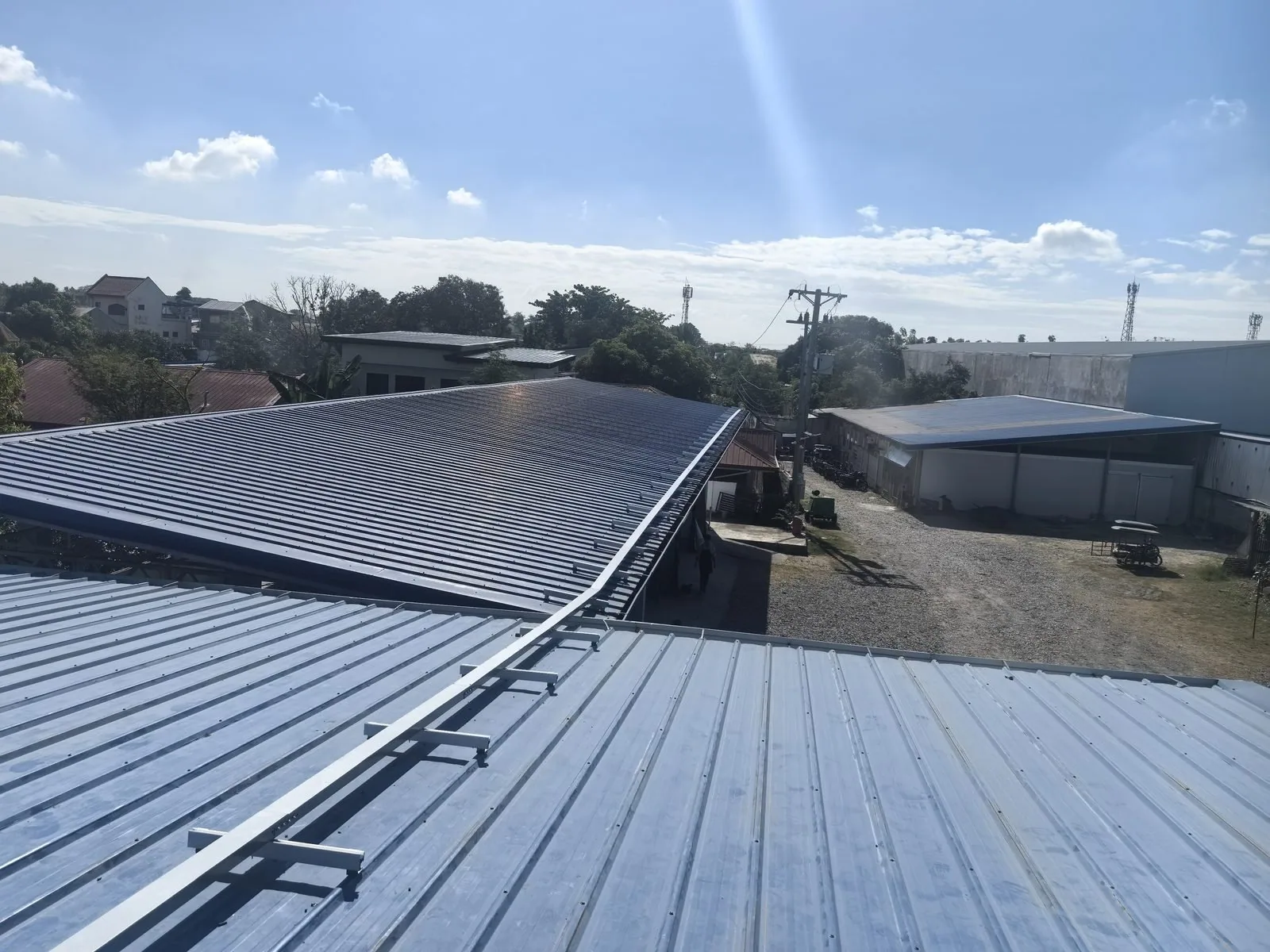
This farm runs irrigation pumps, cold rooms and staff buildings on a grid connection that fails regularly — with diesel generation filling the gaps at rising cost.
Water demand peaks exactly when the sun is strongest, making solar the natural primary source for pumping.
The challenge
Daytime pumping peaks, night-time cold chain loads, and an unreliable grid over a large, spread-out site.
The Solution
The system was split by load type: pumping runs directly from solar in the daylight window — water storage instead of batteries — while a battery room covers the cold rooms and buildings after dark.
Hybrid inverters coordinate PV, battery, grid and the existing generator, so the farm runs on solar first and diesel last.
SYSTEM CONFIGURATION
What was supplied.
The configuration below is the reference for this project; every new system is sized against its own load data.
Component
Configuration
Solar panels
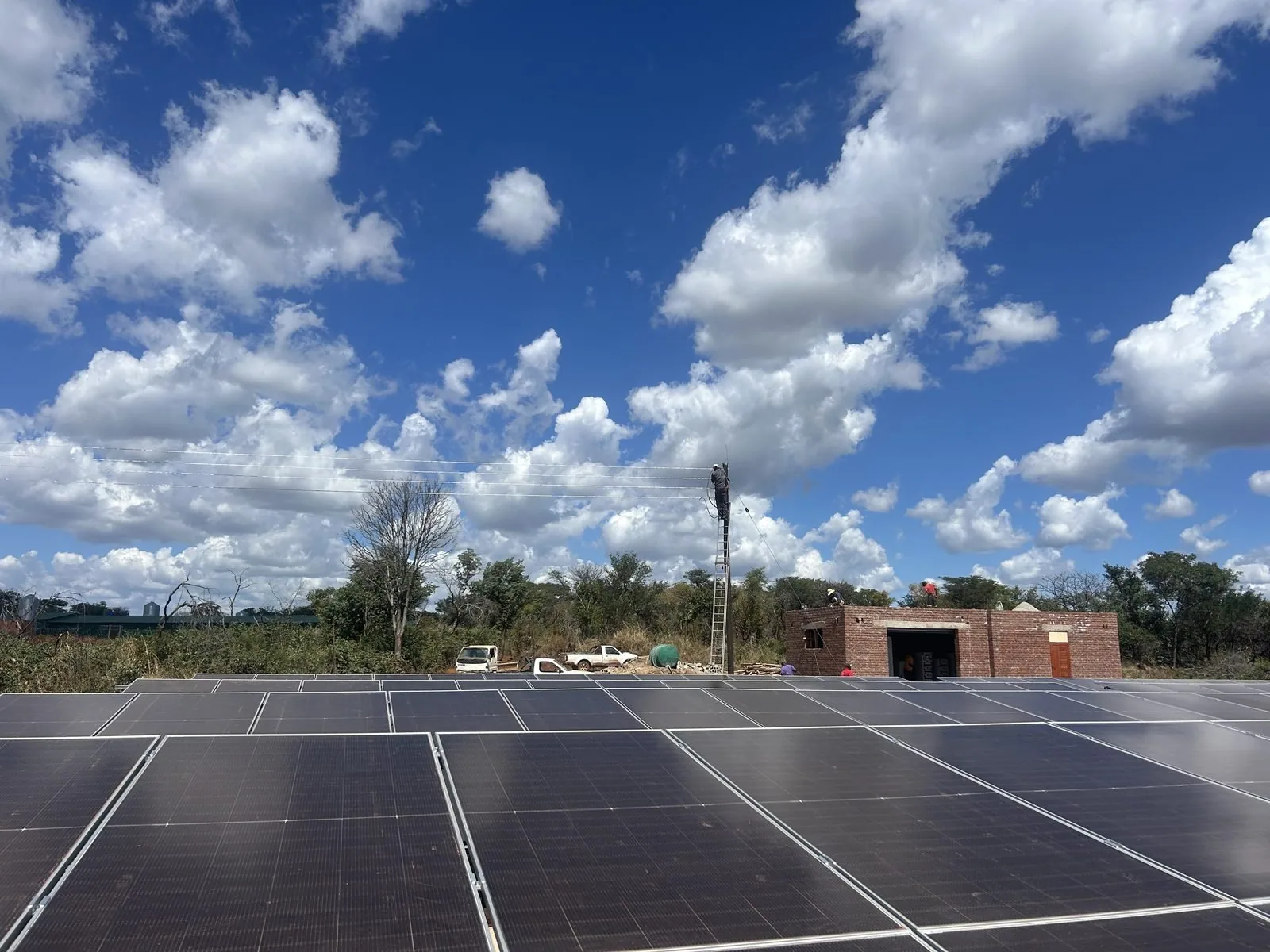
≈ 455 × 550W modules
Hybrid inverters
3-phase, generator-compatible
Battery room
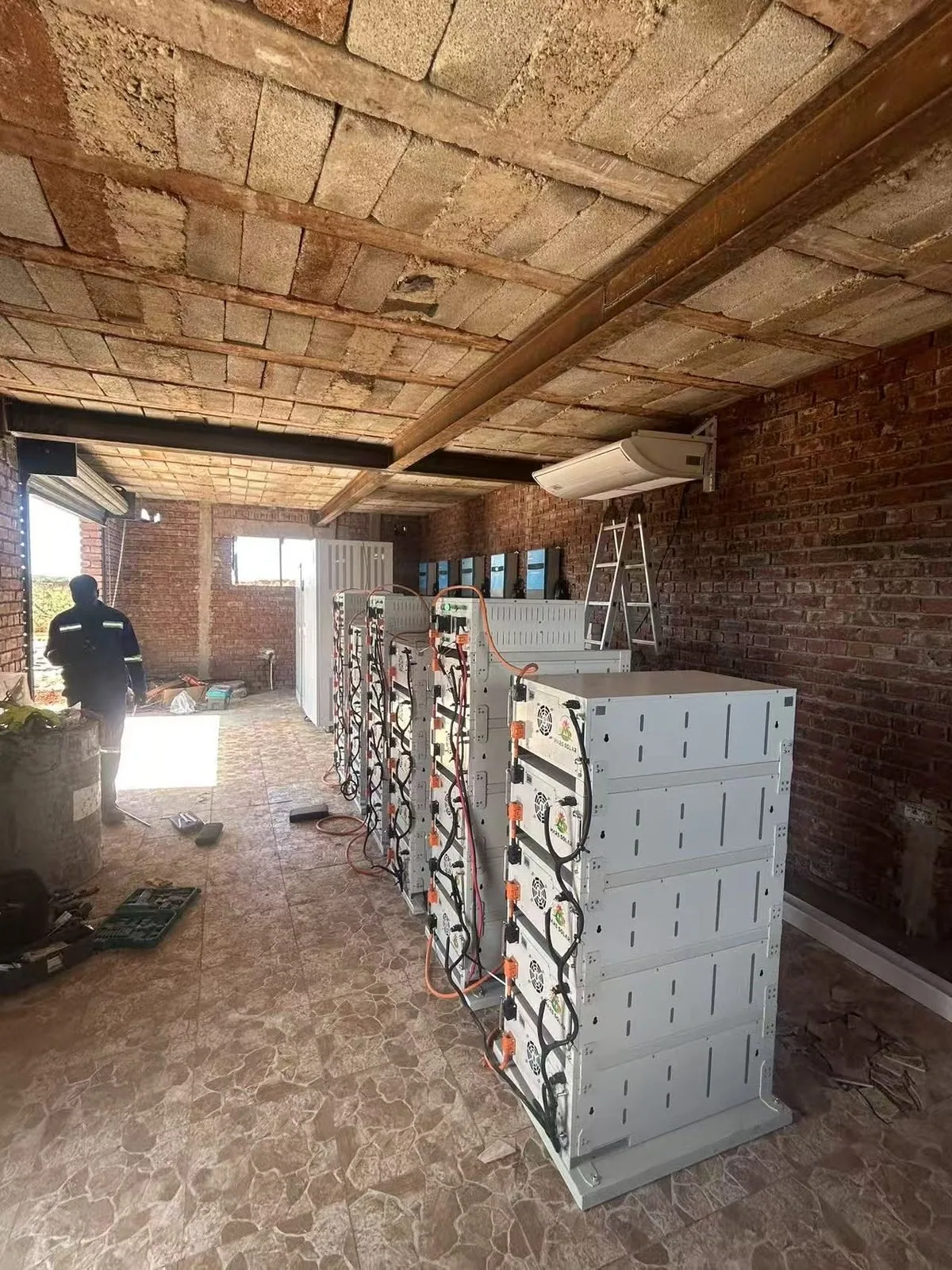
LFP rack storage for buildings and cold rooms
Pumping
Direct solar pumping with tank storage
Results & ROI
Irrigation energy cost approaches zero in the pumping season; diesel use falls to exceptional events.
Cold rooms and buildings stay powered through grid failures from the battery room.
Performance figures are engineering estimates from the project configuration unless stated otherwise.
Why this architecture was chosen
The key decision: split the site by load type
The most transferable idea here is that pumping and buildings were treated as two separate problems. Pumping runs directly from solar during the daylight window and stores its output as water in tanks rather than energy in batteries — water demand peaks exactly when the sun is strongest. The battery room then only covers the buildings and cold rooms after dark. Handled that way, the storage requirement stays far smaller than a single battery sized for the whole farm would be.
Why the generator stays in the picture
Hybrid inverters coordinate PV, battery, grid and the existing generator so the farm runs on solar first and diesel last. Keeping the generator lets the battery be sized for normal nights rather than for the worst possible week.
COMPONENT NOTES
Why each part was specified this way
Every quantity below is the one actually installed — nothing here is illustrative.
Component
What it does on this site
≈ 455 × 550 W modules
≈ 250 kW feeding both the pumping circuit and the hybrid supply to the buildings.
Generator-compatible hybrid inverters
Three-phase units that coordinate PV, battery, grid and diesel on one platform.
LFP rack storage for buildings and cold rooms
Sized to night loads only, because daytime pumping does not draw from it.
Direct solar pumping with tank storage
Turns water storage into the energy store for the largest single load on the farm.
Applying this to your site
The value in a project like this is not the equipment list — it is the sequence of decisions behind it. If your site resembles this one, these are the questions worth answering before anyone quotes a capacity.
Separate daytime loads from night loads before sizing anything. Daytime loads often need no battery at all.
If you pump water, ask whether tank capacity is cheaper than battery capacity. Usually it is.
Size the battery from the critical night list: cold rooms, buildings, anything that must run before dawn.
Check that the inverters can talk to your existing generator — retrofit projects often fail at this interface.
Run a water audit alongside the electrical audit. They govern different parts of the design.
IMPLEMENTATION TIMELINE
From survey to commissioning.
Typical export project sequence — actual dates depend on destination and site.
Week 1–2
Load and water audit
Week 3–4
Engineering and BOM
Week 5–9
Shipment and delivery
Week 10–14
Installation and commissioning
PROJECT GALLERY
Installation records.
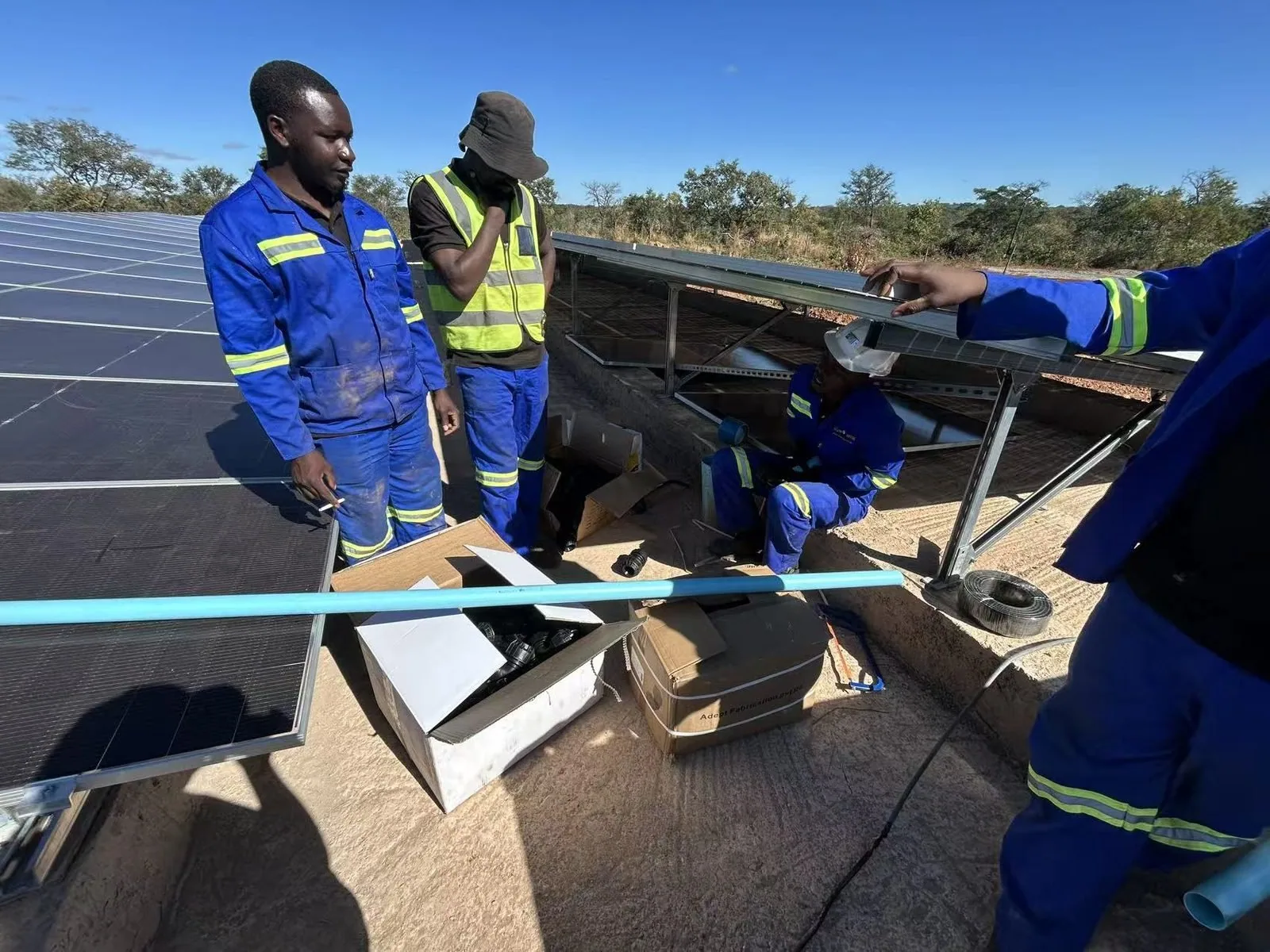
Solar array at the farmCrew installing the arrayBattery room for night-time loads
Pumping runs directly from solar in the daylight window, using tank storage instead of batteries — water demand peaks exactly when the sun is strongest.
What does the battery cover?
An LFP rack battery room covers the buildings and cold rooms at night.
How do the different energy sources work together?
Hybrid inverters coordinate PV, battery, grid and the existing generator, so the farm runs on solar first and diesel last.
How many modules were installed?
Around 455 × 550 W modules, with three-phase generator-compatible hybrid inverters.
START A PROJECT
Get the same results
Send your load profile, grid conditions and destination — we will prepare a sized configuration for your site.